
For campers, backpackers, survivalists, overlanders, hunters, hikers, bushcraft enthusiasts, and emergency preparedness experts, a tarp is one of the most versatile tools in the outdoors. A well-positioned tarp can provide shelter from rain, create shade in extreme heat, block wind during storms, protect gear, collect water, or even serve as an emergency stretcher.
However, even the best tarp becomes nearly useless without reliable knot skills.
A tarp shelter is only as strong as the knots holding it together. Poor knot selection can lead to sagging ridgelines, collapsed shelters, damaged grommets, loose tie-outs, or complete tarp failure during bad weather. On the other hand, properly chosen knots improve stability, tension control, weather resistance, and long-term durability.
The good news is that outdoor enthusiasts do not need to memorize hundreds of complex knots. In reality, mastering just a few highly effective tarp knots can dramatically improve camping efficiency and outdoor safety.
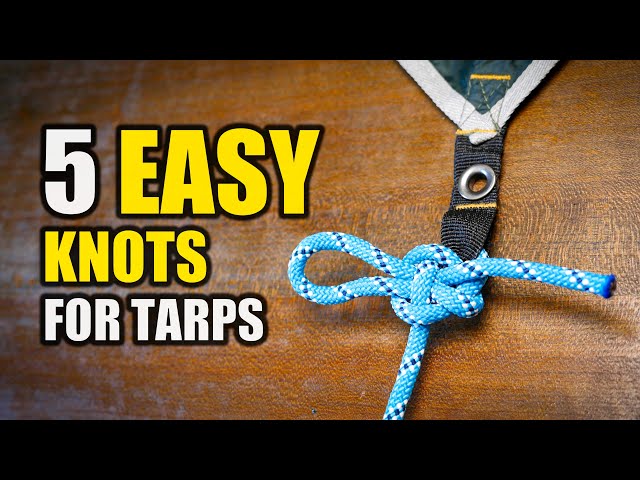
This guide explores five of the most practical and widely used tarp knots every outdoor adventurer should know. We will examine how each knot works, why it matters, when to use it, common mistakes, and how these knots improve tarp setup performance in real-world outdoor conditions.
Why Knot Skills Matter in Outdoor Tarp Setups
Modern outdoor gear has become increasingly advanced, but rope and knot fundamentals remain essential.
The Role of Knots in Tarp Systems
Knots control:
Shelter tension
Structural stability
Wind resistance
Water runoff efficiency
Load distribution
Setup speed
Adjustability
A poorly tied tarp can fail even if the tarp material itself is extremely durable.
Common Problems Caused by Bad Knots
Improper knot selection often leads to:
Ridgeline sagging
Water pooling
Grommet tearing
Rope slippage
Shelter collapse
Excessive fabric stress
During storms or heavy wind, these failures become much more serious.
Why Simplicity Matters Outdoors
Outdoor conditions are unpredictable.
Knots should be:
Easy to remember
Quick to tie
Reliable under stress
Functional with cold hands
Effective in wet conditions
The best tarp knots balance simplicity and performance.
Understanding the Basics of Tarp Rigging
Before discussing individual knots, it helps to understand how tarp systems function.
Main Components of a Tarp Shelter
A typical tarp setup includes:
Ridgeline
Guy lines
Anchor points
Tension systems
Stakes or trees
Each component relies on proper knot techniques.
The Importance of Tension Distribution
Tarps perform best when tension is evenly distributed.
Proper tension:
Prevents water pooling
Reduces flapping noise
Improves wind resistance
Extends tarp lifespan
Knots play a major role in maintaining this balance.
Choosing the Right Rope
Even excellent knots perform poorly with improper cordage.
Popular outdoor rope options include:
Paracord
Dyneema cord
Polyester utility rope
Reflective guyline cord
Good tarp rope should offer:
Low stretch
Weather resistance
High strength-to-weight ratio
Good knot holding ability
Knot #1: The Bowline
The bowline is often considered one of the most important outdoor knots ever developed.
Why the Bowline Matters
The bowline creates a fixed loop that does not tighten under load.
This makes it ideal for:
Ridgeline anchors
Tree attachments
Permanent tarp loops
Shelter corners
Advantages of the Bowline
The bowline offers several major benefits:
Easy to untie after heavy tension
Strong and reliable
Does not slip easily
Maintains a consistent loop size
How the Bowline Works
The bowline forms a secure loop by locking the rope against itself.
Many campers learn the classic memory phrase:
“The rabbit comes out of the hole, around the tree, and back into the hole.”
This simple visualization helps beginners remember the tying sequence.
Best Outdoor Uses for the Bowline
The bowline excels in:
Ridgeline attachment to trees
Hammock suspension systems
Fixed tarp anchor points
Emergency rescue applications
Common Bowline Mistakes
Problems occur when:
The loop is improperly dressed
The tail is too short
Slippery synthetic ropes are used incorrectly
Adding a backup stopper knot improves security.
Knot #2: The Taut-Line Hitch
The taut-line hitch is one of the most practical adjustable knots for tarp shelters.
Why Adjustable Knots Matter
Outdoor conditions constantly change.
Rain, humidity, and wind can loosen tarp tension over time.
An adjustable knot allows campers to:
Retighten shelters quickly
Adapt to weather changes
Adjust guyline tension without retying
How the Taut-Line Hitch Works
The taut-line hitch slides when adjusted but grips firmly under tension.
This makes it highly effective for:
Guyline adjustment
Shelter tensioning
Tent stabilization
Advantages of the Taut-Line Hitch
Benefits include:
Fast tension adjustment
No hardware required
Lightweight functionality
Excellent field versatility
Best Situations for the Taut-Line Hitch
Ideal uses include:
Rain tarp setups
Windy campsite stabilization
Backpacking shelters
Adjustable tarp corners
Common Mistakes
The taut-line hitch may slip if:
Incorrect wraps are used
Rope diameter is too slick
Excessive load is applied
Modern low-friction cords may require additional wraps.
Knot #3: The Trucker’s Hitch
The trucker’s hitch is one of the best knots for achieving high tension.
Why Tension Is Important
A loose tarp creates multiple problems:
Water pooling
Loud flapping
Reduced wind resistance
Increased fabric wear
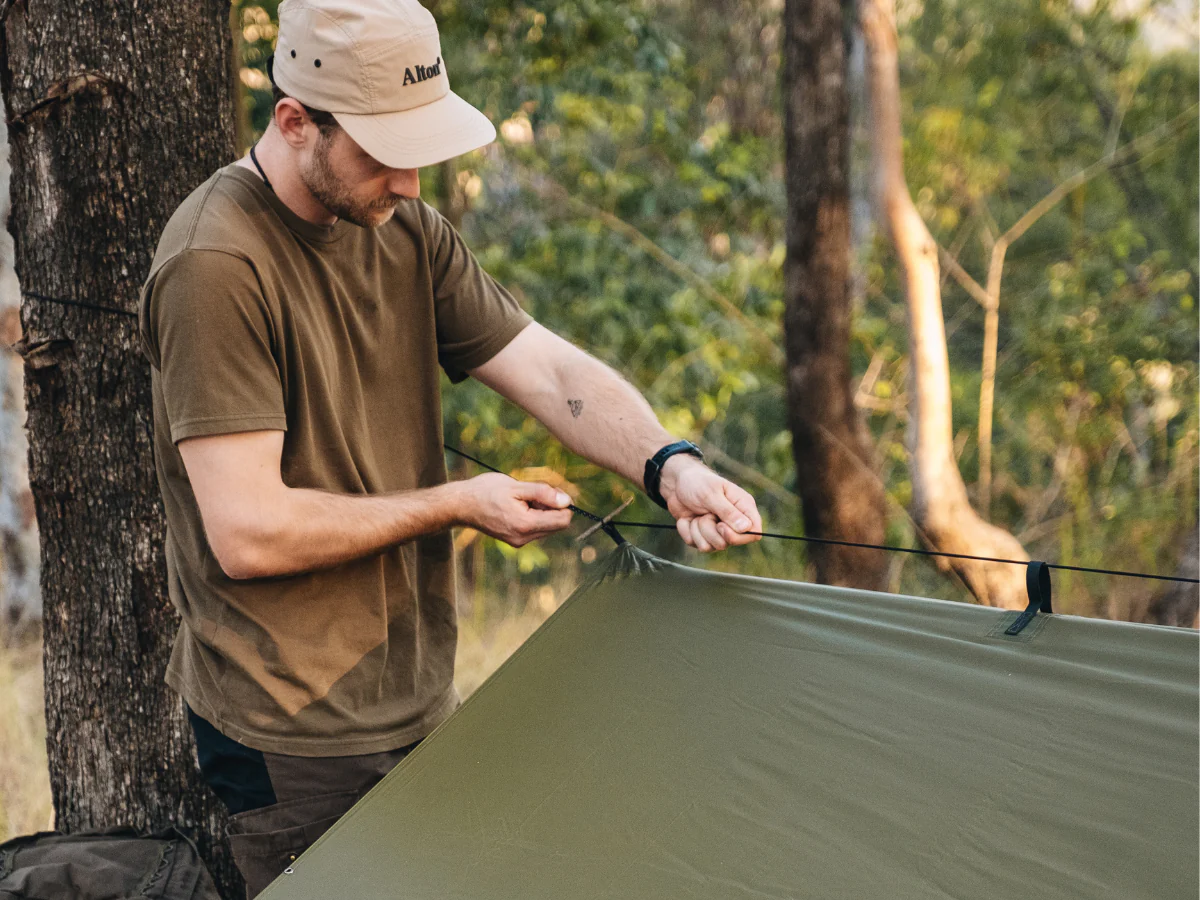
The trucker’s hitch allows users to apply powerful mechanical tension.
How the Trucker’s Hitch Works
The knot creates a pulley-like mechanical advantage.
This allows significantly greater tension than pulling by hand alone.
Key Advantages
The trucker’s hitch provides:
Extremely tight ridgelines
Strong storm resistance
Adjustable tension control
Improved structural rigidity
Best Outdoor Applications
The trucker’s hitch works especially well for:
Ridgelines
Large tarp shelters
Wind-resistant setups
Vehicle camping systems
Preventing Water Pooling
One major benefit is maintaining steep tarp angles.
This improves water runoff during heavy rain.
Common Mistakes
Beginners often:
Use weak loop structures
Overtighten fragile tarps
Create difficult-to-release finishing knots
Practice improves efficiency dramatically.
Knot #4: The Prusik Knot
The Prusik knot is a friction hitch commonly used in climbing and tarp systems.
Why the Prusik Is Valuable
The Prusik knot slides when unloaded but grips tightly under tension.
This creates highly adjustable attachment points.
How Outdoor Enthusiasts Use Prusik Knots
Prusik knots are popular for:
Ridgeline tarp attachments
Adjustable suspension systems
Fine tension control
Fast tarp repositioning
Advantages of the Prusik Knot
Benefits include:
Excellent adjustability
Strong grip under load
Smooth movement when released
Minimal hardware requirements
Ridgeline Efficiency
Many advanced tarp campers use continuous ridgelines with Prusik loops.
This allows rapid shelter adjustments without untying major anchor points.
Common Errors
The Prusik may fail if:
Rope diameters are incompatible
Too few wraps are used
Extremely slick cordage reduces friction
Proper material pairing is important.
Knot #5: The Clove Hitch
The clove hitch is one of the fastest and most versatile outdoor knots.
Why the Clove Hitch Is Popular
The clove hitch can be tied quickly around:
Poles
Trees
Stakes
Carabiners
It is commonly used for temporary anchoring.
Advantages of the Clove Hitch
The knot offers:
Fast setup speed
Easy adjustments
Simple tying process
Versatility in the field
Best Uses for Tarp Systems
The clove hitch works well for:
Initial tarp positioning
Temporary guyline attachment
Fast camp setup
Bushcraft shelters
When Not to Use It
The clove hitch may loosen under:
Constant shifting loads
Slippery rope conditions
Severe vibration
Adding backup knots improves reliability.
How Weather Affects Tarp Knots
Outdoor environments constantly stress rope systems.
Rain and Rope Stretch
Wet ropes may stretch or tighten depending on material.
This affects:
Shelter tension
Knot security
Ridgeline stability
Wind Stress
Strong wind creates dynamic loads that repeatedly stress knots.
Proper tension management reduces:
Rope fatigue
Knot slippage
Tarp flapping
Freezing Temperatures
Cold weather can make:
Ropes stiffer
Knots harder to untie
Gloves reduce dexterity
Simple knots become especially valuable in winter conditions.
Choosing the Best Cordage for Tarp Knots
Rope material strongly affects knot performance.
Paracord
Paracord remains one of the most popular outdoor ropes.
Advantages include:
Flexibility
Strength
Availability
Multipurpose use
However, some paracord stretches under tension.
Dyneema and UHMWPE Lines
Modern ultralight backpackers often use high-performance cordage.
Benefits include:
Extremely low stretch
High strength
Lightweight design
However, slippery surfaces may reduce knot grip.
Polyester Rope
Polyester offers:
Good UV resistance
Low water absorption
Strong knot stability
It is commonly used in marine and outdoor applications.
Common Tarp Knot Mistakes Beginners Make
Many outdoor enthusiasts struggle with tarp rigging initially.
Overtightening Tarps
Excessive tension may:
Damage grommets
Tear tie-out points
Distort tarp shape
Balanced tension works best.
Poor Ridgeline Angles
Incorrect shelter geometry can cause:
Water accumulation
Wind instability
Uneven stress distribution
Using the Wrong Knot for the Situation
Not all knots serve the same purpose.
For example:
Bowlines excel for fixed loops
Taut-line hitches excel for adjustability
Trucker’s hitches excel for tension
Understanding function matters.
Ignoring Rope Wear
Outdoor ropes degrade over time due to:
UV exposure
Moisture
Abrasion
Dirt contamination
Worn cordage weakens knot reliability.
Advanced Tarp Shelter Techniques
Once basic knots are mastered, outdoor enthusiasts can build more advanced shelters.
A-Frame Shelters
The classic A-frame tarp shelter relies heavily on:
Secure ridgelines
Adjustable tension systems
Wind-resistant anchor points
Lean-To Shelters
Lean-to setups require:
Proper drainage angles
Strong rear anchors
Stable front support points
Diamond Fly Setups
Ultralight backpackers often use diamond configurations for minimal weight.
These setups demand precise tension balancing.
Storm Mode Configurations
During severe weather, tarp shelters should:
Sit lower to the ground
Use additional guy points
Reduce exposed surface area
Strong knots become critical in these conditions.
Tarp Knot Skills for Survival Situations
Knot knowledge becomes even more important during emergencies.
Emergency Shelter Construction
In survival scenarios, tarps may provide:
Rain protection
Wind blocking
Heat retention
Ground insulation
Fast, reliable knots improve shelter speed.
Disaster Preparedness
Tarps are widely used during:
Hurricanes
Floods
Wildfire evacuations
Power outages
Knowing a few strong knots can greatly improve temporary shelter stability.
Multi-Use Rope Skills
Outdoor rope systems also assist with:
Gear repair
Rescue systems
Hanging food bags
Securing equipment
Knot mastery increases outdoor self-reliance.
Practicing Tarp Knots Effectively
Knot skills improve through repetition.
Why Muscle Memory Matters
Outdoor conditions may involve:
Darkness
Rain
Cold hands
Fatigue
Limited visibility
Muscle memory allows faster, more reliable tying.
Best Ways to Practice
Good practice methods include:
Repeating knots daily
Practicing with gloves
Using different rope types
Simulating windy conditions
Learning Under Real Conditions
Backyard practice is helpful, but field experience matters most.
Real outdoor setups reveal:
Tension problems
Rope behavior
Weather effects
Shelter weaknesses
Why Minimal Knot Knowledge Beats Memorizing Hundreds
Some beginners feel overwhelmed by complex knot books.
In reality, most experienced outdoor travelers rely on only a handful of highly practical knots.
The Power of Versatility
The five knots in this guide cover most tarp needs:
Fixed loops
Adjustable tension
High-force tightening
Sliding attachment points
Temporary anchoring
Mastering these fundamentals provides enormous flexibility.
Functional Efficiency
Reliable knot execution matters far more than memorizing obscure techniques.
Simple, repeatable systems work best outdoors.
Modern Hardware vs Traditional Knots
Modern camping gear increasingly includes:
Line locks
Tensioners
Carabiners
Adjustable buckles
Why Knot Skills Still Matter
Hardware can fail, break, freeze, or get lost.
Knots remain:
Lightweight
Reliable
Universal
Independent of equipment
Even advanced campers continue relying on traditional knots.
The Psychology of Confidence in Outdoor Shelter Systems
Reliable shelter systems improve more than physical protection.
Reduced Stress During Bad Weather
Strong tarp setups provide:
Better sleep
Reduced anxiety
Improved storm confidence
Greater outdoor comfort
Building Outdoor Self-Reliance
Knot mastery creates a deeper connection to:
Bushcraft skills
Wilderness problem-solving
Survival preparedness
Outdoor independence
These skills remain valuable in both recreation and emergencies.
Final Thoughts
A tarp is one of the most valuable tools in outdoor life, but its effectiveness depends heavily on the quality of the knot systems supporting it. Mastering a few highly practical knots allows outdoor enthusiasts to create stronger shelters, improve weather resistance, reduce equipment stress, and adapt quickly to changing conditions.
The bowline provides reliable fixed loops. The taut-line hitch offers adjustable tension. The trucker’s hitch creates powerful ridgeline stability. The Prusik knot delivers advanced adjustability. The clove hitch enables rapid anchoring and versatile field use.
Together, these five knots form the foundation of highly effective tarp rigging for camping, backpacking, survival, bushcraft, overlanding, hunting, and emergency preparedness.
In the outdoors, weather conditions can change quickly, equipment can fail, and environmental stress can test every part of a shelter system. Reliable knot skills provide flexibility, security, and confidence when it matters most.
For every outdoor enthusiast, learning these tarp knots is not just about tying rope. It is about building safer shelters, protecting gear, improving efficiency, and becoming more capable in the wilderness.
Related Products