Coastal Living Challenges: How to Care for Curtains in High Humidity and Salt Air Environments

Apr 17 2026
Coastal Living Challenges: How to Care for Curtains in High Humidity and Salt Air Environments
Living near the coast offers undeniable appeal—ocean views, fresh breezes, and a relaxed lifestyle that many people dream of. But behind the beauty of seaside living lies a set of unique challenges, especially when it comes to maintaining your home’s interior. Among the most overlooked yet heavily affected elements are your curtains.
In coastal environments, high humidity and salt-laden air can take a serious toll on fabrics, hardware, and overall window treatments. Curtains that look elegant and fresh when first installed can quickly deteriorate if not properly cared for. From mildew growth to fading fabrics and corroded rods, the combination of moisture and salt creates conditions that demand special attention.
This in-depth guide explores why coastal environments are so harsh on curtains, what problems you can expect, and—most importantly—how to maintain and protect your window treatments so they remain beautiful and functional for years.
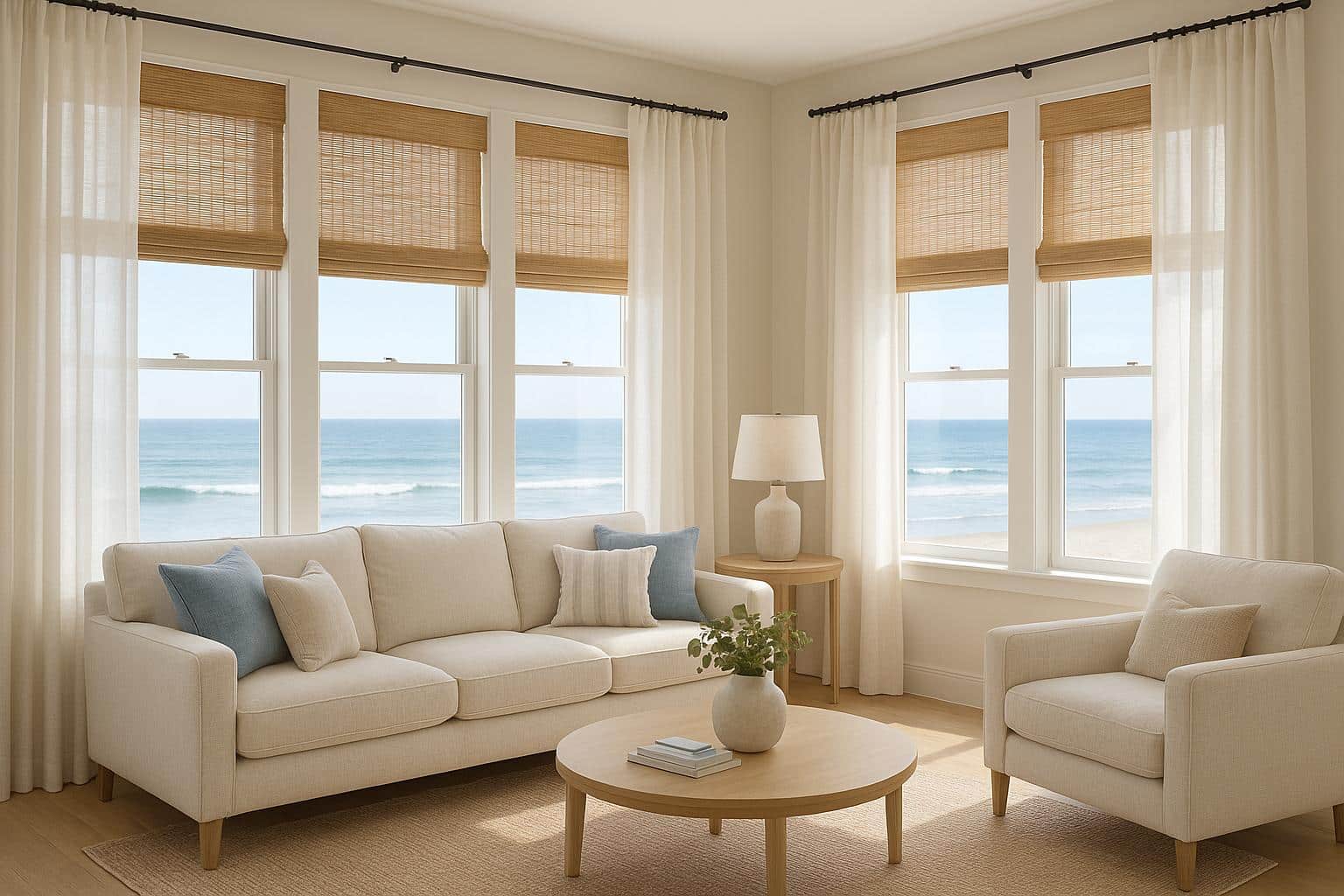
Why Coastal Environments Are So Tough on Curtains
Before diving into maintenance strategies, it’s important to understand the environmental factors at play.
High Humidity
Coastal areas often experience consistently high humidity levels, sometimes exceeding 70–80%. This means the air is saturated with moisture, which easily transfers to fabrics and surfaces inside your home.
Curtains, especially those made from natural fibers, absorb this moisture quickly. Over time, this can lead to:
Mold and mildew growth
Musty odors
Fabric weakening
Discoloration
Salt Air Exposure
Salt particles from ocean spray can travel surprisingly far inland, especially on windy days. These microscopic particles settle on surfaces, including your curtains.
Salt exposure can:
Break down fabric fibers
Cause stiffness and rough texture
Accelerate fading
Corrode metal curtain rods and rings
Intense Sunlight
Coastal homes often receive strong, direct sunlight. Combined with reflective surfaces like water and sand, UV exposure is amplified.
This can lead to:
Rapid color fading
Fabric brittleness
Reduced lifespan of curtain materials
Common Curtain Problems in Coastal Homes
If you live near the ocean, you’ve likely encountered at least one of these issues.
1. Mold and Mildew Growth
Moisture trapped in curtain fabrics creates the perfect environment for mold and mildew. This is especially common in rooms with limited airflow.
Signs include:
Black or green spots
Persistent musty smell
Damp texture
2. Fabric Deterioration
Salt and humidity weaken fibers over time, causing curtains to:
Tear more easily
Lose their shape
Feel rough or brittle
3. Fading and Discoloration
UV rays break down dyes in fabric, leading to uneven fading—especially on sun-facing windows.
4. Rust and Hardware Damage
Metal curtain rods, hooks, and rings are highly susceptible to corrosion in salty air. Rust not only looks unsightly but can also stain your curtains.
5. Lingering Odors
Curtains can trap odors from moisture, salt, and even nearby ocean smells, leading to a stale indoor environment.
Choosing the Right Curtains for Coastal Living
Prevention starts with selecting the right materials.
Opt for Synthetic Fabrics
Materials like polyester, acrylic, and nylon are more resistant to moisture and salt compared to natural fibers like cotton or linen.
Benefits include:
Lower moisture absorption
Greater durability
Resistance to mold and mildew
Consider Treated or Outdoor Fabrics
Outdoor-rated fabrics are designed to withstand harsh environments. Many are treated with:
UV-resistant coatings
Mold and mildew inhibitors
Water-repellent finishes
Light Colors vs. Dark Colors
Lighter colors reflect sunlight and fade less noticeably, making them a practical choice for coastal homes.
Avoid Heavy, Thick Drapes
Heavy curtains trap moisture and take longer to dry, increasing the risk of mold growth. Lightweight fabrics are a better option.
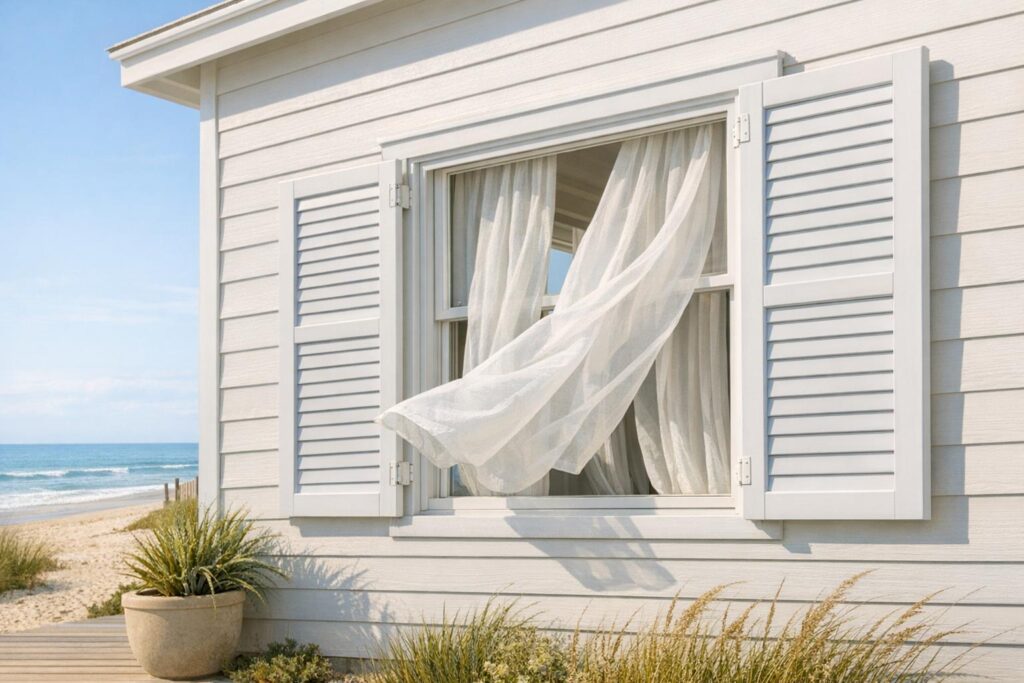
Essential Curtain Maintenance Tips
Proper care is the key to extending the life of your curtains in a coastal environment.
1. Increase Air Circulation
Good airflow helps prevent moisture buildup.
Open windows regularly when weather permits
Use ceiling fans or portable fans
Avoid keeping curtains closed all day
2. Clean Curtains Regularly
Frequent cleaning removes salt particles, dust, and moisture.
How Often?
Light cleaning: every 2–4 weeks
Deep cleaning: every 3–6 months
Cleaning Methods
Machine washable curtains: Use a gentle cycle with mild detergent
Delicate fabrics: Hand wash or dry clean
Steam cleaning: Helps kill mold spores and refresh fabric
3. Use a Dehumidifier
A dehumidifier can significantly reduce indoor moisture levels, especially during humid seasons.
Ideal indoor humidity: 30–50%
4. Rotate Curtains
Switching curtains between rooms or sides of the house ensures even wear and prevents one set from taking all the damage.
5. Protect Against Sun Damage
Install UV-blocking window films
Use sheer curtains behind heavier ones
Close curtains during peak sunlight hours
6. Address Mold Immediately
If you notice mold:
Remove the curtains promptly
Wash with hot water (if fabric allows)
Add white vinegar or a mold-removal solution
Dry completely before rehanging
Delaying treatment can allow mold to spread and permanently damage the fabric.
Hardware Matters: Choosing Rust-Resistant Curtain Rods
Curtain care isn’t just about fabric—hardware plays a major role.
Best Materials for Coastal Areas
Stainless steel
Aluminum
Powder-coated metal
Plastic or resin
These materials resist corrosion better than standard steel or iron.
Maintenance Tips for Hardware
Wipe down rods and rings monthly
Check for early signs of rust
Replace damaged components promptly
Smart Add-Ons for Coastal Curtain Protection
Modern solutions can make curtain maintenance easier.
Fabric Protectant Sprays
These sprays create a barrier against moisture and stains.
Antimicrobial Treatments
Helps prevent mold and bacteria growth.
Thermal and UV Liners
Adding liners can protect your main curtains from sun and salt exposure.
Seasonal Curtain Care Checklist
Keeping a routine helps prevent long-term damage.
Spring & Summer
Increase cleaning frequency
Monitor humidity levels
Watch for mold growth
Fall & Winter
Deep clean curtains
Inspect hardware for corrosion
Replace worn-out fabrics
When to Replace Your Curtains
Even with the best care, coastal conditions can shorten the lifespan of curtains.
Signs it’s time to replace them:
Persistent odors that won’t go away
Visible mold stains
Significant fading or discoloration
Fabric tearing or thinning
Balancing Style and Durability
Many homeowners worry that durable materials won’t look as stylish. Fortunately, modern fabrics offer both performance and aesthetics.
You can find:
Elegant sheer synthetics
Textured outdoor fabrics that mimic linen
Designer options with built-in UV resistance
The key is to prioritize function without sacrificing design.
Final Thoughts
Living by the coast comes with incredible rewards, but it also requires a more proactive approach to home maintenance. Curtains, often seen as simple decorative elements, are actually highly vulnerable in high humidity and salt air conditions.
Without proper care, they can quickly become damaged, discolored, and even unhealthy due to mold growth. However, with the right materials, regular maintenance, and a few smart strategies, you can keep your curtains looking fresh and functioning beautifully.
From choosing moisture-resistant fabrics to maintaining proper airflow and cleaning routines, every small step contributes to extending the life of your window treatments.
Coastal living doesn’t have to mean constant replacement and frustration. With the right approach, your curtains can remain a stylish and durable part of your home—no matter how close you are to the ocean.
Related Products