Electric Curtain Rod Buying Guide: How Silent Motors and Smart Home Compatibility Really Work Together

Mar 26 2026
Smart homes are no longer futuristic concepts reserved for luxury properties. Today, automated lighting, voice assistants, and connected security systems are becoming standard features in modern living spaces. Among these upgrades, electric curtain rods have quietly emerged as one of the most transformative — and most misunderstood — home improvements.
Many buyers focus on appearance, price, or app features. Others simply look for the word “smart” on the product page and assume compatibility will follow. Yet the true performance of an electric curtain system depends on something far more technical:
The relationship between motor silence and smart home integration logic.
A beautiful curtain system loses its appeal quickly if the motor hums loudly during early mornings. Likewise, even the quietest motor becomes frustrating when it refuses to cooperate with your home automation ecosystem.
Choosing correctly requires understanding how mechanical engineering and digital ecosystems interact.
This guide breaks down everything you need to know — from motor technologies and noise control to automation protocols and real-world compatibility — so you can confidently select an electric curtain rod that works seamlessly in daily life.
Why Electric Curtain Rods Are Becoming Essential in Modern Homes
Curtains used to serve simple purposes: privacy, light control, and decoration. Automation transforms them into active environmental tools.
Electric curtain rods now contribute to:
- Natural light scheduling
- Energy efficiency
- Temperature regulation
- Privacy automation
- Accessibility improvements
- Security simulation while traveling
Instead of manually opening curtains every morning, homeowners increasingly rely on automated routines tied to sunrise, occupancy, or voice commands.
But automation only feels luxurious when it works quietly and reliably.
The Two Pillars of a Great Electric Curtain System
Every high-quality electric curtain setup rests on two foundational components:
- The Motor (mechanical intelligence)
- The Control Ecosystem (digital intelligence)
Many purchasing mistakes occur because buyers evaluate these elements separately rather than as a unified system.
A silent motor without smart compatibility limits functionality.
A smart-enabled rod with a noisy motor ruins comfort.
Balance between both defines long-term satisfaction.
Understanding Curtain Motor Technology
Electric curtain motors convert electrical energy into controlled linear movement along a track or rod. While this sounds straightforward, the internal engineering varies dramatically between products.
AC Motors vs DC Motors
AC Motors
- Higher torque
- Suitable for heavy curtains
- Often louder
- Common in commercial installations
DC Motors
- Lower energy consumption
- Quieter operation
- Smooth acceleration
- Ideal for residential environments
Most modern homes benefit from DC brushless motors due to their refined performance and reduced vibration.
What “Silent Motor” Actually Means
Marketing descriptions often label products as “ultra-quiet,” but true silence depends on measurable engineering factors.
Noise originates from three main sources:
- Gear friction
- Motor vibration
- Track resonance
A well-designed silent motor minimizes all three.
Key Noise Reduction Technologies
Brushless Motor Design
Eliminates physical brush contact, reducing mechanical friction.
Soft Start and Soft Stop
Gradually accelerates and decelerates curtains instead of abrupt movement.
Rubber Isolation Mounts
Prevent vibration transfer into walls or ceiling structures.
Precision Gear Systems
Reduce internal rattling and wear.
A truly quiet motor typically operates below conversational noise levels, allowing operation during sleep hours without disturbance.
Why Noise Matters More Than You Think
Curtains are often scheduled to move at emotionally sensitive times:
- Early morning wake-ups
- Late-night privacy adjustments
- Movie watching environments
- Nursery rooms
Even moderate mechanical noise becomes disruptive when repeated daily.
Over time, homeowners often stop using automation simply because the sound feels intrusive.
Silence directly affects whether automation becomes a habit or an annoyance.
Torque: The Overlooked Specification
While silence matters, insufficient torque leads to performance failure.
Torque determines whether a motor can move curtains smoothly without strain.
Factors affecting torque needs include:
- Curtain weight
- Fabric thickness
- Track length
- Curve complexity
- Friction resistance
Underpowered motors produce jerky motion and increased noise — ironically defeating the purpose of a silent design.
A well-matched system balances torque capacity with quiet operation.
Smart Home Compatibility: The Real Complexity
Smart integration is where many buyers encounter confusion.
Not all “smart” curtain rods communicate the same way.
Compatibility depends on communication protocols rather than apps alone.
Major Smart Home Communication Protocols
Wi-Fi
- Direct router connection
- Easy setup
- Higher power consumption
- Can overload networks with many devices
Zigbee
- Low power usage
- Mesh networking improves reliability
- Requires a hub
- Common in advanced automation setups
Z-Wave
- Strong device-to-device communication
- Stable automation
- Smaller ecosystem but highly reliable
Bluetooth
- Simple pairing
- Limited range
- Best for single-room control
The protocol determines responsiveness, reliability, and scalability.
Why Protocol Matching Matters
Imagine owning voice assistants, smart lighting, and sensors already operating on Zigbee. Adding a Wi-Fi-only curtain motor creates fragmentation.
Results may include:
- Multiple apps
- Delayed automation triggers
- Device conflicts
- Increased troubleshooting
Choosing a motor aligned with your existing ecosystem ensures unified automation logic.
Voice Assistant Integration Explained
Modern electric curtain rods frequently advertise compatibility with voice platforms.
Common integrations include:
- Voice-controlled opening and closing
- Scene activation
- Scheduled automation
- Percentage-based positioning
However, voice compatibility usually depends on intermediary hubs or cloud services.
True integration requires stable protocol translation between devices.
Local Control vs Cloud Control
This distinction significantly affects performance.
Cloud-Based Control
Commands travel through internet servers before reaching the curtain motor.
Pros:
- Remote access anywhere
- Easy setup
Cons:
- Delay during execution
- Dependent on internet connection
- Privacy considerations
Local Control
Commands operate within the home network.
Pros:
- Instant response
- Greater reliability
- Works during internet outages
Cons:
- Slightly more complex setup
Advanced users increasingly prefer local automation for responsiveness and stability.
Automation Logic: Beyond Open and Close
The real value of electric curtain rods lies in automation logic rather than manual control.
Examples include:
- Opening curtains gradually with sunrise
- Closing during peak heat hours
- Adjusting based on room temperature
- Synchronizing with lighting scenes
- Privacy activation after sunset
These behaviors require compatibility between sensors, hubs, and motors.
Sensor Integration and Environmental Intelligence
Smart curtains become powerful when connected to environmental data.
Common integrations include:
- Light sensors
- Temperature sensors
- Motion detectors
- Weather data feeds
For example, curtains can automatically close when sunlight increases indoor temperature, reducing air conditioning usage.
Motor responsiveness and smart system compatibility determine how smoothly these automations operate.
Track Design and Its Impact on Silence
Even the best motor cannot compensate for poor track design.
Noise often originates from mechanical resistance rather than the motor itself.
High-quality tracks feature:
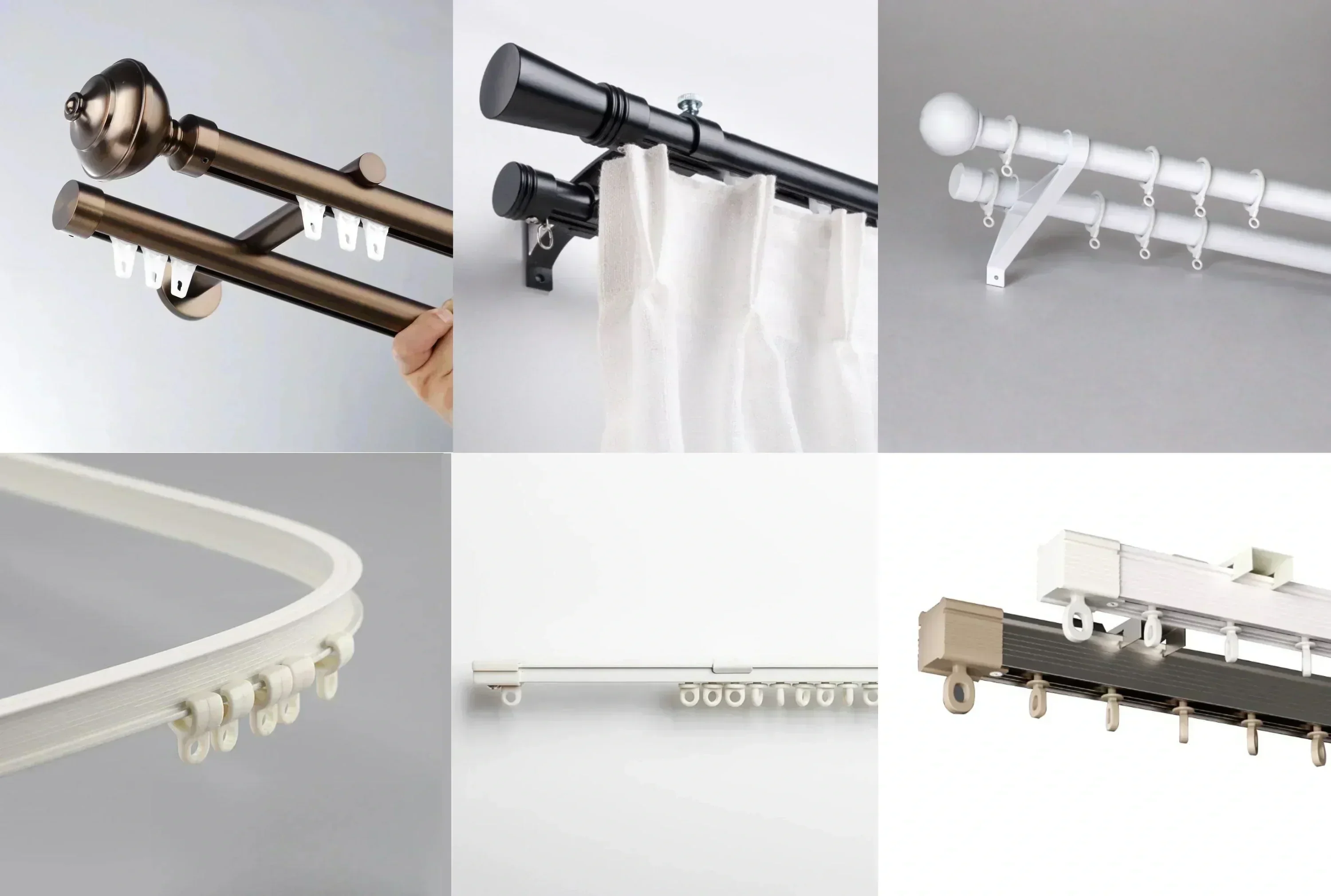
- Aluminum alloy construction
- Precision rollers
- Low-friction coatings
- Reinforced connectors
Curved tracks require especially smooth engineering to prevent vibration.
Power Supply Considerations
Electric curtain rods typically use one of three power methods:
Plug-In Power
Reliable and maintenance-free but requires nearby outlets.
Battery Power
Cleaner installation but requires periodic charging.
Hardwired Systems
Best for new construction projects and seamless integration.
Silent performance depends on stable voltage delivery, making consistent power sources important.
Installation Quality and Noise Performance
Improper installation can double perceived motor noise.
Common mistakes include:
- Loose mounting brackets
- Uneven alignment
- Insufficient wall support
- Incorrect track leveling
Professional installation ensures optimal sound dampening and smooth movement.
Smart Home Ecosystem Matching Strategy
Before buying, evaluate your existing ecosystem:
- Which voice assistant do you use?
- Do you already have a smart hub?
- Which protocol dominates your devices?
- Do you prefer app control or automation scenes?
Choosing compatibility first prevents expensive replacements later.
The Importance of Software Updates
Smart devices are partly software products.
Reliable brands provide:
- Firmware updates
- Security patches
- Expanded compatibility
- Bug fixes
Motors without update support may lose integration over time as ecosystems evolve.
Safety Features Worth Considering
Modern electric curtain rods often include safety technologies such as:
- Obstacle detection
- Manual override
- Overload protection
- Child-safe operation modes
These features improve reliability and reduce mechanical wear.
Energy Efficiency Benefits
Automated curtains help regulate indoor climate naturally.
Benefits include:
- Reduced heating costs in winter
- Lower cooling demand in summer
- Optimized daylight usage
Automation turns curtains into passive energy-management tools.
Real-Life Use Cases
Bedrooms
Silent motors prevent sleep disturbance during scheduled routines.
Living Rooms
Integration with entertainment scenes enhances ambiance.
Home Offices
Automatic glare control improves screen visibility.
Large Windows
Motorized systems eliminate difficult manual operation.
Common Buying Mistakes to Avoid
- Choosing based solely on price
- Ignoring protocol compatibility
- Underestimating curtain weight
- Overlooking installation requirements
- Assuming all “smart” devices work together
Understanding system logic prevents these pitfalls.
Future Trends in Electric Curtain Automation
Technology continues advancing toward deeper integration.
Emerging developments include:
- AI-based light optimization
- Predictive automation learning habits
- Ultra-low-noise motor engineering
- Matter protocol adoption for universal compatibility
The focus is shifting from remote control toward autonomous environmental adjustment.
How to Evaluate a System Before Purchase
Ask practical questions:
- Is motor noise specified in decibels?
- Which protocols are supported?
- Does it require a hub?
- Can it operate locally?
- Are firmware updates provided?
Clear answers indicate mature product design.
The Balance Between Technology and Comfort
The best electric curtain rods disappear into daily life.
You should notice:
- natural lighting changes
- improved comfort
- effortless control
But you should not notice noise, delays, or complicated apps.
Technology succeeds when it becomes invisible.
Final Thoughts: Smart Matching Creates Smart Living
Electric curtain rods represent more than automation gadgets — they are interfaces between architecture, comfort, and intelligent living.
Choosing the right system means understanding that:
- Silence comes from engineering, not marketing claims.
- Compatibility depends on communication protocols.
- Automation works best when ecosystems align.
- Convenience emerges from thoughtful integration.
When silent motors and smart home systems are properly matched, curtains no longer feel like household objects.
They become responsive elements of your living environment — adjusting light, privacy, and atmosphere automatically, quietly, and intelligently.
And that is where true smart living begins.

Related Products