How Proper Care Can Help Your Custom Curtains Last Another 10 Years: A Seasoned Homemaker’s Practical Secrets

Mar 18 2026
Custom curtains are more than decorative fabric panels. They frame your windows, control light, protect privacy, improve insulation, and shape the entire atmosphere of a room. Unlike ready-made options, custom curtains are carefully chosen to match specific spaces, colors, and lifestyles — which also means replacing them can be expensive.
Yet many homeowners unknowingly shorten the life of their curtains through everyday habits: improper cleaning, sun damage, moisture exposure, or simple neglect.
The good news? With the right maintenance routine, high-quality custom curtains can easily last a decade or longer while still looking fresh and elegant.
In this detailed guide inspired by experienced homemakers’ real-life practices, you’ll learn how to care for curtains properly, prevent aging before it starts, and keep your investment looking beautiful year after year.

Why Custom Curtains Deserve Special Care
Custom curtains differ from mass-produced panels in several ways:
Higher-quality fabrics
Tailored measurements
Structured pleats or linings
Specialized stitching
Often layered designs
These features improve appearance and performance but also require gentler maintenance methods.
Unlike furniture that shows wear gradually, curtain damage often appears suddenly — fading, sagging, or fabric weakening may only become noticeable after irreversible deterioration has already occurred.
Preventive care is therefore far more effective than repair.
The Three Biggest Enemies of Curtains
After years of household experience, many seasoned homemakers agree that curtain aging usually comes from three sources.
1. Sunlight Exposure
Ultraviolet rays slowly break down textile fibers, causing:
Color fading
Fabric brittleness
Weak seams
South- and west-facing windows experience the strongest exposure.
2. Dust Accumulation
Curtains act like large air filters, trapping:
Dust particles
Pet dander
Cooking oils
Outdoor pollutants
Over time, buildup dulls fabric texture and causes discoloration.
3. Moisture and Humidity
Bathrooms, kitchens, and humid climates encourage:
Mold growth
Odor retention
Fabric deformation
Understanding these threats allows you to prevent damage before it begins.
The Golden Rule: Maintenance Beats Deep Cleaning
A common mistake is waiting until curtains look dirty before cleaning them.
Professional textile care follows a different philosophy:
Light, regular maintenance prevents heavy wear.
Frequent gentle care reduces the need for aggressive washing that weakens fibers.
Weekly Care Habits That Make a Huge Difference
Experienced homemakers often follow simple weekly routines.
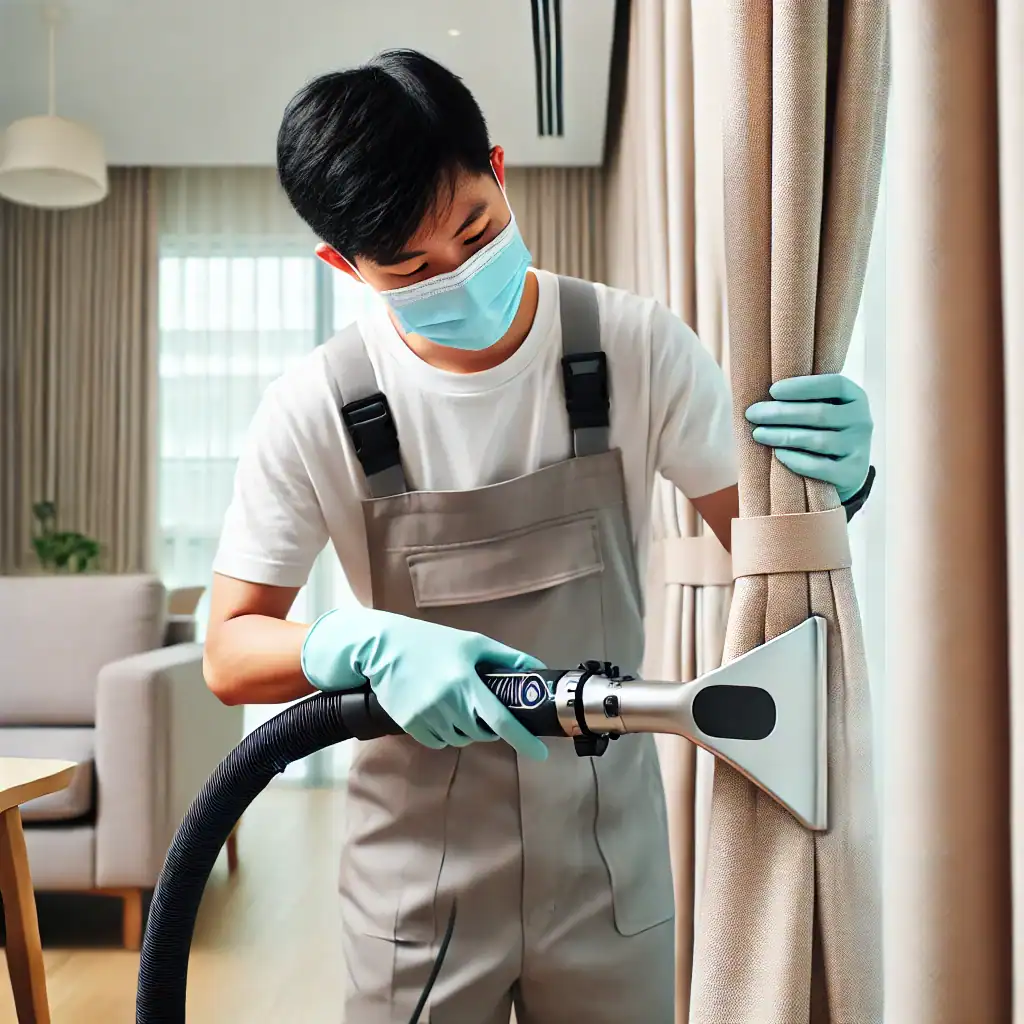
Gentle Dust Removal
Use one of these methods:
Upholstery vacuum attachment on low suction
Soft brush sweeping downward
Fabric-safe lint roller
Always work from top to bottom to avoid redistributing dust.
Shake and Air
Open windows occasionally to allow airflow through curtains, reducing trapped odors and moisture.
Monthly Curtain Reset Routine
Once a month, perform a slightly deeper refresh.
Fully extend curtains.
Vacuum pleats and folds carefully.
Inspect hooks and rings.
Check hems for dust buildup.
Rotate panels if sunlight exposure is uneven.
Rotating panels helps prevent one side from fading faster than the other.
Understanding Fabric Types Before Cleaning
Different materials require different care strategies.
Cotton Curtains
Breathable and natural
May shrink with hot washing
Prefer gentle cycles or professional cleaning
Linen Curtains
Elegant but delicate
Wrinkle easily
Benefit from steaming rather than washing
Polyester Blends
Durable and low-maintenance
Usually machine washable
Resistant to wrinkles
Velvet or Heavy Drapes
Require minimal washing
Best maintained through vacuuming and professional cleaning
Knowing your fabric prevents accidental damage.
How Often Should Curtains Be Washed?
Contrary to popular belief, frequent washing shortens curtain life.
General guidelines:
Living room: every 6–12 months
Bedroom: once per year
Kitchen curtains: every 3–6 months
Allergy-sensitive homes: every 4–6 months
Spot cleaning between washes is usually sufficient.
The Safest Way to Wash Curtains at Home
If fabric permits machine washing, follow this homemaker-approved method.
Step 1: Remove Hardware
Take off hooks, rings, and weights to avoid tearing.
Step 2: Shake Outdoors
Remove loose dust before washing.
Step 3: Use Cold Water
Hot water weakens fibers and causes shrinkage.
Step 4: Choose Gentle Detergent
Avoid bleach or strong fragrances.
Step 5: Select Delicate Cycle
Low agitation protects stitching.
Step 6: Avoid Overloading
Curtains need space to move freely.
Drying Curtains Without Damage
Drying mistakes ruin more curtains than washing does.
Best practices:
Air dry whenever possible
Hang slightly damp curtains back on rods
Allow gravity to remove wrinkles naturally
Avoid high heat dryers unless fabric instructions clearly allow it.
The Homemaker’s Secret Weapon: Steam Care
Steaming refreshes curtains without full washing.
Benefits include:
Removing wrinkles
Killing odor-causing bacteria
Reviving fabric texture
Reducing allergens
Use vertical steaming while curtains hang for best results.
Preventing Sun Damage Without Blocking Light
Sunlight protection doesn’t require dark rooms.
Try these strategies:
Install sheer inner layers
Use UV window film
Rotate curtain positions seasonally
Close curtains during peak afternoon sun
Linings significantly extend curtain lifespan.
Managing Pet Hair and Household Odors
Homes with pets need extra attention.
Helpful tips:
Vacuum weekly
Use washable tiebacks
Keep pet beds away from curtain edges
Brush pets regularly to reduce airborne hair
Odor prevention is easier than odor removal.
Kitchen Curtain Survival Tips
Kitchen curtains face grease and moisture daily.
Protect them by:
Using shorter café-style panels near cooking areas
Increasing ventilation
Spot cleaning oil splashes immediately
Washing more frequently with mild detergent
Cooking residue hardens fabric if ignored.

Hardware Maintenance: The Overlooked Factor
Curtain longevity also depends on rods and hardware.
Check periodically for:
Rusting rings
Bent hooks
Loose brackets
Rough edges causing fabric tears
Smooth movement reduces stress on seams.
Storage Techniques for Seasonal Curtains
If you rotate curtains seasonally, proper storage matters.
Follow these steps:
Clean before storing.
Fold loosely or roll instead of compressing.
Use breathable cotton storage bags.
Avoid plastic containers that trap moisture.
Store in cool, dry areas.
Proper storage prevents yellowing and mildew.
Quick Fixes That Extend Curtain Life Instantly
Small repairs prevent large replacements.
Reinforce loose hems early
Replace worn hooks immediately
Trim loose threads carefully
Spot clean stains before they set
Ten-minute fixes can add years of usability.
Signs Your Curtains Need Attention
Watch for early warning signals:
Uneven fading
Fabric thinning near folds
Persistent odors
Difficulty sliding along rod
Dust returning quickly after cleaning
Early action prevents permanent damage.
Creating a Seasonal Curtain Care Calendar
Experienced homemakers often follow seasonal rhythms.
Spring
Deep clean and air out fabrics.
Summer
Protect against sun exposure.
Fall
Inspect hardware and repair seams.
Winter
Steam refresh and remove dust buildup.
This routine spreads maintenance evenly across the year.
Why Custom Curtains Age Gracefully With Care
High-quality textiles are designed for durability. What determines lifespan is not daily use but accumulated stress from neglect.
Gentle maintenance preserves:
Fabric strength
Color richness
Draping structure
Overall elegance
Curtains cared for consistently often look nearly new even after many years.
The Psychological Benefit of Well-Maintained Curtains
Clean, structured curtains subtly influence how a home feels.
They create:
Softer lighting
Visual calmness
Improved air freshness
A sense of order
Many homemakers say refreshed curtains make an entire room feel renovated without redecorating.
Frequently Asked Questions
Can I Iron Curtains?
Yes, on low heat if fabric allows, but steaming is safer.
Do Curtains Really Collect Dust?
Yes — they function like vertical filters.
Is Dry Cleaning Always Necessary?
Only for delicate or labeled fabrics.
Why Do Curtain Edges Fade Faster?
Edges receive the most sunlight exposure.
The 10-Year Curtain Longevity Checklist
Follow these habits consistently:
Weekly dust removal
Monthly inspection
Annual gentle washing
Sunlight protection
Proper drying
Hardware maintenance
Seasonal rotation
Together, these steps dramatically extend curtain lifespan.
Final Thoughts
Custom curtains are an investment in comfort, design, and everyday living. While replacing them every few years may seem inevitable, experienced homemakers know a different truth: thoughtful care keeps curtains beautiful far longer than expected.
By combining gentle cleaning routines, sunlight protection, proper storage, and small preventative repairs, your custom curtains can easily serve your home for another decade — maintaining their elegance, structure, and warmth along the way.
Sometimes the secret to a timeless home isn’t buying new things, but learning how to care for what you already love.
Related Products