Installing Radiant Floor Heating in a Finished Home: Do You Need to Adjust Your Curtain Length?

Mar 10 2026
Upgrading a finished or fully decorated home with radiant floor heating is becoming increasingly popular among homeowners seeking greater comfort, energy efficiency, and modern living standards. Radiant heating systems offer gentle, evenly distributed warmth that eliminates cold spots and improves indoor comfort during colder seasons.
However, many homeowners discover an unexpected design question during renovation:
After installing floor heating, should curtain length be adjusted?
At first glance, curtains and heating systems seem unrelated. But once flooring height changes, heat distribution patterns shift, and airflow dynamics evolve, window treatments suddenly become part of the thermal system of the room.
Curtains that once fit perfectly may now drag, trap heat, reduce heating efficiency, or even create long-term maintenance issues.
This article explores the issue from architectural, interior design, and building science perspectives — helping you decide whether curtain adjustments are necessary and how to make the right choice for both comfort and aesthetics.
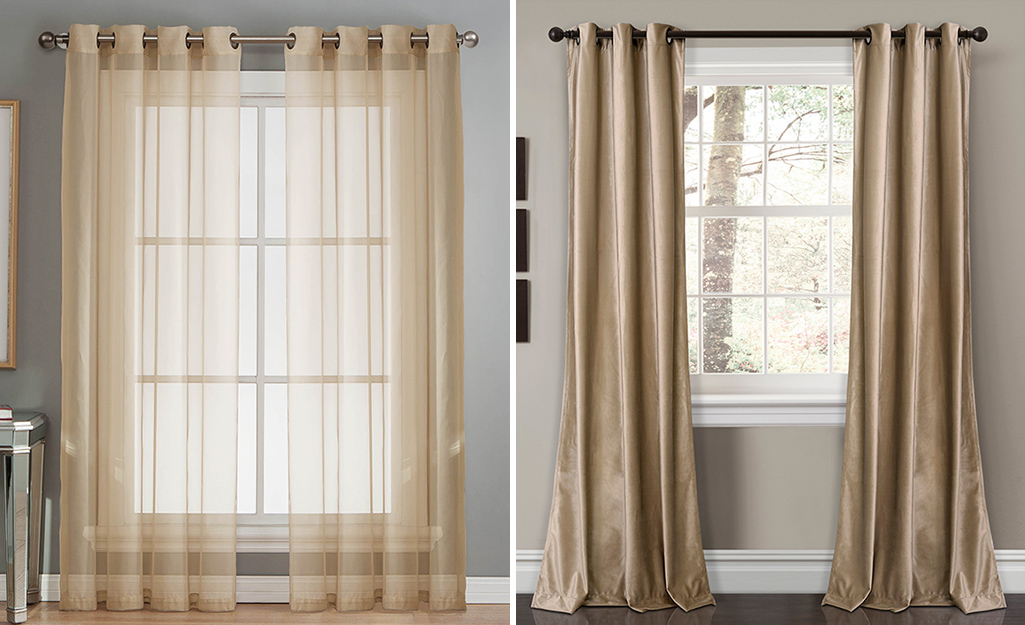
Why Radiant Floor Heating Changes More Than Just Temperature
Radiant floor heating works differently from traditional radiators or forced-air systems.
Instead of heating air first, the system warms the floor surface, which then radiates heat upward into the room.
This creates several environmental changes:
Warmer lower air layers
Reduced air circulation turbulence
More stable humidity distribution
Different convection patterns near windows
Because curtains interact directly with floor-level air, their behavior changes significantly after installation.
The Most Overlooked Renovation Detail: Floor Height Increase
In finished homes, installing radiant heating almost always raises the floor height.
Typical height increases include:
Electric floor heating: 0.5–1.5 inches
Hydronic systems: 1.5–3 inches (or more)
Additional leveling layers or insulation
Even a one-inch change can affect curtain clearance dramatically.
Curtains previously hovering above the floor may now:
Touch the floor
Compress against heated surfaces
Lose their intended drape
This physical change alone often requires reconsideration.
Curtain Length Categories Explained
Interior designers typically classify curtain lengths into four styles:
Floating (½ inch above floor)
Kiss length (just touching floor)
Break length (slight fold)
Puddle length (extra fabric pooling)
Radiant heating impacts each style differently.
How Radiant Heat Interacts with Curtains
Understanding heat movement helps explain why curtain adjustments matter.
Radiant floors emit low-temperature, continuous heat upward. When long curtains block this pathway, several effects occur.
Heat Trapping
Floor-length curtains can trap warm air behind fabric layers, reducing heating efficiency.
Uneven Temperature Zones
Heat accumulates near windows instead of dispersing into the room.
Increased Energy Consumption
The system works harder to achieve target temperatures.
Fabric Stress
Continuous exposure to heat accelerates material aging.
When You Definitely Need to Adjust Curtain Length
Certain scenarios almost always require modification.
1. Curtains Now Drag on the Floor
Dragging fabric:
Collects dust faster
Blocks heat radiation
Causes uneven draping
Even small compression changes visual balance.
2. Heating Pipes Run Close to Windows
Hydronic systems often concentrate heating loops near exterior walls to counter cold air.
Long curtains covering these zones reduce performance significantly.
3. Lightweight Sheer Curtains
Sheers move easily with rising warm air and may cling to heated floors.
This creates:
Wrinkling
Static buildup
Heat exposure damage
4. Smart Temperature Control Rooms
Modern thermostats rely on accurate room temperature readings.
Curtains trapping heat near sensors can cause incorrect temperature regulation.
When Curtain Adjustment May NOT Be Necessary
Not every installation requires changes.
You may keep existing curtains if:
Floor height increase is minimal.
Curtains already float above the floor.
Heating output near windows is moderate.
Curtains are tied back most of the time.
Observation during early heating use helps determine real impact.
The Ideal Curtain Clearance After Floor Heating Installation
Interior designers and HVAC specialists often recommend:
0.5–1 inch clearance above heated floors.
This distance allows:
Efficient heat circulation
Cleaner appearance
Reduced fabric wear
Better airflow balance
The goal is cooperation between design and thermal performance.
Fabric Behavior Under Radiant Heat
Different curtain materials respond differently to constant low heat.
Natural Fabrics
Cotton and linen:
Breathable
Moderate heat resistance
May shrink slightly over time
Wool:
Excellent insulation
Handles heat well
Synthetic Fabrics
Polyester blends:
Durable
Heat-resistant
Maintain shape longer
However, extremely thin synthetics may warp under prolonged exposure.
Velvet and Heavy Drapes
Thick fabrics trap more heat.
While visually luxurious, they may reduce heating efficiency if touching the floor.
Energy Efficiency Considerations
Curtains influence heating performance more than many homeowners realize.
Properly adjusted curtains can:
Improve heat distribution
Reduce heat loss through windows
Lower energy consumption
Incorrect curtain length can unintentionally act as insulation blocking radiant output.
Window Zones: The Most Sensitive Thermal Area
Windows are responsible for significant heat exchange.
Radiant floor heating compensates by warming air near glazing surfaces.
Curtains that seal off this zone prevent the system from balancing temperature effectively.
Shortening curtains slightly often improves comfort near windows immediately.
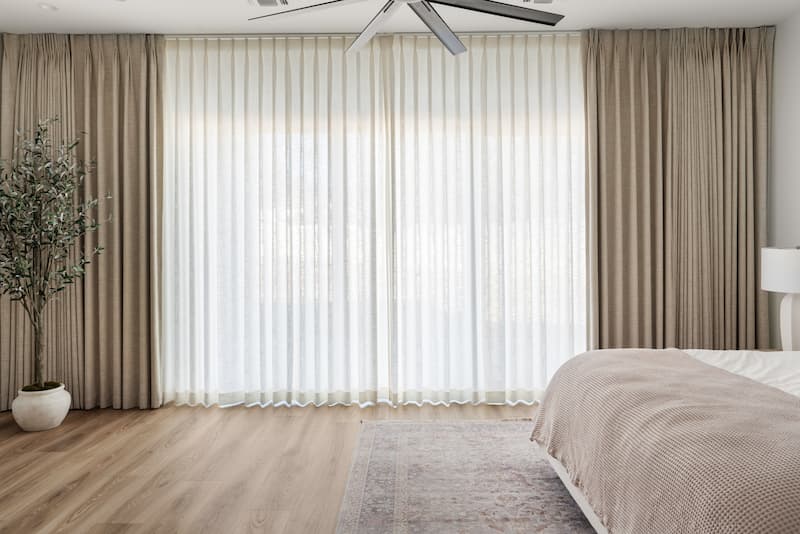
Aesthetic Concerns: Will Shorter Curtains Look Wrong?
Many homeowners worry that raising curtains compromises visual elegance.
In reality, modern interior trends favor cleaner curtain lines.
Floating curtains:
Look intentional
Enhance perceived ceiling height
Create lighter visual flow
Design adjustments often improve aesthetics rather than diminish them.
How to Measure Curtain Length After Renovation
Follow these steps:
Complete flooring installation first.
Turn heating system on for several days.
Allow materials to settle.
Measure from rod to heated floor surface.
Subtract desired clearance distance.
Avoid measuring immediately after installation because flooring expansion may occur.
Should You Hem Existing Curtains or Replace Them?
Both options are viable depending on fabric quality.
Hemming Works Best When:
Fabric is high quality.
Length excess is small.
Curtain style is simple.
Replacement Makes Sense When:
Curtains are worn.
Style no longer fits updated interior.
Thermal performance upgrade is desired.
Renovation provides a natural opportunity to refresh window treatments.
Smart Curtain Solutions for Radiant Heating Homes
Modern curtain systems integrate better with heated floors.
Consider:
Adjustable curtain tracks
Motorized curtains
Layered systems (sheer + blackout)
Magnetic tie-backs
These options allow flexibility throughout seasons.
Seasonal Curtain Positioning Strategies
Curtain behavior may change between seasons.
Winter:
Close curtains at night for insulation.
Maintain floor clearance.
Summer:
Increase airflow by opening fully.
Prevent heat buildup near glass.
Radiant heating encourages adaptive curtain use rather than static positioning.
Common Mistakes Homeowners Make
Mistake 1: Adjusting Curtains Before Floor Completion
Final height must include all finishing layers.
Mistake 2: Ignoring Heat Flow
Design decisions should consider airflow, not only appearance.
Mistake 3: Choosing Extra-Long Curtains for Luxury Effect
Puddled curtains conflict with radiant heating efficiency.
Mistake 4: Blocking Thermostats
Curtains covering sensors cause temperature inaccuracies.
Radiant Heating and Indoor Air Quality
Unlike forced air systems, radiant heating reduces dust circulation.
However, curtains touching floors can collect more particles due to warm airflow patterns.
Maintaining clearance helps preserve cleaner indoor environments.
Long-Term Maintenance Benefits of Proper Curtain Length
Correct adjustments provide advantages beyond heating performance:
Easier cleaning
Reduced fabric wear
Less discoloration
Improved durability
Small changes extend curtain lifespan significantly.
Designer Recommendations for Renovated Homes
Many designers now follow a simple principle:
Heating systems and soft furnishings must be planned together.
Instead of treating curtains as purely decorative, they are viewed as functional environmental elements.
This integrated thinking leads to better comfort and visual harmony.
Future Interior Trends Supporting Shorter Curtains
Contemporary homes increasingly favor:
Minimal floor contact textiles
Functional elegance
Energy-aware design
Clean architectural lines
Radiant heating accelerates these design preferences.
Quick Decision Checklist
Ask yourself:
Did floor height increase more than 1 inch?
Do curtains now touch heated surfaces?
Is heating uneven near windows?
Do curtains feel warmer than before?
If you answered yes to two or more, adjustment is likely beneficial.
Final Thoughts
Installing radiant floor heating in a finished home transforms more than just temperature — it reshapes how heat moves, how spaces feel, and how interior elements interact.
Curtains, often overlooked during renovation planning, play an important role in maintaining both visual balance and heating efficiency.
In many cases, adjusting curtain length after floor heating installation is not merely a cosmetic decision but a practical improvement that enhances comfort, energy performance, and long-term durability.
The goal is not shorter curtains for the sake of change, but better harmony between architecture, heating technology, and everyday living.
When curtains allow warmth to circulate freely while maintaining clean visual lines, the result is a home that feels naturally comfortable — exactly what radiant heating was designed to achieve.
Related Products