The Art of Draping: How to Maintain Perfect Curtain Pleats After Years of Use

Apr 20 2026
Curtains do far more than block light or provide privacy—they shape the entire mood of a room. A well-draped curtain with crisp, elegant pleats can instantly elevate a space, adding depth, texture, and a sense of refined design. Yet over time, even the most beautiful curtains can lose their structure. Pleats soften, fabric stretches, and the once-tailored look begins to sag.
The good news is that maintaining perfectly structured curtain pleats isn’t reserved for professional designers or luxury homes. With the right techniques, consistent care, and a bit of attention to detail, you can preserve—and even restore—the elegant drape of your curtains for years to come.
This comprehensive guide explores the science and artistry behind curtain pleats, why they lose their shape, and how to maintain that flawless, tailored appearance long after installation.
Why Curtain Pleats Matter More Than You Think
Pleats are not just decorative—they define how curtains hang, move, and interact with light.
Structure and Symmetry
Pleats create uniform folds that guide the fabric into consistent vertical lines. This symmetry enhances visual balance and makes a room feel more organized and intentional.
Light Control
Well-formed pleats allow curtains to open and close smoothly, ensuring even light distribution.
Perceived Quality
Crisp pleats signal craftsmanship and attention to detail, while sagging fabric can make even expensive curtains look worn.
Why Curtains Lose Their Pleats Over Time
Understanding the causes helps you prevent and correct them effectively.
Fabric Fatigue
Repeated opening and closing gradually relaxes the fibers, causing pleats to lose definition.
Gravity and Weight
Heavier fabrics naturally pull downward over time, stretching the folds.
Humidity and Temperature Changes
Moisture and heat can soften fibers, making pleats less structured.
Improper Cleaning
Washing or drying curtains incorrectly can distort their shape.
Poor Storage
Folding curtains instead of hanging them can create unwanted creases and disrupt pleats.
Choosing the Right Fabric for Long-Lasting Pleats
If you’re starting fresh or considering an upgrade, fabric choice plays a crucial role.
Fabrics That Hold Pleats Well
- Polyester blends
- Cotton-poly mixes
- Medium-weight linen blends
- Treated fabrics with memory retention
Fabrics That Require Extra Care
- Pure linen
- Silk
- Velvet
These materials can still look stunning but may need more maintenance to retain structure.
Step 1: Train Your Curtains Early
One of the most effective ways to maintain pleats is to “train” your curtains when they’re new.
What Is Curtain Training?
Curtain training involves guiding the fabric into its intended folds and securing it temporarily so the pleats set properly.
How to Do It
- Arrange the pleats evenly along the rod
- Use fabric ties or strips to loosely secure each fold
- Leave them tied for 1–2 weeks
This helps the fabric “remember” its shape, making long-term maintenance easier.
Step 2: Regularly Reset the Pleats
Even well-trained curtains need occasional adjustments.
Weekly or Biweekly Routine
- Run your hands down each pleat to realign folds
- Gently tug the fabric downward to remove slack
- Ensure spacing remains even
This simple habit prevents minor shifts from becoming major distortions.
Step 3: Use Proper Hanging Techniques
How your curtains are hung directly affects their drape.
Choose the Right Hardware
- Use sturdy rods that won’t sag
- Ensure brackets are evenly spaced
- Match rod strength to curtain weight
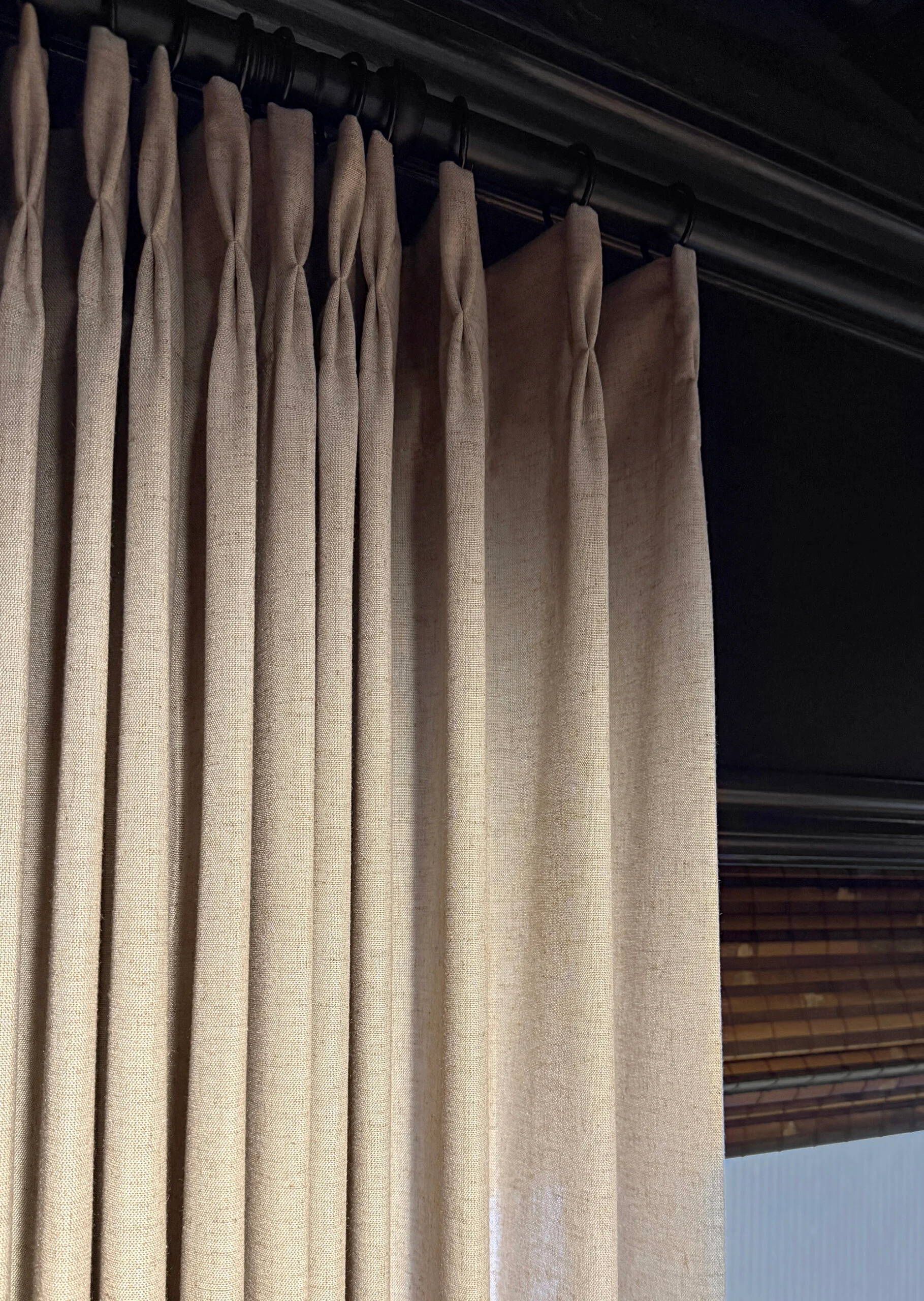
Hook Placement Matters
For pleated curtains:
- Use evenly spaced hooks
- Align them with the pleat structure
- Avoid uneven tension
Proper hanging ensures the weight is distributed evenly across the fabric.
Step 4: Steam Instead of Ironing
Heat and moisture can restore structure when used correctly.
Why Steaming Works
Steam relaxes fibers and allows them to be reshaped without flattening the pleats.
How to Steam Curtains
- Hang curtains fully extended
- Use a handheld steamer
- Move vertically along each pleat
- Gently guide folds into place
Avoid Common Mistakes
- Don’t press too hard
- Avoid over-saturating the fabric
- Always test on a small area first
Step 5: Clean Curtains the Right Way
Cleaning is essential, but improper methods can ruin pleats.
Check Care Labels First
Different fabrics require different cleaning methods.
General Cleaning Tips
- Vacuum regularly with a soft brush attachment
- Spot clean stains immediately
- Avoid frequent full washes unless necessary
Washing Guidelines
- Use gentle cycles
- Avoid high heat drying
- Rehang while slightly damp to help reset pleats
Step 6: Add Weights for Better Drape
Curtain weights can significantly improve how pleats fall.
Benefits of Weights
- Enhance vertical alignment
- Reduce billowing
- Maintain consistent folds
Where to Place Them
- Sew into the bottom hem
- Distribute evenly across the width
Weights are especially useful for lightweight fabrics.
Step 7: Control Environmental Factors
Your home environment plays a bigger role than you might expect.
Manage Humidity
- Use dehumidifiers in damp areas
- Avoid prolonged exposure to moisture
Limit Sun Exposure
- Rotate curtains periodically
- Use liners to protect fabric
Maintain Airflow
Good ventilation helps prevent fabric from becoming limp.
Step 8: Store Curtains Properly
If you rotate curtains seasonally, proper storage is crucial.
Best Practices
- Hang instead of folding when possible
- Use breathable garment bags
- Avoid overcrowding
If Folding Is Necessary
- Fold along pleat lines
- Avoid sharp creases
- Store in a dry, cool place
Step 9: Reinforce Pleats with Stitching (Advanced)
For long-term structure, consider reinforcing pleats.
Tack Stitching
- Small, hidden stitches at the top of each pleat
- Helps maintain shape without affecting appearance
Professional Alterations
If your curtains are high-value, a tailor can reinforce pleats for durability.
Step 10: Refresh Hardware and Accessories
Sometimes the issue isn’t the fabric—it’s the support system.
Check Rod Alignment
A sagging rod can distort pleats.
Replace Worn Rings or Hooks
Old hardware can cause uneven tension.
Upgrade When Necessary
Modern hardware options offer better support and smoother operation.
Common Mistakes to Avoid
Even with good intentions, certain habits can ruin your curtain’s drape.
Overwashing
Frequent washing weakens fibers and relaxes pleats.
Using High Heat
Heat can permanently distort fabric structure.
Ignoring Early Signs
Small shifts in pleats can quickly worsen if left uncorrected.
Uneven Adjustments
Fixing one area without addressing the rest leads to imbalance.
Long-Term Maintenance Routine
Consistency is the key to preserving perfect pleats.
Weekly
- Light adjustment and alignment
- Dust removal
Monthly
- Inspect hardware
- Steam if needed
Seasonally
- Deep clean
- Re-train pleats if necessary
The Psychology of Well-Draped Curtains
Perfect pleats do more than enhance aesthetics—they influence how a space feels.
Visual Calm
Symmetry and structure create a sense of order and relaxation.
Perceived Cleanliness
Neatly draped curtains make a room feel cleaner and more maintained.
Elevated Design
Well-kept curtains act as a subtle but powerful design statement.
When to Replace Instead of Restore
Sometimes, maintenance isn’t enough.
Signs It’s Time for New Curtains
- Fabric is permanently stretched
- Pleats won’t hold even after steaming
- Visible wear or fading
Investing in new curtains may be more practical than continuous repairs.
Final Thoughts: Mastering the Art of Draping
Maintaining perfect curtain pleats is both a science and an art. It requires understanding how fabric behaves, how environmental factors influence structure, and how small, consistent actions can preserve beauty over time.
The secret isn’t in complicated techniques—it’s in regular care, mindful handling, and attention to detail. By training your curtains early, maintaining them consistently, and addressing issues promptly, you can enjoy elegant, well-defined pleats for years.
In the end, beautifully draped curtains don’t just frame your windows—they frame your entire living experience.
Frequently Asked Questions
How often should I steam my curtains?
Only when needed—typically once every few months or after cleaning.
Can all fabrics hold pleats?
Most can, but some require more maintenance than others.
Do curtain weights really help?
Yes, especially for lightweight fabrics that struggle to maintain structure.
Is professional cleaning worth it?
For delicate or expensive curtains, professional cleaning can help preserve their shape and longevity.

Related Products