The Ultimate Guide: How Often Should You Actually Wash Your Custom Curtains?

Mar 13 2026
When you invest in custom drapery, you aren't just buying window coverings; you are investing in the "soft architecture" of your home. These fabrics control the light, soften the acoustics, and tie your interior design together.
However, one of the most common questions homeowners ask after installation is: "How often do I need to wash these?"
The answer isn't universal. In fact, washing your curtains too often can be just as damaging as never washing them at all. Over-laundering leads to fiber fatigue, color fading, and the loss of that crisp, "weighted" hang that defines high-end window treatments. To help you protect your investment, we’ve broken down the "DNA" of different fabrics and the precise maintenance schedules they require.
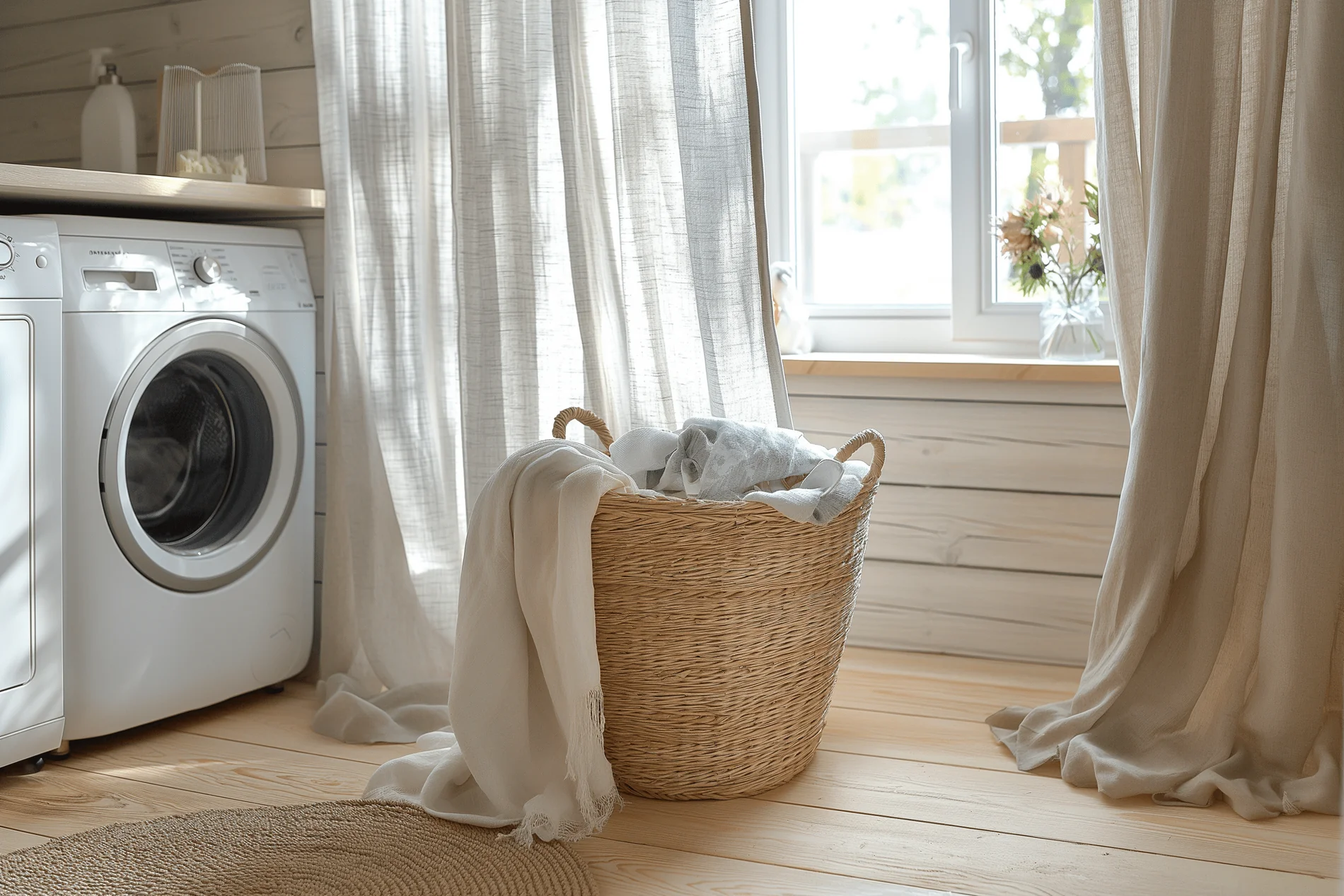
1. The "Invisible" Enemy: Why Curtains Get Dirty
Unlike your clothes or bedding, curtains don't usually deal with skin oils or spills. Their enemies are invisible:
Atmospheric Dust: Microscopic particles that settle into the weave, acting like sandpaper on the fibers.
UV Radiation: Sunlight weakens fibers (especially silk and linen), making them brittle over time.
Cooking Volatiles: In open-concept homes, microscopic grease particles from the kitchen travel through the air and "glue" dust to your fabric.
Humidity: Moisture can cause dust to turn into "mildew-lite," which leads to that musty "old house" smell.
2. The Fabric Cheat Sheet: Washing Frequencies
100% Linen and Linen Blends
The Vibe: Elegant, breathable, and prone to "relaxed" wrinkling.
Deep Clean Frequency: Every 3 to 5 years.
Why: Linen is a cellular fiber. Every time it gets wet, the fibers swell and then shrink. Frequent washing will eventually lead to "short curtains" that no longer graze the floor.
Pro Maintenance: Vacuum with a soft brush attachment once a month to prevent dust from settling into the porous weave.
Silk and Faux Silk
The Vibe: High-luster, delicate, and luxurious.
Deep Clean Frequency: Never (Unless there is a visible stain).
Why: Silk is highly sensitive to both water and dry-cleaning solvents. The more you clean silk, the faster it loses its natural "sericin" (the protein that gives it strength).
Pro Maintenance: Use a handheld steamer on low heat every six months to refresh the fibers and release odors without submerging the fabric.
Velvet (Natural and Synthetic)
The Vibe: Moody, heavy, and excellent for light blocking.
Deep Clean Frequency: Every 5 to 7 years.
Why: Velvet is all about the "pile." Agitating the fabric in a wash cycle—even a professional one—can cause "bruising" or permanent bald spots.
Pro Maintenance: Use a soft-bristled velvet brush to "comb" the fabric once a quarter. This keeps the pile standing upright and prevents dust from being crushed into the base.
Sheers and Voiles (Polyester)
The Vibe: Airy, light-filtering, and usually the most exposed to the window.
Deep Clean Frequency: Once a year.
Why: Because sheers act as the first line of defense against the window, they catch the most pollen and outdoor pollutants. Fortunately, high-quality polyester sheers are incredibly resilient.
Pro Maintenance: These can often handle a gentle, cold-water hand wash in the bathtub to keep them bright and white.
3. The "Three-Tier" Maintenance Strategy
Instead of waiting for your curtains to look gray before acting, professionals recommend a tiered approach to longevity.
Tier 1: Weekly (The "Dust Patrol")
Give your curtains a firm "shake" while they are still on the rod. This prevents dust from bonding with the fibers. If you have pets, use a lint roller on the bottom 12 inches of the panels where fur tends to accumulate.
Tier 2: Monthly (The Vacuum Ritual)
Use your vacuum's upholstery tool. Start from the top and work your way down, focusing on the deep folds of the pleats. This is where 80% of the dust hides. Eliminating this dust is the single best way to delay a professional cleaning.
Tier 3: The Multi-Year "Deep Refresh"
When the fabric begins to look "flat" or holds a stale scent despite vacuuming, it’s time for professional intervention. For custom drapes, on-site cleaning is always preferred over taking them down to a dry cleaner, as it eliminates the risk of shrinkage and "lost" pleats.

4. Environmental Factors That Change the Rules
Your home's specific environment might require you to double the frequency of your cleaning:
Smokers in the Home: Nicotine is a resin that yellows fabric and bonds aggressively to fibers.
Fireplaces: Even gas fireplaces release particulates that settle on textiles.
Coastal Living: Salt air is "hygroscopic"—it pulls moisture from the air into your curtains, which can lead to rapid fiber degradation.
Allergies: If anyone in the house suffers from severe dust or pollen allergies, sheers should be washed every 3 to 6 months.
5. The "Golden Rule" of Custom Drapes
If the label says "Dry Clean Only," believe it. Custom drapes often have "hidden" components—buckram in the headers, lead weights in the hems, and flannel interlining in the middle. These components all react differently to water. If you put a triple-layered custom drape in a washing machine, the different layers will shrink at different rates, resulting in a distorted, puckered mess that cannot be fixed.
Summary: Preservation over Restoration
The secret to beautiful curtains isn't a powerful detergent; it’s consistent, gentle maintenance. By vacuuming regularly and respecting the specific needs of your fabric type, you can extend the life of your window treatments by decades.
Remember: Your curtains are a "passive filter" for your home’s air. Keep the filter clean, and your home stays fresh.

Related Products