Three Mistakes That Can Ruin a Set of Custom Curtains — Are You Making Them Without Realizing?

Mar 16 2026
Introduction: When Beautiful Curtains Lose Their Beauty Too Soon
Custom curtains are often one of the most impactful investments in a home. They frame natural light, enhance interior design, improve privacy, and contribute to insulation and comfort. Unlike ready-made options, custom curtains are tailored precisely to window dimensions, fabric preferences, and lifestyle needs.
Yet many homeowners unknowingly shorten the lifespan of their curtains within months of installation — not because of poor quality, but because of everyday habits that slowly damage fabric, structure, and function.
If your curtains are fading unevenly, wrinkling permanently, sagging, or losing their elegant drape, the cause may not be time. It may be three common mistakes that happen in homes everywhere.
This guide explores the most damaging behaviors that ruin custom curtains, explains why they cause long-term harm, and shows how to protect your investment for years to come.
Why Custom Curtains Require Different Care Than Ready-Made Ones
Custom curtains are designed differently from mass-produced panels.
They often include:
Premium fabrics with natural fibers
Precise pleating structures
Weighted hems for balanced draping
Specialized linings
Exact measurements matched to window architecture
Because of this precision, small environmental or handling mistakes can create noticeable changes quickly.
Think of custom curtains less like décor accessories and more like tailored garments for your windows.

Mistake #1: Leaving Curtains Constantly Exposed to Direct Sunlight
The Silent Fabric Killer
Sunlight is the number one cause of curtain deterioration, especially in rooms with large windows or strong afternoon exposure.
Many homeowners assume curtains are meant to endure sunlight indefinitely. While they are designed to manage light, constant exposure without protection gradually destroys fabric fibers.
What UV Radiation Does to Curtain Fabric
Ultraviolet rays break down molecular bonds inside textiles.
Over time, this leads to:
Color fading
Fiber brittleness
Loss of softness
Uneven discoloration
Weakening seams
Even high-end fabrics cannot fully resist continuous UV exposure.
Natural materials such as linen, cotton, and silk are particularly vulnerable.
Why Damage Appears Uneven
Sunlight rarely hits curtains uniformly.
Common patterns include:
One panel fading faster than the other
Bottom sections remaining darker
Fold lines retaining original color
Window-edge bleaching
This uneven aging makes curtains look older than they actually are.
The Role of Window Orientation
South- and west-facing windows receive the most intense sunlight.
If curtains remain open daily without rotation or protection, damage accelerates dramatically during summer months.
How to Prevent Sun Damage
Simple changes dramatically extend fabric life:
Use sheer layers to diffuse sunlight
Close curtains during peak afternoon hours
Install UV-filtering window film
Rotate curtain panels periodically
Choose lined curtains for sun-heavy rooms
A lining acts as a protective shield, absorbing UV stress instead of the decorative fabric.
Mistake #2: Improper Cleaning and Washing Habits
The “Just Throw Them in the Washer” Problem
One of the fastest ways to ruin custom curtains is treating them like regular laundry.
Many homeowners remove panels and wash them using standard machine cycles, unaware that this can permanently alter structure and sizing.
Why Washing Causes Shrinkage
Curtain fabrics often undergo controlled finishing during manufacturing. Water exposure combined with agitation releases tension in fibers.
Results may include:
Length shrinkage
Distorted pleats
Twisted seams
Uneven hems
Even a one-inch shrink can destroy the tailored floor-length appearance.
Damage to Curtain Linings
Custom curtains frequently include layered construction:
Face fabric
Interlining
Blackout lining
Each layer reacts differently to water and heat. Machine washing can cause layers to contract at different rates, creating bubbling or puckering.
Detergent Residue Issues
Heavy detergents leave residue trapped in dense fabrics, leading to:
Stiff texture
Dust attraction
Color dullness
Reduced fabric breathability
Ironically, over-cleaning often makes curtains look dirtier faster.
The Correct Cleaning Approach
Instead of frequent washing:
Vacuum curtains using upholstery attachment monthly
Spot-clean stains immediately
Use professional dry cleaning when required
Air curtains periodically to remove odors
Most custom curtains need deep cleaning only once every 1–2 years.
Mistake #3: Pulling Curtains Incorrectly Every Day
Daily Handling Causes Structural Damage
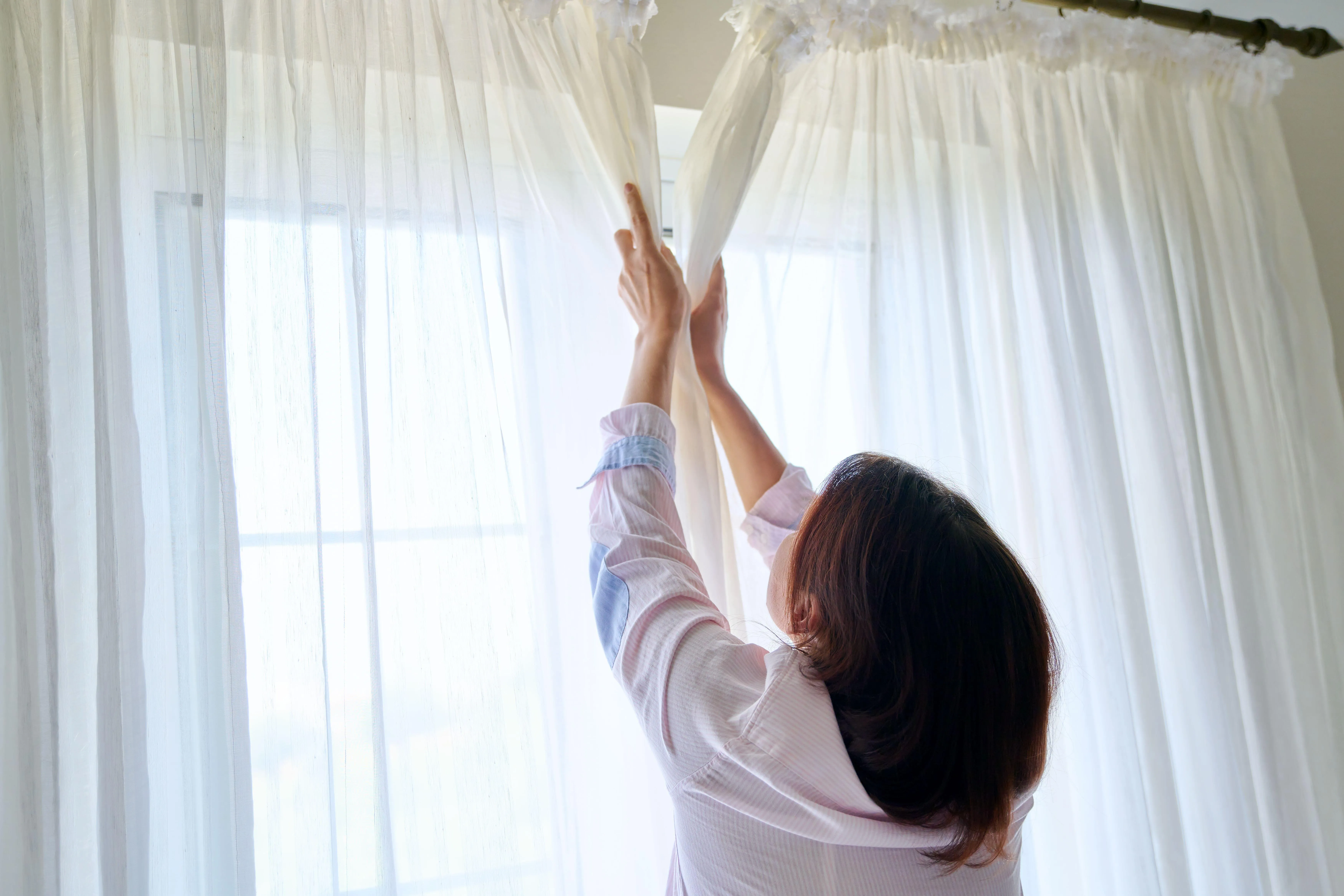
The way curtains are opened and closed matters more than most people realize.
Many homeowners pull fabric directly instead of using designated edges or wands.
Over time, this habit weakens stress points.
What Happens When You Pull the Fabric
Repeated pulling creates:
Stretched pleats
Torn stitching
Bent hooks or rings
Uneven gathering
Sagging header lines
The curtain loses its original tailored shape even though the fabric remains intact.
The Hidden Damage at the Top
Most structural strain occurs at the header — the area people rarely inspect.
Damage accumulates where:
Hooks connect to pleats
Grommets hold weight
Tracks carry movement pressure
Once distorted, curtains no longer hang symmetrically.
Correct Opening and Closing Technique
Always:
Pull from the leading edge or wand
Move curtains slowly and evenly
Support heavy panels with both hands
Avoid sudden tugs
These small habits preserve alignment.
Additional Behaviors That Accelerate Curtain Wear
While the three main mistakes cause the most damage, several secondary habits also reduce lifespan.
Leaving Windows Open During Windy Conditions
Wind causes repeated whipping motion that stresses seams and hems.
Allowing Curtains to Drag on the Floor
Excess contact collects dust and moisture, weakening fibers.
Installing Incorrect Rod Support
Long spans without center brackets cause sagging and uneven weight distribution.
Ignoring Humidity Levels
Bathrooms and kitchens expose curtains to moisture, leading to mildew or fabric distortion if ventilation is poor.
Early Warning Signs Your Curtains Are Being Damaged
Watch for subtle changes:
Fading near window edges
Curtains no longer closing smoothly
Wrinkles that do not relax
Panels appearing uneven in length
Increased dust accumulation
Early intervention can prevent irreversible damage.
How Long Custom Curtains Should Last
With proper care, quality custom curtains typically last:
7–10 years in moderate sunlight
5–7 years in high-sun environments
Over 10 years in shaded interiors
Premature aging usually results from environmental or handling issues rather than fabric quality.
Creating a Curtain Care Routine
Weekly
Adjust curtain position
Shake out dust gently
Monthly
Vacuum lightly
Inspect hooks and tracks
Seasonally
Rotate panels
Check sun exposure patterns
Annually
Professional inspection or cleaning if needed
Consistency matters more than intensive maintenance.
Why Protecting Curtains Improves the Entire Room
Curtains influence more than appearance.
Well-maintained curtains:
Enhance light control
Improve insulation
Reduce glare
Support energy efficiency
Maintain interior color harmony
Damaged curtains affect the perceived quality of the entire space.
The Cost of Replacement vs. Prevention
Custom curtains often represent a significant investment due to fabric quality, craftsmanship, and installation.
Replacing them prematurely can cost far more than implementing simple care habits.
Preventive behavior requires minutes per week but adds years to curtain lifespan.
The Psychology Behind Everyday Damage
Most curtain damage happens unintentionally because actions feel harmless:
Leaving curtains open for natural light
Cleaning enthusiastically
Pulling quickly when in a hurry
These habits seem minor individually but accumulate into long-term wear.
Understanding cause and effect transforms how people interact with their home environment.
Smart Upgrades That Increase Curtain Longevity
Consider adding:
Sheer inner layers
Motorized tracks to reduce handling
UV-protective window treatments
Quality curtain rods with smooth gliding systems
Reducing friction and exposure dramatically improves durability.
When Repair Is Still Possible
If damage appears early, solutions may include:
Replacing lining only
Re-sewing pleats
Adjusting hem length
Reinforcing headers
Consulting a professional early often saves the entire curtain set.
Conclusion: Small Habits Decide Curtain Lifespan
Custom curtains are designed to elevate a space with elegance, comfort, and precision. However, three surprisingly common behaviors can silently destroy them:
Constant direct sunlight exposure
Improper washing and cleaning methods
Pulling curtains incorrectly during daily use
The encouraging truth is that all three mistakes are easily preventable.
By managing sunlight, cleaning gently, and handling curtains correctly, homeowners can preserve fabric beauty, maintain structure, and enjoy their custom window treatments for many years.
If your curtains still look new today, consider this the perfect moment to adjust your habits. Protecting them now ensures they continue shaping your home’s atmosphere long into the future.
Sometimes, preserving luxury is not about doing more — it is about avoiding the few mistakes that matter most.
Related Products