How Far Should Curtains Hang Above the Floor? The Ultimate Installation Measurement Guide

Mar 04 2026
Introduction: Why Curtain Length Matters More Than You Think
Curtains do far more than block light or provide privacy. They shape how a room feels, influence perceived ceiling height, frame windows architecturally, and quietly determine whether a space looks professionally designed or accidentally unfinished.
Among all curtain decisions — fabric, color, fullness, or hardware — one measurement causes the most confusion:
How far should curtains hang from the floor?
Some homeowners prefer curtains barely touching the ground. Others love dramatic pooling fabric. Still others aim for a clean floating look that works well in modern interiors. The challenge is that there is no single universal answer. The “right” distance depends on lifestyle, room function, fabric type, cleaning needs, and design goals.
This comprehensive guide explains everything you need to know about curtain height and floor clearance, including professional standards, measurement formulas, common mistakes, and room-by-room recommendations.
By the end, you’ll know exactly how to install curtains that look intentional, balanced, and perfectly scaled.
Understanding the Three Classic Curtain Length Styles
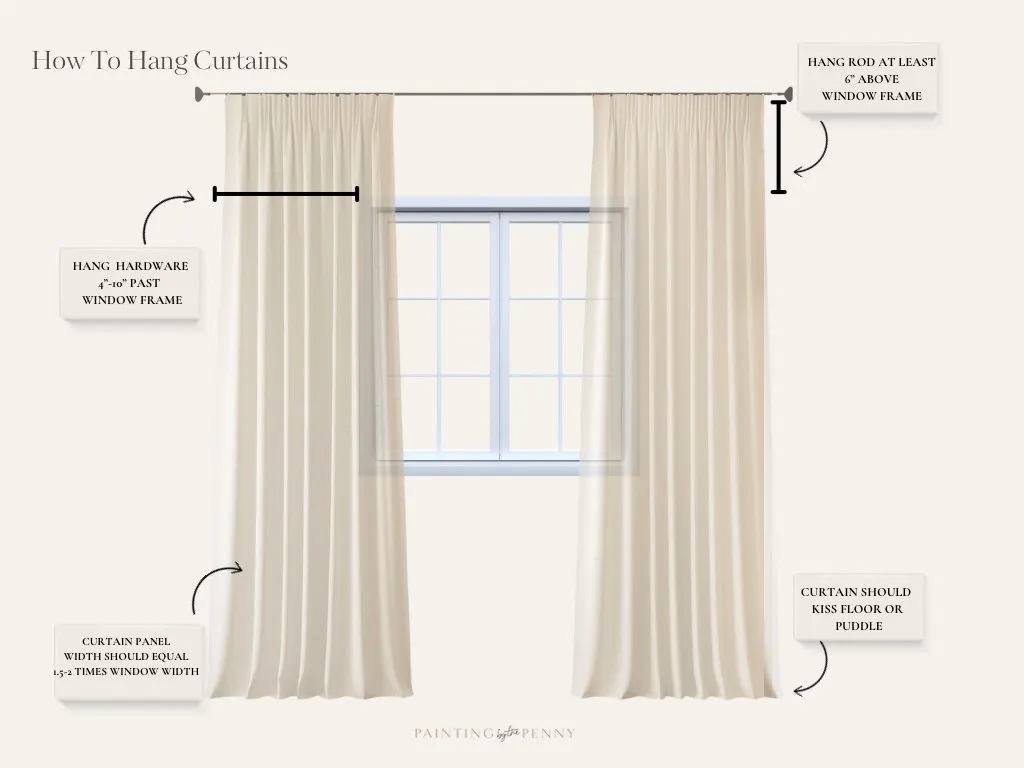
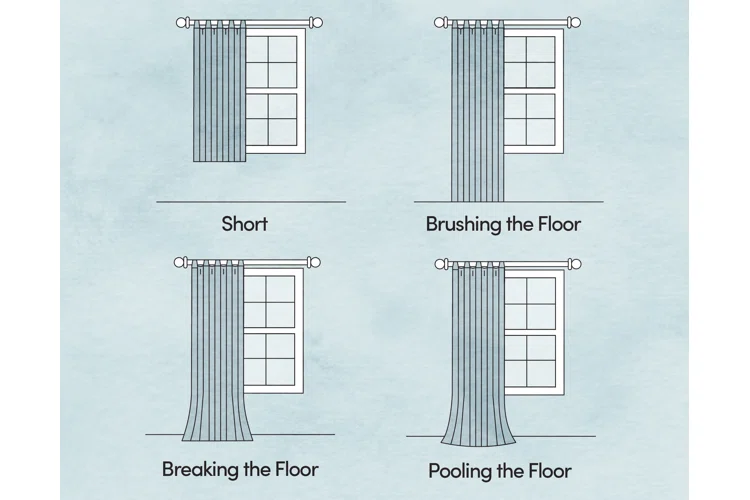
Interior designers generally categorize curtain lengths into three primary styles. Each creates a different visual effect and serves different practical needs.
1. Floating Curtains (Above the Floor)
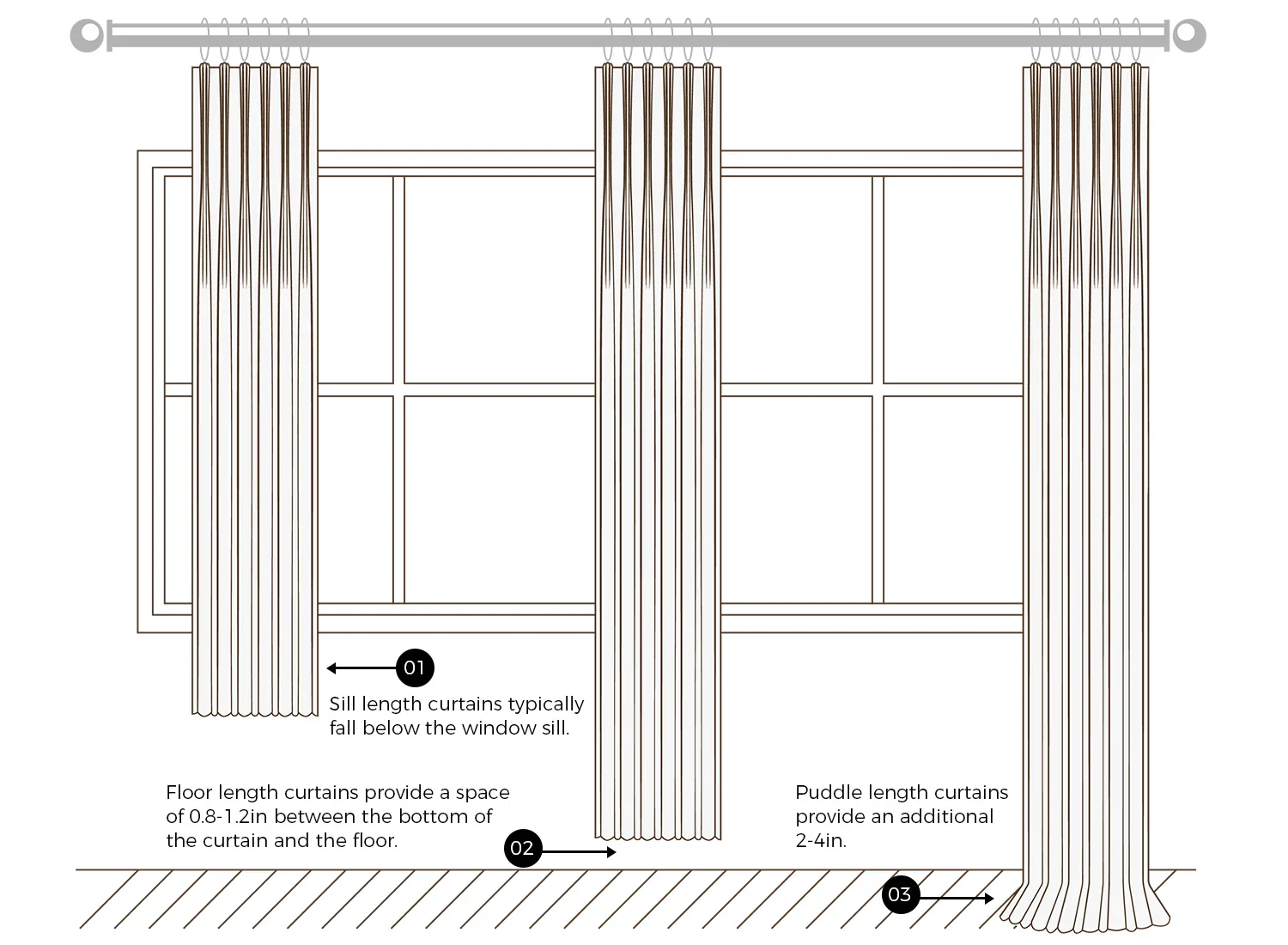
Floating curtains hang slightly above the floor rather than touching it.
Typical distance:
½ inch to 1 inch (about 1–2.5 cm)
This style creates a crisp, modern appearance and is highly practical for everyday living.
Best for:
High-traffic homes
Families with pets or children
Modern or minimalist interiors
Rooms requiring frequent cleaning
Floating curtains avoid dust accumulation and reduce fabric wear.
2. Kiss the Floor (Designer Standard)
Often called the “kiss” length, this is the most widely recommended installation style.
Typical distance:
Just touching the floor or within ¼ inch (about 0–0.6 cm)
Curtains appear tailored and elegant without excess fabric gathering.
Best for:
Living rooms
Bedrooms
Dining rooms
Transitional or classic interiors
This length balances aesthetics and practicality, making it the professional default.
3. Puddled Curtains (Luxury Style)
Puddled curtains extend beyond floor level, allowing fabric to pool intentionally.
Typical extra length:
2–6 inches (5–15 cm) or more
This style evokes softness and luxury but requires careful maintenance.
Best for:
Formal spaces
Decorative rooms
Low-traffic areas
Lightweight fabrics
Not ideal for homes with pets or robotic vacuums.
Why Curtain Height Changes How Big a Room Feels
Curtains influence spatial perception more than most people realize.
Vertical Illusion
When curtains are installed higher than the window frame, they draw the eye upward, making ceilings appear taller.
A common professional guideline:
Mount rods 4–8 inches above the window frame, or
Install rods halfway between window trim and ceiling.
In rooms with low ceilings, mounting closer to the ceiling dramatically improves proportions.
Width Expansion Effect
Curtains hung wider than the window frame make windows appear larger.
Recommended extension:
6–12 inches beyond each side of the window.
Combined with proper floor clearance, this creates balanced visual framing.
Standard Curtain Measurements in Inches and Centimeters
Below is a quick reference chart homeowners frequently use.
| Style | Distance From Floor | Metric Equivalent |
|---|---|---|
| Floating | ½–1 inch above | 1–2.5 cm |
| Kiss Length | 0–¼ inch | 0–0.6 cm |
| Trouser Break | 1–2 inches extra | 2.5–5 cm |
| Puddle | 2–6 inches extra | 5–15 cm |
These ranges provide flexibility while maintaining intentional design.
How to Measure Curtains Correctly (Step-by-Step)
Accurate measurement prevents costly mistakes.
Step 1: Install Curtain Rod First
Never measure from the window frame alone. Always measure from the installed rod position.
Rod placement determines final length.
Step 2: Measure From Rod to Floor
Use a metal measuring tape and measure vertically to the floor at multiple points.
Floors are rarely perfectly level.
Record:
Left side measurement
Center measurement
Right side measurement
Use the shortest measurement for floating curtains and the longest for puddled styles.
Step 3: Account for Hardware Type
Different header styles change final length:
Grommet curtains reduce visible drop.
Ring clips add extra height.
Rod pockets sit higher on the rod.
Always include hardware spacing in calculations.
Step 4: Decide Final Clearance
Choose your desired floor relationship before ordering curtains.
Adjust length accordingly.
The Most Common Curtain Measurement Mistakes
Measuring Before Installing the Rod
This leads to curtains that are too short or excessively long.
Choosing Curtains That Are Slightly Too Short
Short curtains visually shrink a room.
Designers often say:
Curtains should never look accidental.
When unsure, slightly longer is safer.
Ignoring Floor Variations
Older homes often have uneven flooring. Measuring only one side creates uneven hems.
Forgetting Fabric Shrinkage
Natural fabrics like cotton or linen may shrink after cleaning.
Add a small allowance when necessary.
Curtain Length Recommendations by Room
Living Room
Recommended style:
Kiss length or slight break
Reason:
Creates elegance without maintenance issues.
Bedroom
Recommended style:
Kiss length or soft puddle
Bedrooms benefit from relaxed softness and visual warmth.
Kitchen
Recommended style:
Floating curtains
Kitchens require practicality and easy cleaning.
Dining Room
Recommended style:
Kiss length
Maintains formality while avoiding floor contact during chair movement.
Home Office
Recommended style:
Floating or tailored length
Supports a clean, structured appearance.
Special Considerations for Homes With Pets
Cats and dogs significantly influence curtain decisions.
Why Floating Curtains Work Best
Pets may:
Sit against fabric
Carry dirt onto curtains
Pull or play with hanging material
Keeping curtains 1 inch above the floor reduces wear and cleaning frequency.
Fabric Choice Matters
Durable fabrics include:
Polyester blends
Performance weaves
Tightly woven cotton
Avoid delicate fabrics in pet-heavy environments.
Curtain Length and Cleaning Practicality
Longer curtains collect:
Dust
Pet hair
Moisture
Allergens
Floating curtains simplify vacuuming and robotic cleaning routines.
Puddled styles require regular fabric maintenance.
Ceiling Height and Curtain Strategy
Low Ceilings (Under 8 Feet)
Mount rods close to ceiling.
Use floor-length curtains.
Avoid short panels.
Creates vertical expansion.
Standard Ceilings (8–9 Feet)
Install rods 6–8 inches above window.
Kiss-length curtains work best.
High Ceilings (10+ Feet)
Consider extra-long panels.
Maintain proportional fullness.
Slight puddling adds elegance.
Curtain Fullness and Its Impact on Length Appearance
Curtain fullness refers to fabric width relative to window size.
Recommended fullness:
2× window width minimum
2.5× for luxury appearance
More fullness creates deeper folds, slightly shortening visual length — something to consider during measurement.
Modern vs Traditional Curtain Styling
Modern Interiors
Floating or precise kiss length
Clean lines
Minimal pooling
Traditional Interiors
Slight breaks or puddles
Heavier fabrics
Decorative softness
Length reinforces design language.
Fabric Weight and How It Affects Drop
Heavy fabrics stretch slightly over time.
Examples:
Velvet
Thick linen
Blackout panels
Light fabrics maintain original length more consistently.
Professionals sometimes allow an extra ¼–½ inch for heavy materials.
Custom Curtains vs Ready-Made Panels
Ready-Made Panels
Limited length options
May require hemming
Faster installation
Custom Curtains
Exact floor clearance
Tailored proportions
Ideal for unusual ceiling heights
Custom sizing often delivers the most refined result.
When Curtains Should NOT Touch the Floor
Avoid floor contact when:
Windows sit above radiators
Air vents exist below windows
High humidity environments are present
Frequent cleaning is required
Function should always guide design decisions.
Professional Designer Measurement Formula
A commonly used formula:
Curtain Length = Rod Height – Desired Floor Clearance
Example:
Rod height: 96 inches
Clearance: 1 inch
Curtain length = 95 inches.
Simple calculations prevent costly ordering errors.
Visual Balance: Curtains and Furniture Placement
Curtains should visually anchor the room.
Avoid:
Curtains stopping above furniture height
Panels ending mid-wall
Lengths competing with baseboards
Floor-length designs create continuity.
Layered Window Treatments
When combining sheers and blackout curtains:
Sheers often kiss the floor.
Outer panels may float slightly.
Layering adds depth while maintaining practicality.
Seasonal Adjustments
Some homeowners rotate curtains seasonally.
Winter:
Heavier fabrics
Slightly longer lengths
Summer:
Lightweight panels
Floating styles
Adjustments improve comfort and maintenance.
Curtain Hardware and Structural Support
Longer curtains weigh more.
Ensure rods are:
Properly anchored
Supported every 30–40 inches
Rated for fabric weight
Structural stability preserves curtain alignment over time.
Final Installation Checklist
Before finalizing installation, confirm:
Rod height installed correctly
Multiple floor measurements taken
Clearance style selected
Fabric behavior considered
Hardware compatibility verified
Small preparation steps produce professional results.
Conclusion: The Perfect Curtain Length Is Intentional
There is no single universal measurement for how far curtains should hang above the floor. Instead, the best length balances aesthetics, lifestyle, and practicality.
As a general guide:
1–2.5 cm above floor: clean and modern
Just touching: timeless and designer-approved
5–15 cm pooling: soft and luxurious
The difference between average and beautifully finished interiors often comes down to subtle proportions. Proper curtain length frames windows, enhances architecture, and quietly elevates an entire space.
When measured carefully and installed thoughtfully, curtains do more than cover windows — they complete the room.
Need Help with Your Custom Project?
Have questions about materials, sizing, or looking for a quick quote? Drop us a message and our experts will respond within 24 hours.
Chat on WhatsApp
+1 (304) 356-6765
Send us an Email
hello@incustom.com
Picked for You