Is Blackout Fabric with Black Coating Really Eco-Friendly? The Truth Behind High-Opacity Curtains

Feb 24 2026
Walk into any home improvement store in the United States and you’ll see rows of blackout curtains promising better sleep, lower energy bills, and total privacy. Many of them advertise “100% blackout,” “thermal insulated,” or “triple-layer protection.” But increasingly, environmentally conscious homeowners are asking a deeper question:
Are blackout curtains—especially those with black vinyl or rubberized backing—actually eco-friendly?
If you’re redesigning a bedroom, nursery, home theater, or apartment and care about sustainability, indoor air quality, and long-term durability, this guide will help you understand what’s really inside high-opacity blackout fabric. We’ll break down materials, manufacturing processes, chemical coatings, certifications, and greener alternatives—so you can make an informed decision without sacrificing performance.
What Is Blackout Fabric, Exactly?
Blackout fabric refers to textile materials engineered to block most or all incoming light. Unlike standard curtains, blackout curtains are designed to:
Block 90–100% of sunlight
Improve sleep quality
Increase privacy
Reduce outside noise
Enhance thermal insulation
Lower indoor cooling and heating demands
There are two primary types of high-opacity blackout curtains:
Coated Blackout Curtains – A woven fabric (usually polyester or cotton blend) with a black foam, rubber, or vinyl backing applied to the rear.
Woven Triple-Weave Blackout Curtains – Multiple tightly woven layers (often polyester) designed to block light without a visible backing.
The environmental impact depends heavily on which type you choose.
The Appeal of Black-Coated Blackout Curtains
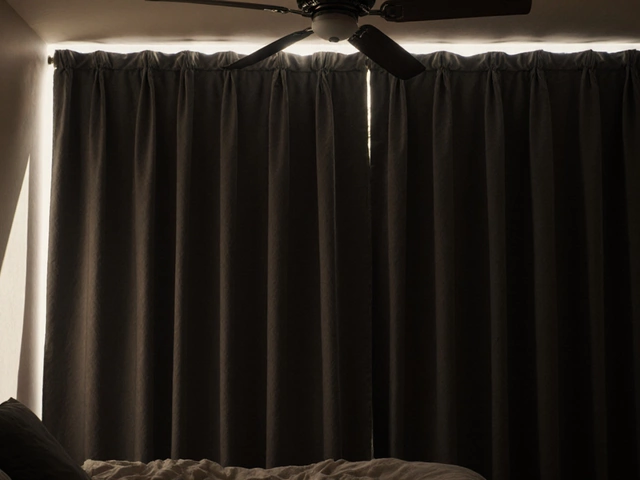
The classic “blackout curtain” most Americans picture features a soft decorative front and a thick black layer on the back. That black layer is typically made from:
Acrylic foam
PVC (polyvinyl chloride)
Rubberized compounds
Latex-based coatings
These coatings dramatically increase light-blocking capability. In fact, coated blackout curtains can block nearly 100% of visible light, making them popular in:
Nurseries
Bedrooms for shift workers
Media rooms
Hotel rooms
But the same materials that make them effective also raise environmental concerns.
Are Black-Coated Blackout Curtains Eco-Friendly?
The answer is nuanced. Let’s break it down.
1. The Environmental Cost of PVC and Synthetic Coatings
PVC (polyvinyl chloride) is commonly used in coated blackout curtains because it’s flexible, durable, and light-blocking. However, PVC production involves:
Fossil fuel extraction
Chlorine processing
Potential release of harmful byproducts
During manufacturing and disposal, PVC can generate dioxins—persistent environmental pollutants linked to ecological harm.
Additionally, some lower-quality blackout curtains may contain plasticizers (like phthalates) to keep coatings flexible. These additives have raised health and environmental concerns.
That doesn’t mean every coated curtain is hazardous—but it does mean not all blackout fabrics are created equal.
2. Off-Gassing and Indoor Air Quality
When you first open a new blackout curtain and notice a chemical smell, that’s called off-gassing. It happens when volatile organic compounds (VOCs) are released into the air.
In poorly ventilated bedrooms—especially children’s rooms—this can be concerning.
Higher-quality blackout curtains often advertise:
Low-VOC manufacturing
Formaldehyde-free materials
Non-toxic backing
If you’re sensitive to indoor air pollution, this factor matters as much as the environmental footprint of production.
3. Longevity vs. Sustainability
An important sustainability principle is durability.
A cheap blackout curtain that peels, cracks, or flakes within two years creates more waste than a durable curtain lasting ten years. Many rubber-backed curtains deteriorate over time, especially in humid climates.
When coatings break down, they:
Lose light-blocking effectiveness
Shed particles
Become landfill waste
In contrast, high-quality blackout fabrics—particularly woven triple-layer designs—often last longer and maintain performance.
Longevity reduces environmental impact over the product lifecycle.
What About Triple-Weave Blackout Curtains?
Triple-weave blackout curtains are constructed using multiple layers of tightly woven polyester yarns, often including a dense black thread layer in the middle.
They achieve high light-blocking capability without foam or vinyl coatings.
Environmental Advantages:
No PVC backing
Lower risk of flaking or peeling
Often machine washable
Longer usable lifespan
However, polyester is still petroleum-based. While it avoids certain coating chemicals, it is not inherently biodegradable.
The key difference lies in reduced chemical treatment and improved durability.
Energy Efficiency: The Overlooked Environmental Benefit
One of the strongest arguments in favor of blackout curtains—coated or woven—is their impact on home energy use.
In hot U.S. states like:
Arizona
Texas
Florida
Nevada
Blackout curtains can significantly reduce solar heat gain. By blocking sunlight, they lower indoor temperatures and reduce air conditioning demand.
Similarly, in cold northern states:
Minnesota
Wisconsin
New York
Maine
Thermal blackout curtains help retain heat during winter months.
Reducing heating and cooling usage can meaningfully lower household carbon emissions over time. In many homes, energy savings may offset the environmental cost of production.
Breaking Down the “Eco-Friendly” Label
If a blackout curtain is labeled “eco-friendly,” what does that really mean?
Here are key certifications and claims to look for:
OEKO-TEX Standard 100
This certification tests for harmful substances in textiles. Curtains with this label have been evaluated for safety in contact with human skin.
GREENGUARD Certification
Indicates low chemical emissions, supporting healthier indoor air quality.
Recycled Polyester Content
Some brands use recycled PET bottles to produce polyester fibers. This reduces virgin plastic production and diverts waste from landfills.
Organic Cotton Front Panels
Some blackout curtains use organic cotton facing with eco-conscious dye processes, paired with safer backing materials.
However, always verify claims. Marketing language like “green,” “natural,” or “non-toxic” can be vague without certification backing.
The Hidden Environmental Cost of Manufacturing
To truly understand sustainability, we must examine the supply chain.
Blackout curtains involve:
Fiber production
Dyeing and finishing
Backing application
Transportation
Packaging
Dyeing and coating processes are water- and energy-intensive. Factories that implement wastewater treatment, renewable energy, and chemical management programs significantly reduce environmental harm.
Consumers rarely see this side of production—but it plays a major role in ecological impact.
Are Natural Fiber Blackout Curtains Better?
Some companies offer blackout curtains made from:
Cotton
Linen
Hemp blends
These materials are biodegradable and renewable. However, natural fibers alone cannot block 100% of light without additional lining.
Often, they still require a synthetic backing to achieve full blackout performance.
So while the front fabric may be natural, the overall environmental impact depends on the backing material.
Comparing Blackout Curtain Types
Here’s a simplified comparison:
Rubber or PVC-Coated Blackout Curtains
Maximum light blocking
Potential VOC emissions
Risk of peeling
Lower upfront cost
Higher chemical footprint
Triple-Weave Polyester Blackout Curtains
High (not always 100%) light blocking
No foam backing
More durable
Lower off-gassing risk
Still petroleum-based
Natural Fiber + Lining
Renewable materials
Often partial blackout
May still contain synthetic layers
The most eco-conscious option balances performance, durability, and certified low emissions.
How to Choose a More Sustainable Blackout Curtain
If you care about environmental impact, consider the following checklist:
Look for low-VOC or GREENGUARD certification.
Choose triple-weave designs over PVC-coated backing when possible.
Prioritize recycled polyester content.
Select durable construction to extend lifespan.
Wash and air out curtains before installation to reduce initial off-gassing.
Sustainability isn’t about perfection—it’s about making informed trade-offs.
Disposal and End-of-Life Considerations
When blackout curtains reach the end of their life:
PVC-coated curtains are difficult to recycle.
Polyester curtains may be recyclable in specialized textile programs.
Natural fiber curtains may biodegrade more easily (if free from heavy coatings).
Repurposing old curtains into insulation layers, drop cloths, or moving blankets can reduce landfill waste.
The Bigger Picture: Is Blackout Fabric Truly Sustainable?
No textile product is impact-free. However, blackout curtains can contribute to sustainability in indirect ways:
Lowering home energy consumption
Improving sleep quality (which supports overall health)
Reducing need for artificial lighting during daytime naps
Enhancing home comfort without structural renovations
The environmental question is less about whether blackout curtains are perfect—and more about which type offers the best balance between function, safety, and longevity.
Final Verdict: Are Black-Coated Blackout Curtains Eco-Friendly?
They can be—but not automatically.
Lower-quality PVC-backed curtains with high chemical emissions and short lifespans have a higher environmental cost.
Higher-quality, certified, low-emission blackout curtains—especially durable triple-weave options—offer a more responsible choice while still delivering strong light-blocking performance.
If your goal is both darkness and sustainability, focus on:
Certified materials
Low chemical emissions
Long lifespan
Energy efficiency benefits
In the end, the most sustainable blackout curtain is one that performs well, lasts for years, and reduces your overall household energy footprint.
If you’d like, I can also write:
A buyer-focused version for e-commerce conversion
A manufacturer-focused industry analysis version
Or a data-driven deep dive into textile sustainability trends in North America
Just let me know which direction you’d like to go next.
Related Products