The Science of Silence and Shadow: A Deep Dive into the "Black Tech" of Physical Blackout Fabrics

Feb 24 2026
In the modern world, sleep has become the ultimate luxury. With the rise of 24/7 urbanization, "light pollution" is no longer just an astronomical term—it is a physiological hurdle. Whether it’s the piercing glare of a LED streetlamp, the intrusive glow of a neighbor’s security light, or the relentless early-morning sun, external light is the primary disruptor of the human circadian rhythm.
To combat this, the home textile industry has moved far beyond the simple "thick curtain." We have entered the era of Physical Blackout Technology.
If you’ve been shopping for window treatments recently, you’ve likely encountered the term "Physical Blackout" . But what does it actually mean? Is it just a marketing buzzword, or is there a genuine "Black Tech" evolution happening within the fibers of your curtains?
In this 4,000-word deep dive, we will peel back the layers of textile engineering to explore the physics of light absorption, the molecular structure of high-density weaving, and why physical blackout fabrics are the superior, eco-friendly choice for the modern American home.
1. Defining "Physical Blackout": More Than Just Darkness
To understand physical blackout, we must first understand its predecessor: Coated Blackout.
For decades, the only way to achieve 100% light blockage was to take a standard piece of fabric and spray it with a chemical layer—usually white foam, latex, or silver glue. While effective at blocking light, these "Coated" curtains came with significant downsides: they were stiff, they often had a chemical odor when heated by the sun, and the coating would eventually crack and peel after a few washes.
Physical Blackout is a radical departure from this. It is a "Black Tech" solution where the light-blocking properties are woven directly into the structure of the fabric itself. ### The Triple-Weave Architecture The core of physical blackout technology is the High-Density Triple Weave. Instead of a single layer of cloth, these fabrics consist of three distinct layers integrated into one:
The Aesthetic Front Layer: The high-quality colored or patterned yarn that faces your room.
The "Black Core" Layer: A middle layer of high-density black silk fibers. This is the "engine" of the fabric that traps photons.
The Protective Back Layer: A durable layer that faces the window, designed to resist UV degradation.
2. The Physics of the "Black Silk" Core
Why do physical blackout curtains work so well? It comes down to Photon Trapping.
Light is persistent. In standard fabrics, light waves find the microscopic gaps between the warp and weft of the yarn and "leak" through. In physical blackout fabrics, the middle layer consists of thousands of ultra-fine, carbon-infused black yarns.
Molecular Density and Light Absorption
When light hits the curtain, it passes through the first layer and immediately hits the black core. Because black surfaces absorb the highest percentage of the visible light spectrum, the energy of the photons is converted into a negligible amount of thermal energy.
By increasing the GSM (Grams per Square Meter)—the "Black Tech" metric for fabric density—manufacturers can now achieve a 95% to 99% shading rate without the use of a single drop of chemical glue.
3. Beyond the Dark: The "Hidden" Benefits of High-Density Weaving
While "shading" is in the name, physical blackout curtains are actually multi-functional environmental tools.
Thermal Insulation (The Energy Dividend)
In a typical American home, windows are the primary source of thermal loss in winter and heat gain in summer. The dense, triple-weave structure creates a "Dead Air Space" between the layers.
The Summer Effect: It reflects infrared radiation, keeping your AC from working overtime.
The Winter Effect: It acts as a thermal blanket, preventing the warmth of your heater from escaping through the cold glass.
Acoustic Dampening (Soundproofing)
Light isn't the only thing that travels in waves; sound does too. While no curtain is 100% "soundproof," the high-density fibers of physical blackout fabrics act as a Decibel Buffer. The irregular, porous surface of the weave scatters sound waves from traffic and sirens, reducing ambient noise by up to 30% to 40%.
4. Why Physical Blackout is the "Eco-Conscious" Choice
In 2026, the savvy consumer looks for products that are "Clean and Green." Physical blackout curtains have a massive advantage over coated alternatives in this department.
Because the shading is achieved through mechanical weaving rather than chemical application, these curtains do not emit the "new curtain smell" when hit by direct sunlight—making them the only safe choice for nurseries and children’s bedrooms.
5. How to Identify True "Physical Blackout" Fabrics
Not all "thick" curtains are physical blackout. If you are looking to invest in high-quality window treatments, use these three "Black Tech" tests:
The "Cell Phone Flashlight" Test: Hold your phone’s flashlight directly against the back of the fabric. If you see tiny points of light (the "starry sky" effect), the weave density is too low.
The "Scrape" Test: Gently try to peel the back of the fabric. If nothing flakes off, it is a physical weave. If you see a rubbery film, it’s a coating.
The Weight Check: A true high-shading physical blackout fabric should have a weight of at least 280g - 450g per square meter. Anything lighter will likely fail to block the 6:00 AM sun.
6. The Aesthetic Revolution: Colors and Drapes
A common myth is that blackout curtains must be dark colors. This is the beauty of the triple-weave "Black Tech."
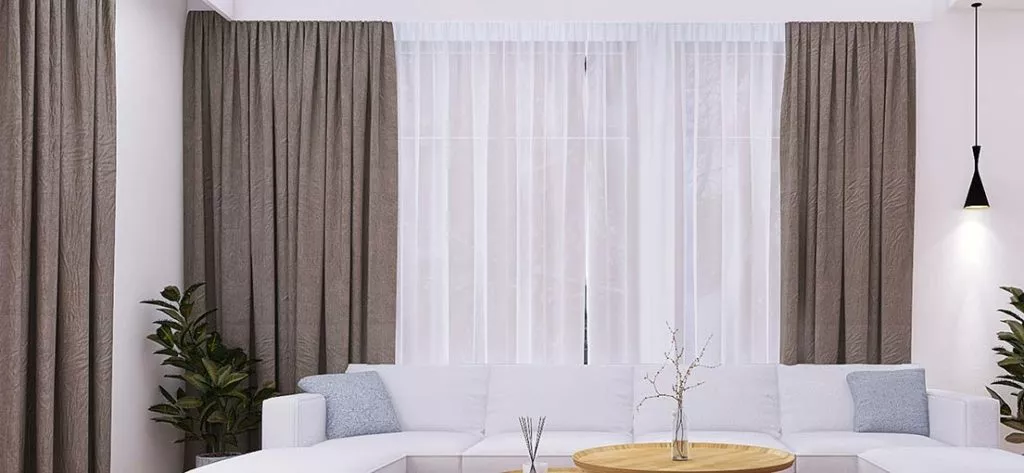
Because the black silk is hidden in the middle layer, the exterior can be any color—Cream, Sage Green, Powder Blue, or even White. The middle layer handles the darkness, while the outer layers handle the style. Furthermore, because there is no stiff coating, these fabrics possess a "Fluid Drape." They fall in elegant, architectural folds that enhance the interior design of a room rather than looking like a heavy tarp.
7. Maintenance: Keeping the "Black Tech" Working
One of the greatest financial benefits of physical blackout curtains is their ease of care.
Machine Washable: Unlike coated curtains (which must be hand-washed or dry-cleaned to avoid destroying the latex), physical blackout fabrics can usually be machine-washed on a gentle cycle.
Ironing: They are resistant to high temperatures. You can steam out the wrinkles without worrying about melting a chemical liner.
8. Conclusion: Investing in Your Circadian Health
Windows are the "eyes" of the home, but even a home needs to close its eyes to rest. Physical blackout technology represents the pinnacle of modern textile engineering—a perfect marriage of physics, health, and style.
By choosing a high-density, triple-weave fabric, you aren't just buying a piece of decor. You are investing in a Bio-Hacking Tool that regulates your temperature, silences your environment, and protects your sleep-wake cycle from the intrusion of the modern world.
Is your bedroom currently optimized for deep sleep?
Would you like me to help you calculate the Fullness Ratio (the amount of fabric needed) to ensure your curtains don't have "light leaks" at the edges?
Need Help with Your Custom Project?
Have questions about materials, sizing, or looking for a quick quote? Drop us a message and our experts will respond within 24 hours.
Chat on WhatsApp
+1 (304) 356-6765
Send us an Email
hello@incustom.com
Picked for You