
Tarps are among the most versatile and practical protective materials used across construction sites, outdoor camping trips, transportation industries, farming operations, emergency shelters, and home improvement projects. Despite their simple appearance, tarps vary dramatically in strength, durability, weather resistance, flexibility, and intended use.
Choosing the wrong tarp material can lead to torn covers, water damage, mold growth, UV deterioration, cargo loss, or expensive replacement costs. Yet many buyers purchase tarps based only on price or appearance without understanding how different materials actually perform under real-world conditions.
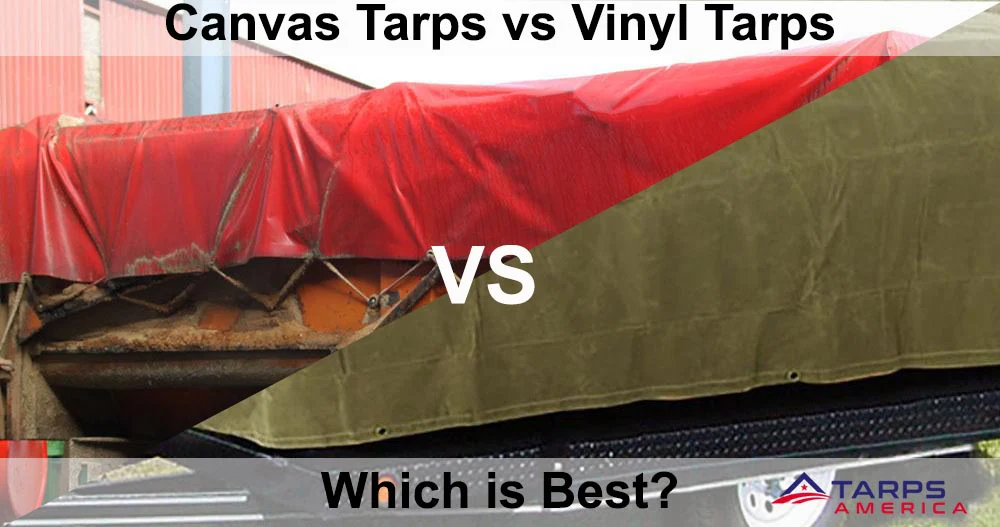
Three of the most widely used tarp materials are polyethylene, vinyl, and canvas. Each offers unique advantages and disadvantages depending on the environment, weather exposure, budget, and application.
This guide explores the science, construction, strengths, weaknesses, and best use cases for polyethylene tarps, vinyl tarps, and canvas tarps. Whether you need a heavy-duty truck tarp, waterproof camping shelter, industrial equipment cover, agricultural solution, or all-weather outdoor protection, understanding tarp materials will help you make a smarter long-term investment.
What Is a Tarp?
A tarp, short for tarpaulin, is a large flexible sheet designed to provide protection against environmental exposure.
Tarps are commonly used to shield objects from:
Rain
Sunlight
Snow
Wind
Dust
Dirt
Moisture
Debris
Modern tarps are manufactured using a wide range of synthetic and natural materials.
The most common categories include:
Polyethylene tarps
Vinyl tarps
Canvas tarps
Mesh tarps
Polyester tarps
Fire-retardant tarps
However, polyethylene, vinyl, and canvas remain the dominant choices for most residential, commercial, agricultural, and industrial applications.
Why Tarp Material Matters
Different tarp materials behave very differently under stress.
A tarp that performs perfectly for camping may fail completely on a construction site. Likewise, a tarp suitable for short-term rain protection may deteriorate quickly under constant UV exposure.
Key Factors Affected by Tarp Material
Material selection directly affects:
Waterproofing
Tear resistance
UV resistance
Flexibility
Breathability
Weight
Temperature tolerance
Chemical resistance
Mold resistance
Lifespan
Cost
Understanding these variables helps buyers avoid costly mistakes.
Understanding Polyethylene Tarps
Polyethylene tarps, often called poly tarps, are among the most widely used tarps in the world.
What Is Polyethylene?
Polyethylene is a thermoplastic polymer created from petroleum-based compounds.
It is lightweight, flexible, water-resistant, and relatively inexpensive to manufacture.
Poly tarps are typically constructed using:
Woven polyethylene fabric
Laminated polyethylene coating layers
This layered construction improves waterproofing and durability.
How Poly Tarps Are Made
Most polyethylene tarps use woven strips of high-density polyethylene (HDPE) sandwiched between low-density polyethylene (LDPE) coating layers.
The woven core provides:
Strength
Tear resistance
Structural support
The outer laminated layers provide:
Waterproofing
UV resistance
Surface durability
The result is a lightweight but surprisingly durable tarp.
Advantages of Polyethylene Tarps
Poly tarps remain popular because they balance affordability and functionality.
Excellent Waterproofing
Polyethylene tarps are fully waterproof.
Unlike breathable fabrics, polyethylene does not absorb moisture.
This makes poly tarps ideal for:
Rain protection
Temporary roof covers
Outdoor storage
Emergency shelters
Boat covers
Lightweight and Easy to Handle
One major advantage of poly tarps is portability.
Compared to canvas and vinyl, polyethylene tarps are significantly lighter.
Benefits include:
Easier installation
Better portability
Reduced transport costs
Faster setup
Budget-Friendly Pricing
Poly tarps are generally the most affordable option.
This makes them attractive for:
Temporary projects
Large coverage areas
Emergency use
Disposable applications
Chemical and Mildew Resistance
Polyethylene resists:
Mold
Mildew
Many chemicals
Water damage
This makes poly tarps useful in damp environments.
Disadvantages of Polyethylene Tarps
Despite their advantages, poly tarps also have important limitations.
Reduced Long-Term Durability
Lower-grade poly tarps can degrade relatively quickly under:
Constant UV exposure
Extreme temperatures
Heavy abrasion
Strong winds
Thin poly tarps may tear easily under stress.
Limited Breathability
Polyethylene is non-breathable.
This means trapped moisture may create:
Condensation
Mold beneath covered items
Humidity buildup
For some applications, breathability is essential.
Cold Weather Brittleness
In extremely cold conditions, polyethylene can become:
Stiff
Brittle
More prone to cracking
High-quality cold-weather poly tarps perform better but remain less flexible than vinyl.
Best Uses for Polyethylene Tarps
Poly tarps work best for:
Temporary outdoor protection
Construction projects
Firewood covers
Camping ground sheets
Roof leak emergencies
Equipment covers
Agricultural use
Short-term weather protection
Heavy-duty poly tarps are commonly used on construction sites because they provide strong waterproofing at a relatively low cost.
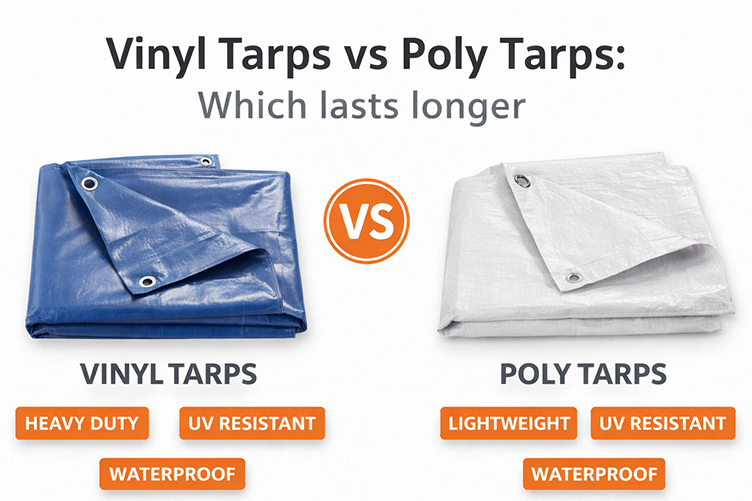
Understanding Vinyl Tarps
Vinyl tarps are considered premium heavy-duty tarps.
They are widely used in industrial, transportation, commercial, and high-performance outdoor environments.
What Is Vinyl?
Vinyl tarp material is usually based on polyvinyl chloride (PVC).
PVC-coated polyester fabrics form the foundation of most vinyl tarps.
This combination creates:
High tensile strength
Waterproof performance
Excellent flexibility
Strong abrasion resistance
Vinyl Tarp Construction
Most vinyl tarps use:
Polyester scrim reinforcement
PVC coating layers
Heat-sealed seams
This produces an extremely durable material capable of handling harsh conditions.
Advantages of Vinyl Tarps
Vinyl tarps are among the strongest and most weather-resistant tarps available.
Superior Durability
Vinyl tarps excel under:
Heavy loads
High wind exposure
Frequent handling
Industrial environments
Long-term outdoor use
They resist:
Tearing
Abrasion
Punctures
Stretching
Excellent Waterproofing
Like polyethylene, vinyl is fully waterproof.
However, vinyl tarps often outperform poly tarps in:
Long-term water exposure
Commercial trucking
Marine applications
Severe weather conditions
Outstanding UV Resistance
Vinyl tarps generally provide excellent UV protection.
This allows them to survive extended sun exposure with less degradation.
Cold Weather Flexibility
Unlike polyethylene, vinyl remains flexible in cold temperatures.
This is extremely important for:
Winter trucking
Snow removal operations
Northern climates
Cold-weather construction
Flame Retardant Options
Many industrial vinyl tarps include fire-retardant treatments.
These are often required for:
Construction compliance
Industrial safety
Transportation regulations
Disadvantages of Vinyl Tarps
Despite their high performance, vinyl tarps also have tradeoffs.
Higher Cost
Vinyl tarps are typically more expensive than poly tarps.
The increased price reflects:
Better materials
Longer lifespan
Industrial-grade construction
Heavier Weight
Vinyl tarps are significantly heavier.
This may create challenges for:
Solo installation
Frequent repositioning
Lightweight camping setups
Less Breathability
Like polyethylene, vinyl is non-breathable.
Improper airflow beneath vinyl covers can trap moisture.
Best Uses for Vinyl Tarps
Vinyl tarps are ideal for:
Flatbed trucking
Industrial equipment covers
Heavy machinery protection
Long-term outdoor storage
Marine applications
Commercial construction
Harsh weather environments
They are especially common in professional transportation industries where durability is critical.
Understanding Canvas Tarps
Canvas tarps represent a more traditional tarp category.
Unlike synthetic materials, canvas is typically made from natural cotton fibers or cotton-blend fabrics.
What Makes Canvas Different?
Canvas offers a fundamentally different performance profile.
Instead of focusing solely on waterproofing, canvas prioritizes:
Breathability
Durability
Air circulation
Temperature stability
Canvas tarps are often treated with:
Wax coatings
Oil treatments
Water-resistant chemicals
These treatments improve weather resistance while preserving breathability.
Advantages of Canvas Tarps
Canvas tarps remain highly valued for many specialized applications.
Excellent Breathability
Canvas allows air circulation.
This dramatically reduces:
Condensation
Mold growth
Moisture buildup
Mildew formation
Breathability makes canvas ideal for covering items sensitive to trapped humidity.
Reduced Condensation
Unlike plastic-based tarps, canvas does not trap heat and moisture as aggressively.
This is especially important for:
Wooden furniture
Firewood
Machinery
Agricultural supplies
Vintage vehicles
High Abrasion Resistance
Heavy-duty canvas can withstand rough handling and repeated friction.
Canvas is often preferred where tarp surfaces contact sharp or uneven materials.
Environmentally Friendly Appeal
Many buyers prefer canvas because natural fiber materials feel more sustainable than petroleum-based plastics.
Canvas also often has a more traditional appearance.
Disadvantages of Canvas Tarps
Canvas tarps are not perfect for every environment.
Not Fully Waterproof
Most canvas tarps are water-resistant rather than fully waterproof.
During prolonged heavy rain, untreated or lower-quality canvas may absorb moisture.
Heavier Than Poly Tarps
Canvas can become especially heavy when wet.
This may complicate:
Transportation
Installation
Drying
Storage
Potential for Mold if Stored Improperly
Although breathable, canvas can develop mold if stored while wet.
Proper drying is essential.
Higher Maintenance Requirements
Canvas tarps typically require more care than synthetic tarps.
Maintenance may include:
Drying after use
Retreatment for water resistance
Proper storage conditions
Best Uses for Canvas Tarps
Canvas tarps perform well for:
Covering machinery
Firewood storage
Painting drop cloths
Agricultural equipment
Furniture protection
Camping shelters
Vintage vehicle covers
Their breathability makes them especially valuable when moisture control matters more than absolute waterproofing.
Waterproof vs Water-Resistant: Understanding the Difference
One of the biggest tarp buying mistakes involves misunderstanding waterproofing terminology.
Waterproof Tarps
Waterproof tarps completely block water penetration.
Examples include:
Polyethylene tarps
Vinyl tarps
These materials prevent water from passing through the fabric.
Water-Resistant Tarps
Water-resistant tarps repel moderate moisture but may eventually absorb water.
Canvas typically falls into this category.
Water resistance may weaken over time without retreatment.
UV Resistance and Sun Exposure
Sunlight is one of the most destructive forces for tarps.
How UV Radiation Damages Tarps
Ultraviolet radiation breaks down material structure over time.
This can lead to:
Cracking
Fading
Brittleness
Weakening
Surface peeling
Best Materials for UV Protection
Vinyl generally provides the strongest UV resistance.
High-quality UV-treated poly tarps also perform well.
Untreated canvas may degrade faster under intense sunlight.
Tarp Thickness and Weight Explained
Tarp quality is not determined by material alone.
Thickness and weight also matter.
Poly Tarp Measurements
Poly tarps are often rated using:
Mil thickness
Weave count
GSM (grams per square meter)
Higher values usually indicate stronger construction.
Vinyl Tarp Weight Ratings
Vinyl tarps are commonly measured in ounces per square yard.
Examples include:
10 oz vinyl
18 oz heavy-duty vinyl
22 oz industrial vinyl
Heavier vinyl generally means:
Greater durability
Better puncture resistance
Longer lifespan
Canvas Weight Ratings
Canvas tarps are also measured by fabric weight.
Heavier canvas typically offers:
Better durability
Improved abrasion resistance
Longer service life
Fire Resistance and Safety Considerations
Certain environments require flame-resistant tarps.
Fire-Retardant Vinyl Tarps
Industrial vinyl tarps often include flame-retardant properties.
These are useful for:
Welding areas
Construction sites
Industrial storage
Transportation regulations
Canvas and Fire Resistance
Canvas naturally resists sparks better than many synthetic materials.
However, untreated canvas is not truly fireproof.
Specialized treated canvas options are available for high-risk environments.
Cold Weather Performance Comparison
Temperature dramatically affects tarp flexibility.
Polyethylene in Cold Weather
Poly tarps may stiffen and crack in freezing conditions.
Vinyl in Winter Conditions
Vinyl remains flexible at low temperatures.
This makes it ideal for:
Snow climates
Winter trucking
Outdoor industrial operations
Canvas in Cold Climates
Canvas performs reasonably well in cold weather but may absorb moisture and freeze if saturated.
Breathability vs Moisture Trapping
One of the most important tarp considerations is airflow.
Why Condensation Happens
Non-breathable tarps trap:
Heat
Humidity
Evaporation
This can produce internal moisture buildup.
Best Choice for Breathability
Canvas is the clear winner for airflow.
This makes it ideal for covering:
Wood
Metal equipment
Furniture
Sensitive machinery
Comparing Lifespan Expectations
Tarp longevity depends heavily on environment and maintenance.
Polyethylene Lifespan
Basic poly tarps may last:
Months to a few years
Heavy-duty UV-treated versions last significantly longer.
Vinyl Lifespan
Premium vinyl tarps can last:
Many years under harsh conditions
Industrial-grade vinyl often provides the best long-term value.
Canvas Lifespan
Properly maintained canvas tarps can also last for years.
However, maintenance quality strongly affects longevity.
Which Tarp Is Best for Camping?
Camping requires balancing:
Weight
Waterproofing
Durability
Portability
Poly Tarps for Camping
Poly tarps work well for:
Ground covers
Rain shelters
Budget camping
Their lightweight design is highly portable.
Canvas for Camping
Canvas offers:
Better breathability
Reduced condensation
More natural insulation
Canvas shelters remain popular among traditional campers.
Vinyl for Camping
Vinyl is usually too heavy for backpacking but works well for:
Vehicle camping
Base camps
Long-term outdoor setups
Which Tarp Is Best for Construction?
Construction sites demand durability and weather resistance.
Best Construction Tarp Materials
Vinyl and heavy-duty polyethylene dominate construction applications.
Common uses include:
Equipment covers
Temporary roofing
Debris containment
Weather barriers
Vinyl generally performs better for long-term exposure.
Which Tarp Is Best for Trucking?
Flatbed trucking requires maximum durability.
Why Vinyl Dominates Trucking
Truck tarps face:
High wind stress
Constant movement
UV exposure
Abrasion
Road debris
Vinyl tarps provide the durability needed for commercial transportation.
Which Tarp Is Best for Agriculture?
Agricultural environments expose tarps to:
Sunlight
Moisture
Dirt
Temperature changes
Animal contact
Common Farm Tarp Uses
Tarps are widely used for:
Hay protection
Equipment storage
Crop shielding
Livestock shelters
Canvas and heavy-duty poly tarps are both popular depending on airflow needs.
Environmental Impact of Tarp Materials
Sustainability concerns are increasingly important.
Polyethylene Environmental Concerns
Polyethylene is petroleum-based.
Improper disposal contributes to plastic waste.
However, reusable heavy-duty poly tarps reduce replacement frequency.
Vinyl Environmental Concerns
PVC production raises environmental concerns because of chemical manufacturing processes.
However, vinyl’s long lifespan may offset some replacement waste.
Canvas Sustainability
Canvas often appeals to environmentally conscious buyers because natural fibers are renewable.
However, treatments and coatings still affect sustainability.
How to Extend Tarp Lifespan
Proper care dramatically increases tarp durability.
Cleaning Tips
Regular cleaning removes:
Dirt
Mold
Chemical residue
Debris
Proper Storage
Store tarps:
Dry
Folded carefully
Away from direct sunlight
In ventilated areas
Avoid Sharp Stress Points
Using proper tie-down techniques reduces:
Tearing
Grommet failure
Edge stress
Common Tarp Buying Mistakes
Many buyers choose tarps incorrectly.
Focusing Only on Price
Cheap tarps often fail quickly.
Repeated replacement may cost more long term.
Ignoring Environmental Conditions
Different climates require different materials.
Underestimating UV Exposure
Sunlight destroys low-quality tarps surprisingly fast.
Choosing the Wrong Size
Improper sizing increases stress and wind damage.
Always allow extra coverage margin.
Final Verdict: Polyethylene vs Vinyl vs Canvas
Each tarp material excels in different situations.
Choose Polyethylene If You Need:
Budget-friendly protection
Lightweight portability
Waterproof coverage
Temporary outdoor use
Choose Vinyl If You Need:
Maximum durability
Heavy-duty performance
Long-term outdoor exposure
Industrial or trucking applications
Choose Canvas If You Need:
Breathability
Reduced condensation
Traditional appearance
Protection for moisture-sensitive items
There is no universally perfect tarp material. The best choice depends entirely on the environment, weather conditions, durability expectations, and intended application.
Final Thoughts
Tarps may seem simple, but material selection makes an enormous difference in real-world performance. Polyethylene, vinyl, and canvas each offer distinct strengths and weaknesses that affect waterproofing, durability, breathability, UV resistance, flexibility, and long-term value.
Polyethylene remains an affordable and versatile solution for general outdoor protection. Vinyl delivers unmatched durability for industrial and commercial environments. Canvas provides superior breathability and moisture control for specialized applications.
Understanding these differences helps buyers avoid wasted money, premature tarp failure, and inadequate protection.
Whether you are covering construction equipment, protecting camping gear, securing cargo, storing firewood, or building outdoor shelters, choosing the right tarp material ensures better performance, longer lifespan, and greater peace of mind in every environment.
Related Products