
Spring is one of the busiest and most exciting seasons for gardeners. As temperatures rise and plants begin to grow again, homeowners, hobby gardeners, homesteaders, and landscaping enthusiasts spend countless hours preparing soil, planting vegetables, protecting flowers, organizing tools, and transforming outdoor spaces after winter.
While most people think of tarps as simple covers for construction materials or camping gear, experienced gardeners know that tarps are actually one of the most versatile tools you can own during the spring season.

A good tarp can help with:
Weed control
Soil warming
Moisture management
Composting
Frost protection
Mulch transport
Raised bed preparation
Garden cleanup
Temporary greenhouses
Outdoor workspace organization
Whether you maintain a small backyard garden, a large homestead, a greenhouse operation, or a decorative landscape, tarps can save time, reduce labor, improve plant health, and protect your outdoor investments.
This guide explores 10 highly creative and practical ways to use tarps in your garden this spring, including detailed explanations, benefits, setup ideas, and expert tips for maximizing efficiency and durability.
Why Tarps Are So Valuable in Gardening
Before diving into specific ideas, it helps to understand why tarps work so well in outdoor growing environments.
Tarps Combine Flexibility and Protection
Unlike rigid garden structures, tarps are:
Lightweight
Portable
Waterproof
Easy to store
Affordable
Adaptable to different tasks
This makes them useful for both temporary and long-term gardening projects.
Spring Weather Is Unpredictable
Spring often brings:
Heavy rain
Late frosts
Strong wind
Muddy soil
Sudden temperature swings
Tarps help gardeners adapt quickly to changing weather conditions.
Gardening Creates Constant Mess and Movement
Garden work involves moving:
Soil
Compost
Mulch
Branches
Leaves
Tools
Pots
Plants
Tarps simplify transport and cleanup dramatically.
Choosing the Right Tarp for Garden Use
Not all tarps perform equally well in gardening applications.
Poly Tarps
Polyethylene tarps are:
Waterproof
Lightweight
Budget-friendly
Good for temporary coverage
They work well for:
Rain protection
Weed suppression
Soil warming
Canvas Tarps
Canvas tarps are:
Breathable
Durable
Better for airflow-sensitive tasks
They are ideal for:
Covering firewood
Protecting delicate plants
Temporary outdoor workspaces
Mesh Tarps
Mesh tarps allow partial airflow and sunlight.
These are useful for:
Shade applications
Wind reduction
Debris containment
UV Resistance Matters
Spring sunlight can damage low-quality tarps quickly.
UV-resistant tarps last significantly longer outdoors.
1. Use a Tarp for Weed Suppression Before Planting
One of the smartest spring gardening techniques is tarp-based weed suppression.
How It Works
By covering soil before planting season, tarps block sunlight from reaching weeds.
Without light, weeds weaken and die.
Benefits of Tarp Weed Control
This method:
Reduces herbicide use
Saves weeding time
Conserves soil moisture
Helps prepare planting beds
Black Tarps for Solarization
Dark tarps absorb heat and increase soil temperature.
This process, called solarization, can suppress:
Weed seeds
Certain pests
Some soil pathogens
Best Practices
For effective weed suppression:
Lay tarps tightly against soil
Secure edges with rocks or stakes
Leave in place for several weeks
Spring sunlight improves effectiveness dramatically.
2. Create a Temporary Frost Protection System
Spring weather can be deceptive.
Warm daytime temperatures are often followed by sudden nighttime frosts.
Why Frost Is Dangerous
Late frost can damage:
Young seedlings
Tomato plants
Herbs
Fruit blossoms
Newly sprouted vegetables
Using Tarps for Frost Protection
Tarps create a temporary thermal barrier that traps warmer air around plants.
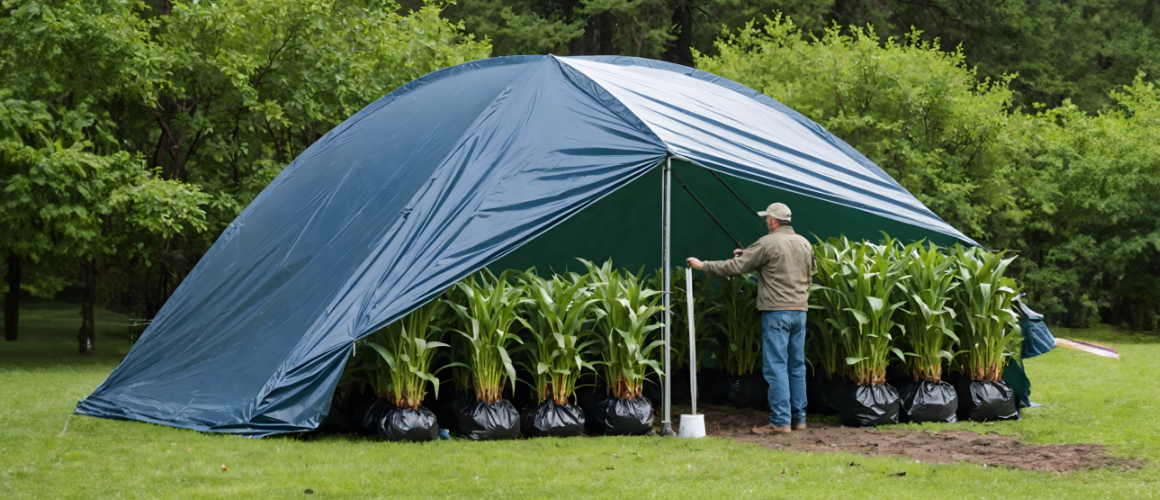
Best Setup Method
To avoid crushing plants:
Use stakes or hoops to elevate the tarp
Cover plants before sunset
Remove coverings during the day if temperatures rise
Important Warning
Do not place heavy tarps directly on delicate plants for long periods.
Condensation and pressure may cause damage.
3. Build a Simple Rain Shelter for Raised Beds
Spring rain can become excessive in some climates.
Too much water may lead to:
Root rot
Nutrient runoff
Soil compaction
Fungal disease
Tarp Rain Shelters
A tarp can create a quick removable roof over raised beds.
Benefits
This helps:
Control moisture levels
Protect seedlings
Extend planting flexibility
Prevent soil erosion
Easy DIY Structure
Use:
PVC pipes
Wooden stakes
Metal garden hoops
Then stretch a waterproof tarp above the bed.
Proper airflow is important to prevent overheating.
4. Use Tarps for Easy Mulch and Soil Transport
Spring gardening often involves moving large amounts of material.
Why Tarps Simplify Transport
Instead of carrying multiple buckets, gardeners can drag materials directly using a tarp.
Ideal Materials for Tarp Transport
Tarps work well for moving:
Mulch
Compost
Leaves
Wood chips
Soil
Garden debris
Benefits
This reduces:
Back strain
Cleanup time
Wheelbarrow trips
Heavy-duty tarps are especially useful for large properties.
5. Build a Temporary Greenhouse or Cold Frame
Spring gardeners often want earlier planting opportunities.
Why Early Season Protection Matters
Young plants benefit from:
Warmer soil
Stable temperatures
Wind protection
DIY Tarp Greenhouses
Transparent or translucent tarps can help trap solar heat.
Simple Structure Ideas
Common frames include:
PVC arches
Wooden frames
Metal hoops
What You Can Grow Earlier
Protected environments support early growth for:
Lettuce
Spinach
Peppers
Tomatoes
Herbs
Ventilation Is Essential
Overheating can occur quickly on sunny days.
Always allow airflow during warm conditions.
6. Protect Garden Furniture and Equipment
Spring weather can still be rough on outdoor equipment.
What Needs Protection?
Garden tarps help protect:
Lawn mowers
Potting benches
Garden tools
Outdoor furniture
Seed trays
Fertilizer bags
Why Moisture Protection Matters
Rain exposure may cause:
Rust
Mold
Wood rot
Corrosion
Choosing the Best Tarp
Waterproof poly or vinyl tarps work best for equipment storage.
Secure tie-downs improve wind resistance.
7. Use a Tarp as a Garden Cleanup Station
Spring cleanup creates enormous amounts of debris.
Common Spring Garden Waste
Gardeners often deal with:
Leaves
Dead plants
Branches
Grass clippings
Pulled weeds
Tarp Cleanup Advantages
A tarp acts like a giant portable collection surface.
Instead of making repeated trash bag trips, gardeners can:
Pile debris directly onto the tarp
Drag it to compost areas
Transport it for disposal
Reducing Lawn Damage
Dragging a tarp often causes less lawn damage than heavy wheelbarrows.

8. Create a Mud-Free Potting Area
Spring gardening can become messy quickly.
Why Potting Areas Get Dirty
Potting tasks involve:
Wet soil
Fertilizer spills
Water runoff
Loose compost
Tarp Workstations
A tarp creates a cleanable surface for:
Potting plants
Mixing soil
Organizing containers
Seed starting
Benefits
This setup helps:
Reduce cleanup
Protect patios
Contain messes
Improve organization
Canvas tarps are especially useful because they provide some breathability.
9. Harvest Rainwater More Efficiently
Water conservation is becoming increasingly important.
Tarp Rain Collection Systems
Tarps can direct rainwater into barrels or containers.
Simple Collection Setup
Position the tarp at an angle so water funnels toward a collection point.
Benefits
Rainwater collection helps:
Reduce water bills
Support drought resilience
Provide chemical-free irrigation
Best Applications
Collected rainwater works well for:
Vegetable gardens
Flower beds
Compost moisture management
Food-safe storage containers are recommended.
10. Create Shade for Sensitive Plants
Not all spring sunlight is beneficial.
Why Some Plants Need Shade
Young plants may suffer from:
Heat stress
Sun scorch
Rapid moisture loss
Shade Tarp Solutions
Mesh tarps or light-colored tarps help reduce sunlight intensity.
Best Shade Applications
Temporary shading works well for:
Seedlings
Transplanted vegetables
Shade-loving flowers
Nursery trays
Preventing Overheating
Partial shade improves plant survival during sudden spring heat waves.
Bonus Idea: Protect Pathways from Mud
Spring gardens often become muddy after rain.
Tarp Walkways
Tarps can create temporary walking surfaces during wet conditions.
Benefits
This helps:
Reduce slipping
Protect grass
Minimize soil compaction
Keep boots cleaner
Heavy-duty tarps work best for repeated foot traffic.
How Tarps Improve Soil Health
Many gardeners overlook how tarps influence soil conditions.
Moisture Retention
Tarps help reduce evaporation.
This preserves soil moisture during dry spring periods.
Temperature Control
Dark tarps warm soil faster.
This can accelerate:
Seed germination
Microbial activity
Early plant growth
Reduced Soil Erosion
Heavy rain can wash away valuable nutrients.
Tarps help stabilize exposed soil areas.
Choosing the Right Tarp Size for Gardening
Size matters for efficiency and ease of use.
Small Tarps
Best for:
Potting stations
Tool coverage
Small raised beds
Medium Tarps
Ideal for:
Garden cleanup
Soil transport
Frost protection
Large Tarps
Useful for:
Greenhouses
Rain shelters
Large-scale weed suppression
Oversized tarps may become difficult to manage in windy weather.
Tarp Safety Tips for Gardeners
Improper tarp use can create hazards.
Secure Tarps Properly
Loose tarps may become dangerous in strong wind.
Use:
Stakes
Weights
Tie-down ropes
Avoid Water Pooling
Standing water adds heavy weight and may collapse structures.
Maintain angled surfaces for drainage.
Ensure Proper Ventilation
Covered plants still require airflow.
Poor ventilation may encourage:
Mold
Mildew
Heat buildup
Environmental Considerations
Gardeners increasingly care about sustainability.
Reusing Old Tarps
Even older tarps can remain useful for:
Weed barriers
Ground covers
Cleanup projects
Reducing Plastic Waste
Buying durable tarps reduces replacement frequency.
Canvas as an Eco-Friendly Option
Canvas tarps may appeal to gardeners seeking more natural materials.
Common Mistakes When Using Tarps in Gardens
Many beginners misuse tarps unintentionally.
Leaving Tarps Too Long on Soil
Excessive coverage may reduce soil oxygen exchange.
Rotate tarp use carefully.
Using Non-Breathable Covers on Plants
Direct moisture trapping can create fungal problems.
Ignoring Wind Conditions
Large tarps act like sails in windy weather.
Proper anchoring is critical.
Why Professional Growers Use Tarps
Commercial farmers and market gardeners use tarps extensively.
Agricultural Benefits
Professional operations use tarps for:
Silage coverage
Weed suppression
Soil warming
Crop protection
Moisture management
Labor Savings
Tarps reduce manual labor dramatically during busy planting seasons.
The Growing Popularity of Tarp Gardening
Modern gardeners increasingly value flexible low-cost solutions.
Why Tarps Continue Gaining Popularity
Tarps offer:
Multi-purpose functionality
Affordability
Reusability
Easy seasonal storage
Adaptability Across Garden Styles
Tarps work well in:
Urban gardens
Backyard vegetable plots
Homesteads
Greenhouses
Permaculture systems
Their versatility makes them one of the most underrated garden tools available.
Final Thoughts
Tarps are far more than simple waterproof covers. In spring gardening, they become versatile tools for weed suppression, frost protection, moisture control, cleanup, rain collection, shade management, temporary greenhouses, and efficient material transport.\n\nWhether you are an experienced gardener managing a large homestead or a beginner growing vegetables in a small backyard, incorporating tarps into your spring gardening routine can save time, reduce labor, improve plant health, and increase overall garden productivity.\n\nThe key is choosing the right tarp type, using proper setup techniques, and understanding how different tarp applications influence soil conditions, airflow, temperature, and moisture management.\n\nFrom protecting delicate seedlings during unexpected frost to simplifying messy cleanup after major planting projects, tarps provide flexible solutions for nearly every stage of spring gardening.\n\nFor gardeners looking to work smarter, stay organized, and protect their outdoor spaces more effectively, mastering creative tarp use is one of the simplest and most practical upgrades you can make this season.
Need Help with Your Custom Project?
Have questions about materials, sizing, or looking for a quick quote? Drop us a message and our experts will respond within 24 hours.
Chat on WhatsApp
+1 (304) 356-6765
Send us an Email
hello@incustom.com
Picked for You