A Step-by-Step Guide to Cleaning High Window Curtains: Creating an Allergen-Free Home Environment

Apr 16 2026
High windows are a beautiful architectural feature. They let in abundant natural light, enhance vertical space, and elevate the overall design of a home. But when it comes to maintenance—especially cleaning curtains—those same high windows can quickly become a challenge.
Dust, pollen, pet dander, and airborne pollutants tend to accumulate in curtains over time. When these contaminants collect in high, hard-to-reach places, they often go unnoticed—and uncleaned—for far too long. The result? A hidden source of allergens that can impact your indoor air quality and overall comfort.
If you or your family members suffer from allergies, asthma, or sensitivities, keeping your curtains clean—especially those on high windows—is not just about aesthetics. It’s essential for your health.
In this comprehensive guide, you’ll learn how to safely and effectively clean high window curtains step by step, using practical tools and techniques that help you create a cleaner, healthier, and allergen-free home.
Why High Window Curtains Collect More Dust Than You Think
At first glance, it might seem like high window curtains would stay cleaner than those at eye level. After all, they’re farther away from daily activity, right?
In reality, the opposite is often true.
Air Circulation Carries Dust Upward
Warm air rises—and with it, dust particles, pollen, and other allergens. These airborne particles eventually settle on elevated surfaces, including curtain fabric.
Curtains Act Like Filters
Curtains naturally trap particles from the air:
- Dust
- Pet dander
- Mold spores
- Outdoor pollutants
Over time, they function like passive air filters—except they don’t clean themselves.
Infrequent Cleaning Leads to Buildup
Because high windows are difficult to access, curtains are often cleaned less frequently. This allows layers of dust and allergens to accumulate.
The Health Impact of Dusty Curtains
Dirty curtains don’t just look dull—they can actively affect your indoor environment.
Common Symptoms Linked to Allergen Buildup
- Sneezing and nasal congestion
- Itchy or watery eyes
- Persistent coughing
- Skin irritation
- Worsened asthma symptoms
Why Curtains Are a Hidden Trigger
Unlike floors or furniture, curtains aren’t cleaned as often. Yet they hang directly in airflow paths, meaning they continuously release trapped particles back into the room.
Safety First: Preparing to Clean High Curtains
Before you start, preparation is key—especially when working at height.
Essential Safety Tips
- Use a sturdy ladder or step stool with non-slip feet
- Avoid standing on unstable furniture
- Have someone nearby for support if possible
- Wear a dust mask if you’re sensitive to allergens
Tools You’ll Need
- Vacuum cleaner with extension hose
- Soft brush attachment
- Microfiber cloths
- Lint roller
- Mild detergent
- Spray bottle with water or cleaning solution
- Extendable duster
Optional but helpful:
- Steam cleaner
- Telescoping pole system
Step-by-Step Guide to Cleaning High Window Curtains
Step 1: Dust Removal (Dry Cleaning Phase)
Start by removing loose dust before introducing moisture.
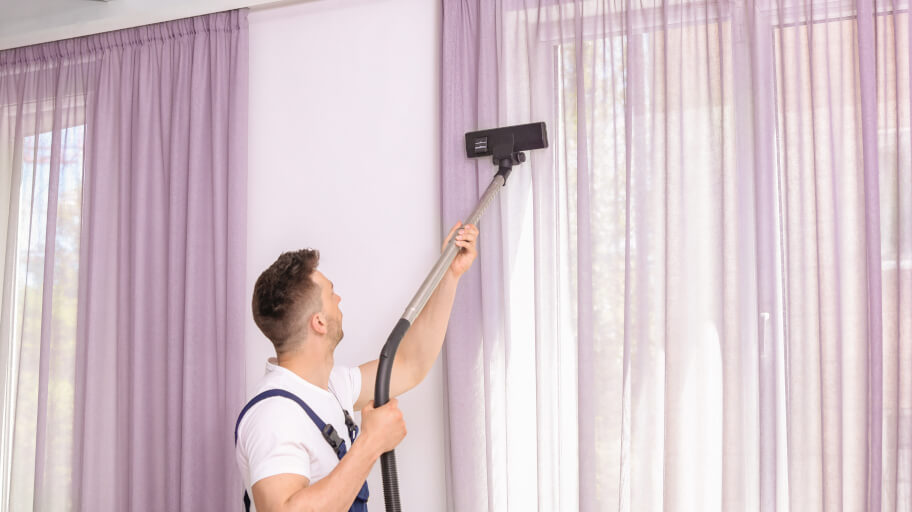
Method A: Vacuuming
Use a vacuum cleaner with a soft brush attachment.
How to do it:
- Extend the hose to reach the curtain height
- Gently run the brush along the fabric from top to bottom
- Focus on folds where dust accumulates
Method B: Extendable Duster
For delicate fabrics, a microfiber duster works well.
Method C: Lint Roller
Use for spot cleaning or removing visible debris.
Step 2: Spot Cleaning Stains
If you notice stains or discoloration:
How to Spot Clean
- Mix a small amount of mild detergent with water
- Dampen a microfiber cloth
- Gently blot (don’t rub) the stained area
- Allow to air dry
Step 3: Deep Cleaning (If Needed)
Depending on the fabric, you may need a deeper clean.
Option A: Machine Wash (If Removable)
- Check care labels
- Use gentle cycle
- Air dry to prevent shrinkage
Option B: Steam Cleaning
Steam is highly effective for:
- Killing dust mites
- Removing odors
- Refreshing fabric
Option C: Professional Cleaning
For heavy or delicate curtains, consider professional services.
Step 4: Drying and Reinstallation
Ensure curtains are completely dry before rehanging.
Step 5: Final Dust Prevention
After cleaning:
- Lightly vacuum again
- Use anti-static spray if appropriate
- Ensure proper airflow in the room
How Often Should You Clean High Curtains?
General Guidelines
- Light cleaning (dusting): Every 1–2 weeks
- Deep cleaning: Every 3–6 months
Increase Frequency If You Have:
- Pets
- Allergies
- Open windows frequently
- High pollution levels
Best Curtain Materials for Low-Allergen Homes
Some fabrics attract less dust and are easier to clean.
Recommended Materials
- Cotton (washable and breathable)
- Polyester blends (low maintenance)
- Linen (natural but may require more care)
Materials to Be Cautious With
- Heavy velvet (traps more dust)
- Thick layered fabrics
- Non-washable decorative materials
Preventing Dust Buildup in the Future
Cleaning is important—but prevention saves time and effort.
Improve Air Quality
- Use air purifiers
- Replace HVAC filters regularly
- Keep windows clean
Control Humidity
High humidity encourages dust mites and mold.
Regular Maintenance Habits
- Shake out curtains periodically
- Vacuum surrounding areas
- Keep floors clean to reduce airborne dust
Smart Tools for Easier Cleaning
Telescoping Cleaning Poles
Allow you to reach high curtains without climbing.
Cordless Handheld Vacuums
Lightweight and easy to maneuver.
Steam Cleaners
Efficient for deep cleaning and sanitization.
Common Mistakes to Avoid
Skipping Regular Cleaning
Leads to heavy buildup and harder cleaning later.
Using Harsh Chemicals
Can damage fabric and release irritants.
Over-Wetting Curtains
May cause mold or mildew.
Ignoring Safety
Always prioritize stability when working at height.
Creating a Truly Allergen-Free Environment
Curtain cleaning is just one part of a bigger strategy.
Combine with These Practices
- Regular vacuuming with HEPA filters
- Washing bedding weekly
- Minimizing clutter
- Using hypoallergenic materials
Final Thoughts
High window curtains may be out of sight—but they should never be out of mind.
By following a consistent cleaning routine and using the right tools and techniques, you can significantly reduce allergens in your home and create a fresher, healthier living environment.
It doesn’t have to be complicated. With a step-by-step approach and a little planning, even the tallest windows can be maintained with ease.
Quick Recap
- High curtains collect dust due to airflow and infrequent cleaning
- Regular dusting and deep cleaning are essential
- Use safe tools and proper techniques
- Choose low-maintenance fabrics when possible
- Prevention is the key to long-term cleanliness

Need Help with Your Custom Project?
Have questions about materials, sizing, or looking for a quick quote? Drop us a message and our experts will respond within 24 hours.
Chat on WhatsApp
+1 (304) 356-6765
Send us an Email
hello@incustom.com
Picked for You