Construction Site Safety: How Tarps Protect Building Materials from Rain, Wind, and Weather Damage

May 14 2026
Construction projects face constant pressure from deadlines, labor costs, material shortages, and unpredictable weather conditions. While contractors carefully plan budgets, schedules, and logistics, one factor continues to threaten projects across every season:
Weather exposure.
Rain, wind, snow, UV radiation, humidity, and temperature fluctuations can quickly damage valuable construction materials if they are not properly protected. Even a single storm can lead to soaked insulation, warped wood, rusted metal components, mold growth, damaged drywall, and expensive project delays.
This is why heavy-duty construction tarps remain one of the most important protective tools on modern job sites.
Far more than simple covers, professional-grade tarps play a critical role in:
Construction site safety
Material preservation
Weather protection
Cost control
Project efficiency
Equipment protection
Hazard prevention
Regulatory compliance
From residential home construction and commercial buildings to roadwork, bridge projects, industrial facilities, and roofing operations, tarps help contractors reduce risk and maintain operational continuity under difficult environmental conditions.
In this guide, we’ll explore:
Why weather protection matters on construction sites
How rain and wind damage building materials
The role of tarps in construction safety
Different types of construction tarps
Best tarp materials for various applications
How to secure tarps safely
Common tarp mistakes contractors make
Long-term benefits of proper site protection
Best practices for weather-resistant material storage
Whether you manage large commercial projects, operate a roofing company, oversee infrastructure construction, or handle residential remodeling, understanding how to properly use construction tarps can significantly improve job-site safety and material protection.
Why Weather Exposure Is a Major Construction Risk
Construction materials are often stored outdoors for extended periods.
Unfortunately, many materials are highly vulnerable to environmental exposure.
Common job-site threats include:
Heavy rain
Wind-driven moisture
Snow accumulation
UV radiation
Humidity
Mud contamination
Standing water
Dust and debris
Ice formation
Sudden storms
Without protection, weather damage can spread rapidly across an entire project.
How Rain Damages Construction Materials
Rain is one of the most destructive forces on active construction sites.
Different materials react differently to moisture exposure.
Lumber and Wood Products
Wood absorbs water quickly.
Excessive moisture may cause:
Warping
Swelling
Cracking
Rot
Mold growth
Structural weakening
Wet framing materials may later shrink unevenly after drying.
This can compromise structural alignment.
Drywall and Insulation
Drywall is extremely moisture-sensitive.
Rain exposure can lead to:
Softening
Structural breakdown
Mold contamination
Surface deterioration
Insulation materials also lose effectiveness when soaked.
Wet insulation may trap moisture inside building systems.
Cement and Concrete Materials
Bagged cement products harden when exposed to moisture.
Rain damage may ruin:
Cement bags
Mortar mixes
Dry compounds
This creates expensive waste.
Metal Components
Metal building materials face corrosion risks.
Examples include:
Steel framing
Fasteners
Pipes
Structural supports
Roofing components
Extended moisture exposure accelerates rust formation.
Electrical Equipment and Tools
Construction sites contain valuable electrical equipment.
Rain exposure may damage:
Power tools
Generators
Wiring
Temporary electrical systems
Battery equipment
Moisture also increases electrical safety risks.
Why Wind Creates Additional Construction Hazards
Wind does more than blow materials around.
Strong wind may:
Spread moisture under coverings
Lift unprotected materials
Scatter debris
Destabilize stacked supplies
Increase fall hazards
Damage partially completed structures
Wind-driven rain is especially dangerous because it penetrates exposed surfaces aggressively.
Proper tarp installation helps reduce both moisture and wind exposure.
The Role of Tarps in Construction Site Protection
Construction tarps act as temporary protective barriers.
Their primary functions include:
Blocking rain
Reducing UV exposure
Preventing moisture accumulation
Protecting unfinished structures
Covering building materials
Reducing contamination
Improving site organization
Enhancing worker safety
Professional-grade tarps are essential for maintaining project continuity during unpredictable weather.
Why Construction Tarps Matter for Safety
Many people associate tarps only with material protection.
However, they also support job-site safety.
Slip and Fall Prevention
Wet construction surfaces become hazardous quickly.
Tarps help reduce water accumulation on:
Walkways
Scaffolding
Equipment zones
Material storage areas
Reducing water exposure helps lower slip risks.
Mold Prevention and Air Quality
Moisture-damaged materials may develop mold.
Mold contamination can affect:
Indoor air quality
Worker health
Building safety
Inspection compliance
Tarps help reduce moisture-related contamination risks.
Structural Stability Protection
Certain construction materials lose strength when exposed to moisture.
Protecting framing and support materials helps preserve structural integrity.
Electrical Hazard Reduction
Keeping electrical systems dry reduces risks involving:
Short circuits
Equipment failure
Electrical shock
Fire hazards
Waterproof coverings play an important role in temporary site safety management.
Types of Tarps Used on Construction Sites
Not all tarps are the same.
Different projects require different tarp materials and designs.
Poly Tarps
Polyethylene tarps are widely used because they are:
Affordable
Waterproof
Lightweight
UV-resistant
Easy to deploy
Heavy-duty poly tarps work well for:
Lumber coverage
Equipment protection
Temporary roof covering
Debris containment
Canvas Tarps
Canvas tarps are breathable rather than fully waterproof.
Advantages include:
Reduced condensation
Better airflow
Heat resistance
Canvas tarps are often used for:
Machinery coverage
Painting projects
Dust control
However, they may not perform as well during heavy rain.
Vinyl Tarps
Vinyl tarps are among the strongest construction-grade options.
Benefits include:
Excellent waterproofing
High tear resistance
Chemical resistance
Long lifespan
Heavy-duty durability
Vinyl tarps are common on industrial projects and long-term outdoor applications.
Mesh Tarps
Mesh tarps allow airflow while blocking debris and sunlight.
Common applications include:
Scaffolding enclosures
Wind reduction
Privacy screening
Dust containment
They are not fully waterproof.
Fire-Resistant Tarps
Certain construction environments require flame-resistant materials.
These tarps are commonly used near:
Welding operations
Industrial equipment
High-heat environments
Safety regulations may require certified fire-resistant coverings.
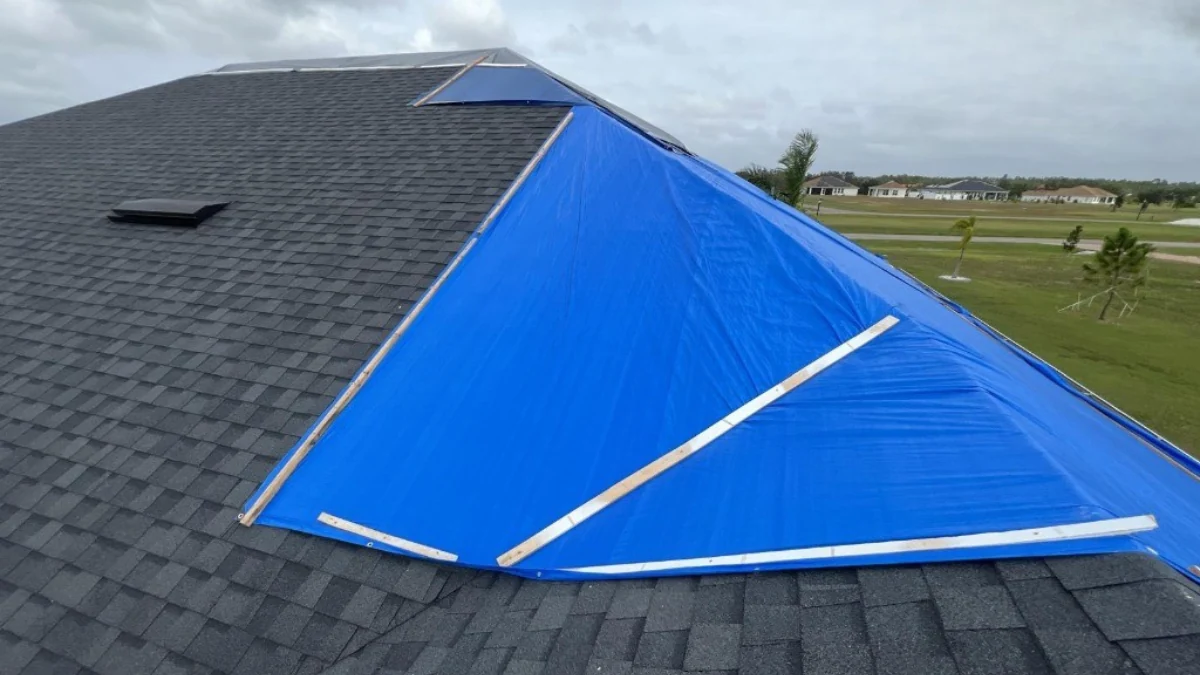
Temporary Roof Tarps
Roof damage or incomplete roofing systems create major weather vulnerabilities.
Roof tarps help protect structures during:
Storm recovery
Roofing installation
Emergency repairs
Delayed construction phases
Heavy-duty waterproof tarps are essential in these situations.
How UV Exposure Damages Construction Materials
Sun exposure is often underestimated.
UV radiation can damage:
Plastics
Roofing materials
Adhesives
Sealants
Lumber surfaces
Paint coatings
Tarps help reduce direct UV degradation during long-term storage.
Best Practices for Using Construction Tarps
Simply throwing a tarp over materials is not enough.
Proper installation matters.
Secure Tarps Tightly
Loose tarps flap in the wind.
This may cause:
Tearing
Water pooling
Material exposure
Safety hazards
Use proper tie-down methods.
Avoid Water Pooling
Standing water adds weight and increases collapse risks.
Ensure tarps are angled for drainage.
Use Reinforced Grommets and Tie-Downs
Weak attachment points may fail during storms.
Professional-grade tarps often include:
Reinforced corners
Rust-resistant grommets
Heavy-duty hems
Elevate Materials Off the Ground
Tarps alone cannot stop ground moisture.
Use:
Pallets
Racks
Elevated platforms
to improve airflow and drainage.
Inspect Tarps Regularly
Tarps degrade over time.
Inspect for:
Tears
UV damage
Loose fasteners
Water accumulation
Mold growth
Damaged tarps should be replaced promptly.
Why Proper Tarping Saves Money
Construction material damage can become extremely expensive.
Weather-related losses may include:
Material replacement
Labor delays
Mold remediation
Structural repairs
Schedule disruptions
Equipment replacement
Preventive protection is far more cost-effective than recovery.
Protecting Different Construction Materials with Tarps
Different materials require different tarp strategies.
Lumber Storage
Best practices include:
Elevated storage
Breathable airflow
Waterproof top coverage
Side ventilation
Improperly sealed wood may trap condensation.
Drywall Protection
Drywall should remain:
Fully dry
Elevated
Covered completely
Stored away from standing water
Moisture exposure may ruin entire shipments.
Steel and Metal Storage
Metal components require:
Waterproof barriers
Condensation reduction
Corrosion prevention
Ventilation remains important.
Cement and Powder Materials
Keep dry compounds completely sealed from moisture.
Waterproof vinyl or poly tarps work well here.
Equipment and Machinery Coverage
Heavy equipment often remains outdoors.
Tarps help protect against:
Rain
UV exposure
Dust
Ice accumulation
Equipment protection improves lifespan and maintenance efficiency.
Seasonal Challenges for Construction Site Protection
Different seasons create different risks.
Winter Construction Risks
Cold-weather hazards include:
Snow accumulation
Ice formation
Freeze-thaw cycles
Heavy-duty waterproof tarps help reduce snow penetration.
Summer Construction Risks
Heat and UV exposure accelerate material degradation.
Ventilation becomes critical during hot weather.
Hurricane and Storm Season Protection
Storm-prone regions require reinforced tarp systems.
Contractors often use:
Extra tie-downs
Sandbags
Anchoring systems
Multi-layer coverings
Storm preparation is essential for site safety.
The Importance of Tarp Quality
Cheap tarps often fail under real construction conditions.
Low-quality covers may:
Tear easily
Degrade under UV exposure
Leak
Lose flexibility
Fail during wind events
Professional-grade tarps offer better long-term value.
How Construction Tarps Improve Project Efficiency
Material protection directly affects scheduling.
Proper weather protection helps contractors:
Avoid delays
Maintain workflow
Reduce waste
Improve site organization
Protect inventory
Reliable protection supports smoother operations.
Environmental Benefits of Material Protection
Reducing material damage also reduces waste.
This helps lower:
Disposal costs
Resource consumption
Replacement manufacturing
Transportation emissions
Material preservation supports more sustainable construction practices.
Technology Trends in Construction Tarp Systems
Modern tarp systems continue evolving.
Innovations include:
Smart weather-monitoring integration
Reinforced composite fabrics
UV-reflective coatings
Self-draining designs
High-strength lightweight materials
Fire-retardant technologies
Advanced coverings improve durability and safety.
Common Mistakes Contractors Make with Tarps
Even experienced crews sometimes make avoidable errors.
Using Undersized Tarps
Insufficient coverage leaves gaps vulnerable to rain and wind.
Ignoring Wind Load
Improper anchoring may turn tarps into dangerous airborne hazards.
Trapping Moisture Improperly
Completely sealing wet materials may worsen mold problems.
Ventilation matters.
Delaying Storm Preparation
Waiting until severe weather arrives increases risk significantly.
Reusing Damaged Tarps
Compromised tarps may fail unexpectedly during storms.
Choosing the Right Construction Tarp
When selecting tarps, consider:
Waterproof capability
UV resistance
Tear strength
Thickness
Temperature resistance
Flame resistance
Expected weather conditions
Duration of use
Different projects require different performance levels.
Why Construction Site Weather Protection Is Becoming More Important
Extreme weather events are becoming increasingly common in many regions.
Construction companies now face:
Stronger storms
Heavier rainfall
Longer heat waves
Increased UV exposure
Greater weather unpredictability
As climate conditions evolve, material protection strategies become even more critical.
Final Thoughts
Construction sites face constant environmental challenges.
Rain, wind, UV exposure, humidity, and storms can quickly damage valuable building materials, delay projects, and create serious safety risks.
Construction tarps remain one of the most effective and affordable tools for protecting:
Lumber
Drywall
Steel
Cement
Equipment
Roofing systems
Electrical components
Beyond simple weather protection, properly installed tarps help improve:
Worker safety
Site organization
Material lifespan
Operational efficiency
Cost control
Modern construction environments demand reliable protection systems capable of handling increasingly unpredictable weather conditions.
By choosing the right tarp materials, using proper installation techniques, and maintaining proactive weather-protection strategies, contractors can significantly reduce risk while improving overall project performance.
In the construction industry, preventing damage is always more efficient than repairing it later.
And in many cases, a properly secured tarp can make the difference between a smooth project timeline and a costly weather-related setback.
Need Help with Your Custom Project?
Have questions about materials, sizing, or looking for a quick quote? Drop us a message and our experts will respond within 24 hours.
Chat on WhatsApp
+1 (304) 356-6765
Send us an Email
hello@incustom.com
Picked for You