Design for Lower Costs from the Start: Low-Maintenance Garden Landscape Planning Strategies

Aug 18 2026
A beautiful garden should not become a permanent source of maintenance expenses. Yet many landscape projects are designed primarily around appearance, with little consideration given to what happens after installation. Plants grow, irrigation systems require adjustment, weeds appear, paving surfaces collect debris, drainage systems become clogged, outdoor structures weather, and seasonal maintenance bills continue to rise.
The good news is that many of these costs can be reduced before construction even begins.
The most effective way to create a low-maintenance garden is not to rely on cheaper materials or simply reduce the number of plants. Instead, the key is to make smarter decisions during the design and planning stage. A well-planned landscape can reduce watering, pruning, fertilizing, mowing, cleaning, repairs, replacement, and labor requirements while still delivering a sophisticated and attractive outdoor environment.
This approach is often described as designing for lifecycle value. Instead of asking only, “How much will this garden cost to build?” homeowners, developers, property managers, and landscape contractors should also ask, “How much will this garden cost to operate over the next five, ten, or twenty years?”
That shift in perspective can dramatically change the way a landscape is designed.
From selecting plants and materials to organizing irrigation zones, controlling weeds, managing drainage, and simplifying maintenance access, every decision can influence long-term operating costs.
This guide explores practical low-maintenance landscape planning strategies that can help reduce garden maintenance costs from the very beginning.
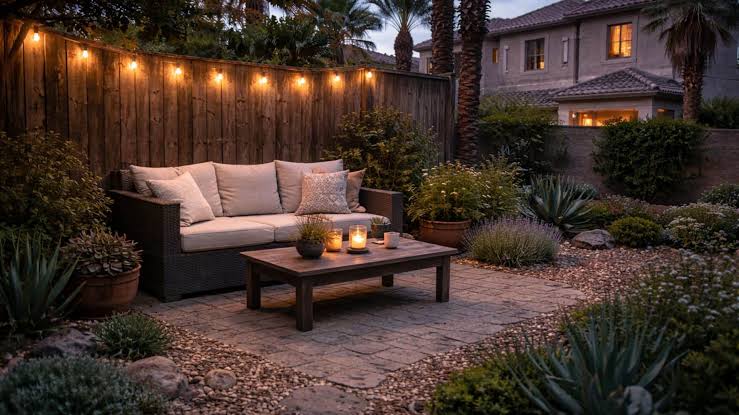
Why Landscape Design Has Such a Big Impact on Maintenance Costs
Maintenance costs are rarely determined by one single factor. They are the result of many small design decisions working together.
For example, a garden with a large lawn may require frequent mowing, edging, irrigation, fertilization, weed control, and seasonal care. A landscape with dense ornamental planting may require regular pruning and plant replacement. A poorly designed drainage system can create standing water, erosion, plant diseases, and structural damage.
In contrast, a carefully planned landscape can reduce many of these tasks.
The principle is simple:
Every maintenance task that can be prevented through design is usually cheaper than a maintenance task that must be performed repeatedly.
Suppose a landscape requires an hour of additional maintenance every week. That may not seem significant during the design stage. Over ten years, however, the accumulated labor can become substantial.
The same principle applies to irrigation. A poorly designed system may continuously waste water because of overlapping spray patterns, inefficient emitters, or inappropriate watering schedules. Replacing the system later is more expensive than designing efficient irrigation zones from the start.
Therefore, low-maintenance landscape design should be viewed as a long-term investment rather than an aesthetic compromise.
Start with a Maintenance-Oriented Site Analysis
Before selecting plants, paving, garden furniture, lighting, or decorative features, analyze the site carefully.
A strong site analysis should consider:
- Sun exposure
- Wind conditions
- Soil type
- Existing vegetation
- Drainage patterns
- Rainfall
- Seasonal temperature changes
- Existing irrigation infrastructure
- Pedestrian circulation
- Maintenance access
- Water availability
- Existing hardscape
- Slopes and elevation changes
Understanding these conditions helps prevent unnecessary maintenance problems.
For example, planting a shade-loving species in a location exposed to intense afternoon sunlight can result in stress, poor growth, and frequent replacement. Similarly, placing plants with high water requirements in a dry area can increase irrigation costs.
Instead of forcing the landscape to behave differently from its natural environment, design around the conditions that already exist.
This is one of the most powerful principles of low-maintenance landscape planning.
Understand Sunlight Before Choosing Plants
Sunlight affects plant health, irrigation requirements, flowering, growth rates, and pruning needs.
Map areas into categories such as:
- Full sun
- Partial sun
- Partial shade
- Full shade
Then select plants appropriate for each microclimate.
A plant that naturally thrives in a particular location will generally require less intervention than a plant struggling to survive outside its preferred conditions.
This reduces the need for excessive watering, fertilization, pest control, and replacement.
Choose Plants Based on Long-Term Performance
Plant selection is one of the biggest factors influencing garden maintenance costs.
A low-maintenance planting plan should prioritize plants that are:
- Adapted to the local climate
- Appropriate for the soil
- Resistant to common pests and diseases
- Suitable for the available sunlight
- Reasonably drought tolerant
- Naturally compact or slow growing when appropriate
- Long lived
- Suitable for the intended landscape function
The cheapest plant is not necessarily the most economical choice.
A low-cost plant that grows aggressively and requires constant pruning may become much more expensive over time than a slightly more expensive plant that maintains its shape naturally.
Avoid Overly Fast-Growing Plants
Fast growth can initially look attractive because the landscape fills in quickly. However, rapid growth often means more pruning.
Trees planted too close to buildings, walkways, fences, or utility lines can create additional problems as they mature.
Before planting, consider the plant's mature height and width rather than its size at installation.
A useful design question is:
“What will this plant look like ten years from now?”
This simple question can prevent many future maintenance problems.
Design Planting Beds Around Mature Plant Size
Overcrowded planting is one of the most common causes of unnecessary garden maintenance.
Landscape designers sometimes place plants close together to create an immediate sense of fullness. While this may produce a dramatic appearance during the first year, the planting can become overcrowded as plants mature.
The result may include:
- Excessive pruning
- Poor air circulation
- Increased disease pressure
- Competition for water
- Competition for nutrients
- Plants growing into pathways
- Higher replacement rates
Instead, establish spacing according to expected mature dimensions.
A garden may look slightly more open immediately after installation, but it can become more balanced and easier to maintain as plants develop.
Reduce Lawn Where Appropriate
Traditional lawns can create significant recurring maintenance requirements.
Depending on the climate and property size, turf may require:
- Frequent mowing
- Edging
- Irrigation
- Fertilization
- Weed management
- Aeration
- Seasonal treatments
- Reseeding or replacement
This does not mean every lawn should be removed.
Lawns can be valuable for recreation, visual openness, pets, and circulation. The goal is to use turf strategically rather than automatically covering large areas with grass.
Consider reducing lawn in locations where it provides little functional value.
Unused lawn areas can potentially be replaced with:
- Ground covers
- Native planting
- Ornamental grasses
- Shrub beds
- Gravel gardens
- Permeable hardscape
- Mulched planting areas
- Low-water perennial gardens
The best replacement depends on the climate, property function, aesthetic goals, and local regulations.
Use Ground Covers to Control Weeds
Bare soil is an invitation for weeds.
When planting beds contain large areas of exposed soil, maintenance teams may need to weed repeatedly.
Ground covers can help occupy available space and reduce opportunities for weeds to establish.
Organic mulch can also suppress weeds while helping retain soil moisture.
However, mulch should be selected and installed properly. Excessively thick mulch or mulch piled directly against tree trunks can create other problems.
The objective is not simply to cover the soil but to create a stable planting environment.
Use Mulch Strategically
Mulching can reduce several types of maintenance work at once.
A properly designed mulch layer can:
- Reduce evaporation
- Moderate soil temperature
- Suppress weed growth
- Reduce soil erosion
- Improve visual consistency
- Reduce the frequency of irrigation
Different mulch materials have different lifespans and maintenance requirements.
Organic mulch may gradually decompose and need periodic replenishment. Stone mulch may remain in place longer but can become displaced or difficult to clean in certain settings.
Choose the material based on the specific application rather than selecting it purely for appearance.
For high-traffic areas, consider how easily leaves, litter, and debris can be removed.
Build an Efficient Irrigation Strategy
Irrigation is one of the most important components of a low-maintenance garden.
A poorly designed irrigation system can waste water and create additional plant-management problems.
The first principle is to group plants according to their water requirements.
Instead of putting every plant on the same irrigation schedule, create separate hydrozones.
For example:
Low-water zone: drought-tolerant shrubs, native plants, ornamental grasses.
Moderate-water zone: plants with average irrigation requirements.
Higher-water zone: plants that genuinely require additional moisture.
This allows each area to receive a more appropriate amount of water.
Avoid Mixing Plants with Completely Different Water Needs
Imagine placing a drought-tolerant shrub beside a moisture-loving perennial and irrigating both with the same system.
One plant may receive too much water while the other receives too little.
Overwatering can increase disease problems, encourage excessive growth, and waste water.
Hydrozoning avoids this conflict.
Select the Right Irrigation Method
Different landscape areas may benefit from different irrigation technologies.
Drip irrigation can be useful for planting beds because it delivers water close to the root zone and can reduce unnecessary wetting of surrounding surfaces.
Sprinklers may remain appropriate for larger turf areas.
Micro-irrigation can be useful for specific planting configurations.
The goal is not to use one technology everywhere. The goal is to match the irrigation method to the landscape function.
Make Irrigation Easy to Inspect and Repair
A technically efficient irrigation system can still become expensive if it is difficult to maintain.
Design irrigation infrastructure with accessibility in mind.
Valves, filters, controllers, pressure regulators, and other service components should be easy to locate and inspect.
Avoid burying critical components in areas that are difficult to access.
Clearly labeled irrigation zones can also make troubleshooting faster.
A maintenance technician should be able to answer three questions quickly:
- Where is the component?
- What does it control?
- How can it be serviced?
Good accessibility reduces labor time during routine maintenance and repairs.
Use Smart Irrigation Controls
Automated irrigation controls can improve efficiency when they are properly configured.
Weather-based systems, soil-moisture information, seasonal scheduling, and rain shutoff functions can help prevent unnecessary watering.
However, technology alone does not guarantee low maintenance.
A sophisticated controller that is poorly programmed can still waste water.
The system should be commissioned properly after installation and adjusted as the landscape matures.
Design for Efficient Drainage
Drainage problems can become some of the most expensive landscape maintenance issues.
Poor drainage can contribute to:
- Standing water
- Root damage
- Plant disease
- Soil erosion
- Muddy pathways
- Paving settlement
- Foundation concerns
- Landscape deterioration
The solution should begin with site grading and drainage design rather than relying on repairs after construction.
Study how water naturally moves across the site.
Use slopes, drainage channels, catch basins, permeable surfaces, planting areas, and other appropriate systems to direct water where it can be safely managed.
Consider Permeable Surfaces
Permeable paving can help manage stormwater by allowing water to infiltrate through or around the surface.
Depending on the project, permeable materials may include:
- Permeable concrete
- Porous asphalt
- Permeable pavers
- Gravel
- Stabilized aggregate systems
The correct solution depends on soil conditions, drainage requirements, traffic loads, climate, and local regulations.
Maintenance must also be considered.
For example, some permeable systems require periodic cleaning to prevent surface pores or joints from becoming clogged.
Therefore, low-maintenance design means selecting a drainage solution whose maintenance requirements match the available resources.
Simplify the Garden's Geometry
Complex landscape geometry often increases maintenance.
A garden filled with small planting islands, narrow strips, irregular corners, and isolated decorative spaces can be visually interesting but difficult to maintain efficiently.
Maintenance workers may need to navigate around numerous obstacles.
Simpler planting beds often allow:
- Faster mowing
- Easier edging
- More efficient irrigation
- Easier weed control
- Easier pruning
- Faster leaf removal
This does not mean every garden should be rectangular.
Instead, use complexity intentionally.
If an unusual shape does not provide meaningful aesthetic or functional value, it may be worth simplifying.
Create Clear Maintenance Boundaries
One of the easiest ways to improve maintenance efficiency is to create clear transitions between different landscape surfaces.
Examples include:
- Lawn to planting bed
- Planting bed to pathway
- Gravel to paving
- Mulch to lawn
- Garden bed to building edge
A clear edge reduces the need for repeated corrective work.
Steel edging, concrete curbs, stone borders, or other suitable materials can help maintain defined boundaries.
The correct solution depends on the project budget, climate, design style, and expected maintenance methods.
Plan Access for Maintenance Equipment
Landscape maintenance is easier when equipment can move efficiently through the site.
Consider how workers will transport:
- Mowers
- Carts
- Leaf blowers
- Pruning equipment
- Soil
- Mulch
- Replacement plants
- Fertilizer
- Tools
If a garden looks beautiful but maintenance workers cannot easily access it, labor costs will rise.
Maintenance routes should be considered during the initial site planning process.
For larger commercial or residential developments, service access deserves the same level of attention as pedestrian circulation.
Select Durable Hardscape Materials
Hardscape materials can represent a significant portion of landscape construction costs, but their long-term maintenance requirements are equally important.
When evaluating materials, consider more than purchase price.
Evaluate:
- Expected lifespan
- Resistance to weather
- Resistance to staining
- Resistance to cracking
- Slip resistance
- Cleaning requirements
- Repairability
- Availability of replacement components
- Compatibility with local climate
A slightly more expensive material may provide better lifecycle value if it requires fewer repairs and lasts significantly longer.
Think About Repairability, Not Just Durability
Durability and repairability are related but different.
A material may last for decades but become difficult to repair when damaged.
Modular paving systems can offer an advantage in some applications because individual units can potentially be removed and replaced rather than requiring an entire surface to be reconstructed.
Similarly, landscape structures should use components that can be inspected and replaced without dismantling the entire system.
The best long-term designs anticipate the possibility of future repairs.
Choose Outdoor Furniture Carefully
Garden furniture can become a maintenance concern when materials are poorly matched to the environment.
Outdoor furniture should be evaluated according to:
- Moisture exposure
- UV exposure
- Temperature fluctuations
- Corrosion risk
- Cleaning requirements
- Storage requirements
- Expected usage
Furniture that requires frequent repainting, sealing, or specialized cleaning may create more maintenance work than expected.
In commercial landscapes, vandalism resistance and replacement availability may also be important.
Design Lighting for Long-Term Maintenance
Landscape lighting can enhance safety, circulation, architecture, and planting design.
However, lighting systems can create maintenance issues when fixtures are difficult to access or placed in areas where plants quickly grow over them.
Consider fixture locations carefully.
Avoid placing fixtures where routine pruning will constantly interfere with light output.
Use accessible wiring and components where possible.
Lighting design should also consider energy consumption and replacement cycles.
A well-designed lighting system should be attractive at night without becoming a weekly maintenance problem.
Avoid Designing Around Constant Pruning
Pruning is one of the most labor-intensive recurring landscape tasks.
A common mistake is to use plants as architectural elements that require constant trimming to maintain an artificial shape.
Formal hedges can look sophisticated, but they may require frequent pruning.
If the project budget does not support regular horticultural maintenance, consider plants with naturally attractive forms.
For example, layered planting using shrubs, grasses, perennials, and trees can create visual structure without requiring every plant to be clipped into a specific shape.
The design should match the maintenance budget.
Design Trees for Their Future Canopy
Trees provide shade, habitat, visual structure, and environmental benefits, but poor tree placement can create significant maintenance costs.
When selecting tree locations, consider mature canopy size and root development.
Avoid planting large trees too close to:
- Buildings
- Utility lines
- Small planting beds
- Narrow pathways
- Pavement
- Drainage infrastructure
- Outdoor structures
Appropriate spacing can reduce future pruning, pavement conflicts, storm damage, and removal costs.
Trees are long-term landscape investments. They should be planned with decades rather than seasons in mind.
Reduce Leaf and Debris Accumulation
Some landscape designs naturally collect leaves and debris.
Narrow planting pockets, recessed corners, decorative gravel areas, dense shrubs beneath trees, and complicated hardscape patterns can make cleanup difficult.
During design, think about where leaves will naturally accumulate.
Can a blower easily reach the area?
Can a maintenance worker access it without damaging plants?
Can debris be removed without moving furniture or decorative features?
These seemingly small considerations can significantly influence recurring labor costs.
Select Plants That Provide Multiple Functions
A smart planting plan can allow one plant to perform several functions.
For example, a well-positioned tree can provide:
- Shade
- Visual screening
- Habitat
- Seasonal interest
- Reduced heat exposure
- Architectural structure
Similarly, ground covers can provide visual coverage while reducing weeds and soil erosion.
Multi-functional landscape elements can reduce the need for additional features.
Instead of installing separate elements for every purpose, look for opportunities to combine functions.
Design for Seasonal Interest Without Excessive Replacement
A garden does not need dozens of annual flowers to remain visually attractive throughout the year.
A carefully layered planting strategy can create seasonal interest using trees, shrubs, perennials, ornamental grasses, foliage color, bark texture, and evergreen structure.
Annual plants can be useful for specific areas, but relying heavily on seasonal replacements increases labor and material costs.
Perennial planting can provide a more stable foundation.
The objective is not to eliminate seasonal color but to use it strategically.
Avoid Invasive or Aggressively Spreading Plants
Plants that spread aggressively can become maintenance problems.
They may move into lawns, pathways, drainage areas, or neighboring planting beds.
Before specifying a plant, understand its mature behavior and local suitability.
A plant that looks attractive in a nursery may behave very differently after several years in a landscape.
Plant selection should consider long-term containment as well as initial appearance.
Build a Landscape Maintenance Budget During Design
A landscape budget should not stop at construction costs.
Create a projected maintenance budget that includes:
- Irrigation
- Mowing
- Pruning
- Fertilization
- Weed management
- Seasonal planting
- Pest control
- Cleaning
- Lighting maintenance
- Furniture maintenance
- Mulch replacement
- Plant replacement
- Drainage inspection
- Hardscape repairs
This helps identify expensive design decisions before construction begins.
For example, if one landscape concept requires weekly intensive pruning while another requires only occasional structural pruning, the difference may be substantial over several years.
Compare Initial Cost with Lifecycle Cost
The cheapest installation is not always the cheapest landscape.
Imagine two options.
Option A costs less to install but requires frequent irrigation, pruning, replacement, and repairs.
Option B costs more initially but uses durable materials, efficient irrigation, adaptable plants, and simpler maintenance routes.
Option B may deliver much better value over ten or twenty years.
This is why lifecycle cost analysis should be part of landscape planning.
A useful formula is:
Total Landscape Cost = Initial Construction Cost + Maintenance Cost + Repair Cost + Replacement Cost + Resource Consumption
The exact numbers vary by project, but the concept is valuable.
Create a Maintenance Matrix
A maintenance matrix can help designers and property owners understand the long-term workload of a landscape.
For each landscape element, identify:
Element: Lawn
Maintenance: Mowing, edging, irrigation, fertilization
Frequency: Weekly or seasonal depending on climate and use
Risk: High recurring labor
Alternative: Reduced turf or lower-maintenance planting
The same evaluation can be applied to hedges, flower beds, trees, irrigation, lighting, paving, furniture, and water features.
This turns maintenance from an afterthought into a measurable design consideration.
Use Water Features Carefully
Water features can provide strong visual and sensory benefits, but they may require substantial maintenance.
Depending on the design, they can involve:
- Pump maintenance
- Filtration
- Water treatment
- Cleaning
- Algae management
- Water replacement
- Mechanical repairs
If a water feature is essential to the design, choose a system that is easy to inspect and clean.
If the feature is primarily decorative, consider whether the visual effect can be achieved through lower-maintenance alternatives such as stone, planting, lighting, or sculptural elements.
Plan for Easy Seasonal Maintenance
Different seasons create different maintenance requirements.
Spring may bring rapid plant growth.
Summer may increase irrigation demand.
Fall may generate significant leaf debris.
Winter may expose plants and structures to cold, wind, or precipitation.
A landscape should be designed so seasonal tasks can be completed efficiently.
For example, trees that drop heavy amounts of leaves directly onto small ponds or difficult-to-access areas may create unnecessary cleanup.
Planting and hardscape relationships should be considered from a seasonal perspective.
Use Technology Where It Actually Saves Labor
Modern landscape technology can reduce maintenance when applied intelligently.
Potential tools include:
- Smart irrigation controllers
- Moisture sensors
- Automated lighting controls
- Weather monitoring
- Remote irrigation alerts
- Leak detection
- Digital maintenance records
However, technology should solve a real problem.
Installing complex systems that require specialized technicians for every adjustment can increase maintenance costs instead of reducing them.
The best technology is often the technology that makes routine maintenance simpler and more predictable.
Standardize Materials When Possible
Large landscape projects can benefit from material standardization.
Using too many different types of paving, edging, lighting fixtures, furniture, irrigation components, or landscape structures can complicate maintenance and replacement.
Standardized components can make it easier to:
- Stock replacement parts
- Train maintenance staff
- Identify failures
- Perform repairs
- Maintain visual consistency
This is particularly valuable for commercial properties, residential developments, hospitality projects, and public landscapes.
Think About Replacement Before Installation
Every landscape component will eventually require replacement.
The question is not whether something will fail but how easy it will be to replace.
Consider:
- Can replacement plants be sourced locally?
- Are paving materials still likely to be available?
- Can lighting components be replaced individually?
- Can irrigation valves be accessed?
- Can damaged furniture components be repaired?
- Can drainage structures be cleaned?
Designing with future replacement in mind can prevent major reconstruction.
Create a Practical Maintenance Standard
Not every landscape needs to look perfectly manicured.
One reason maintenance costs become excessive is that the design establishes unrealistic appearance expectations.
For example, a naturalistic garden is generally more compatible with moderate pruning and seasonal variation than a formal garden requiring precise geometric shapes.
The design language should match the maintenance standard.
If the project requires a highly formal appearance, the budget should reflect the labor needed to maintain it.
If the budget is limited, a more naturalistic design may provide better long-term value.
Balance Aesthetics and Maintenance
Low-maintenance does not mean boring.
A sophisticated low-maintenance garden can use:
- Strong plant structure
- Repetition
- Texture
- Seasonal color
- Architectural trees
- Durable paving
- Carefully positioned lighting
- Natural materials
- Layered planting
- Thoughtful spatial organization
The difference is that each element is selected with long-term performance in mind.
Good design is not about adding more features. It is about choosing the right features.
The Importance of Design Simplicity
Simplicity is one of the strongest tools for controlling landscape maintenance costs.
A simple landscape can still be visually rich.
Instead of using ten different paving materials, use one or two complementary materials.
Instead of planting dozens of unrelated species, create cohesive plant communities.
Instead of creating numerous tiny lawn sections, establish larger, more functional areas.
Instead of scattering decorative objects throughout the garden, use a small number of meaningful focal points.
Simplification reduces the number of things that can fail, require maintenance, or become visually inconsistent.
Low-Maintenance Does Not Mean Zero-Maintenance
It is important to set realistic expectations.
Every garden requires some maintenance.
Plants need care. Irrigation systems require inspection. Trees require monitoring. Hardscape eventually needs cleaning. Outdoor materials experience weather exposure.
The goal is not to eliminate maintenance completely.
The goal is to reduce unnecessary maintenance and make necessary maintenance more efficient.
A well-designed landscape should age gracefully rather than becoming increasingly difficult to manage.
A Practical Low-Maintenance Landscape Planning Framework
Before finalizing a landscape plan, evaluate the project using the following framework.
Step 1: Understand the Site
Analyze climate, soil, sunlight, drainage, wind, existing vegetation, and access.
Step 2: Define the Maintenance Budget
Determine how much labor, water, materials, and professional service the property can realistically support.
Step 3: Identify High-Maintenance Elements
Look for large lawns, formal hedges, high-water plants, complicated irrigation, delicate materials, difficult access, and excessive decorative features.
Step 4: Replace High-Maintenance Choices Where Appropriate
Use climate-adapted plants, efficient irrigation, durable materials, simpler geometry, and accessible infrastructure.
Step 5: Plan for Mature Growth
Evaluate every plant according to its mature size and behavior.
Step 6: Design Maintenance Access
Ensure workers can reach irrigation components, trees, planting beds, drainage systems, lighting, and hardscape.
Step 7: Calculate Lifecycle Costs
Compare initial investment with projected maintenance, repair, water, and replacement expenses.
Step 8: Establish a Maintenance Plan
Make sure the final landscape design is supported by a practical long-term maintenance schedule.
Common Mistakes That Increase Landscape Maintenance Costs
Mistake 1: Choosing Plants Only for Appearance
A beautiful plant may not be appropriate for the site's climate or soil.
Mistake 2: Ignoring Mature Plant Size
Small nursery plants eventually become large landscape plants.
Mistake 3: Using One Irrigation Schedule for Everything
Different plants have different water requirements.
Mistake 4: Creating Too Much Lawn
Unused turf can become one of the most expensive landscape areas to maintain.
Mistake 5: Overcrowding Plants
Overplanting often creates future pruning and disease problems.
Mistake 6: Making Maintenance Access an Afterthought
Difficult access increases labor costs.
Mistake 7: Choosing Materials Based Only on Initial Price
A cheaper material can become expensive if it requires frequent replacement.
Mistake 8: Overcomplicating the Design
Every additional feature adds potential maintenance requirements.
Mistake 9: Forgetting Drainage
Water problems can damage both plants and hardscape.
Mistake 10: Designing Without a Long-Term Budget
A landscape that cannot be maintained properly may lose its value quickly.
How Developers Can Reduce Landscape Operating Costs
For residential communities, commercial developments, hotels, office campuses, and public projects, maintenance costs can represent a major long-term operating expense.
Developers should therefore consider maintenance during the earliest planning stages.
Large properties can benefit from:
- Standardized plant palettes
- Efficient irrigation zones
- Durable hardscape
- Reduced turf areas
- Centralized maintenance access
- Simple planting geometry
- Easy-to-service irrigation infrastructure
- Durable outdoor furniture
- Automated monitoring systems
- Consistent landscape specifications
A small improvement repeated across thousands of square feet can produce significant savings.
How Homeowners Can Apply the Same Principles
Homeowners do not need a massive landscaping budget to benefit from low-maintenance planning.
Start with the areas that consume the most time.
If mowing is the biggest problem, reduce unnecessary turf.
If watering is expensive, review irrigation zones and plant selection.
If pruning is excessive, replace high-maintenance plants with naturally compact varieties.
If weeds are a constant problem, improve ground coverage and mulch management.
If leaves are difficult to clean, reconsider planting and hardscape relationships.
The best solution is often not more maintenance but better design.
Long-Term Value Comes from Better Decisions
Reducing landscape costs does not necessarily mean purchasing cheaper plants, cheaper paving, or cheaper irrigation equipment.
True cost reduction comes from eliminating unnecessary work.
A plant that thrives naturally reduces irrigation and replacement.
A correctly sized tree reduces pruning.
A well-zoned irrigation system reduces water waste.
A durable surface reduces repairs.
A simple planting layout reduces labor.
An accessible valve box reduces service time.
A properly graded site reduces drainage problems.
Individually, these improvements may seem small. Together, they can significantly change the economics of a landscape.
Final Thoughts: Design the Garden You Want to Maintain
The best low-maintenance garden is not simply a garden with fewer plants.
It is a garden in which every element has been selected with long-term performance in mind.
From the first site analysis to the final planting plan, designers should ask:
Will this choice still make sense five years from now?
Then ask:
What will it cost to maintain for ten years?
And finally:
Can the design achieve the same visual and functional result with less recurring labor, water, energy, or replacement?
These questions transform landscape planning from a short-term construction exercise into a long-term investment strategy.
A successful garden should become more established and attractive as it matures—not increasingly expensive and difficult to manage.
By choosing climate-adapted plants, reducing unnecessary lawn, designing efficient irrigation zones, improving drainage, selecting durable materials, simplifying geometry, planning maintenance access, and considering lifecycle costs from the beginning, property owners and landscape professionals can create outdoor spaces that deliver lasting beauty with significantly less ongoing effort.
The central principle is straightforward:
The cheapest landscape to maintain is often the one that was designed to need less maintenance in the first place.
When cost control begins at the design stage, maintenance savings do not have to come at the expense of beauty. Instead, thoughtful planning can create landscapes that are attractive, functional, durable, resource-efficient, and financially sustainable for years to come.
Whether the project is a private backyard, apartment community, commercial courtyard, hotel garden, public park, or large-scale landscape development, designing for low maintenance from day one can improve both the user experience and the long-term return on investment.
A garden should be an asset—not an endless maintenance bill.
Feel free to leave us a message to inquire about pricing—we would be happy to discuss your project and provide a suitable quote.
Need Help with Your Custom Project?
Have questions about materials, sizing, or looking for a quick quote? Drop us a message and our experts will respond within 24 hours.
Chat on WhatsApp
+1 (304) 356-6765
Send us an Email
hello@incustom.com
Picked for You