How to Choose Curtains Based on Window Orientation: Light-Control Secrets for East- and West-Facing Rooms

Mar 10 2026
Curtains do far more than decorate windows. They shape how sunlight enters a home, influence indoor temperature, affect daily comfort, and even impact mood and productivity. Yet many homeowners choose curtains based only on color or style, overlooking one of the most important factors in window treatment design: orientation.
The direction your windows face determines the type, intensity, and timing of sunlight entering a room. East-facing spaces receive bright morning light, while west-facing rooms experience intense afternoon heat and glare. Without the right curtain strategy, these lighting patterns can create discomfort, overheating, or inconsistent indoor ambiance.
Choosing curtains according to orientation allows homeowners to manage natural light intelligently rather than fighting against it. With thoughtful fabric selection, layering techniques, and installation methods, curtains can transform challenging lighting conditions into comfortable, balanced environments.
This guide explores how sunlight behaves in east- and west-facing rooms and provides practical strategies for selecting curtains that improve comfort, energy efficiency, and visual harmony throughout the day.
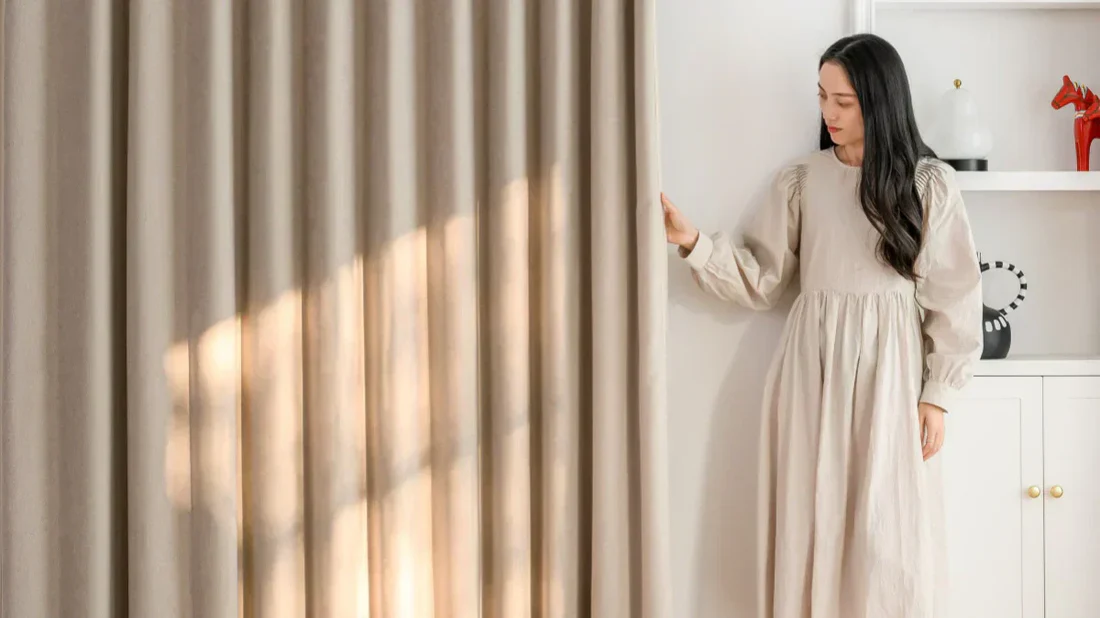
Why Window Orientation Matters More Than Fabric Color
Before discussing specific curtain solutions, it helps to understand why orientation plays such a critical role.
Sunlight changes direction throughout the day:
Morning sunlight arrives from the east.
Midday light comes from above.
Afternoon and evening sunlight enters from the west.
Each direction produces different lighting characteristics:
| Orientation | Light Quality | Common Challenges |
|---|---|---|
| East-facing | Bright, cool morning light | Early glare, sleep disruption |
| West-facing | Warm, intense afternoon light | Heat buildup, strong glare |
Curtains must respond differently to these conditions.
A curtain that works perfectly in one orientation may perform poorly in another. For example, sheer curtains may feel ideal in an east-facing living room but insufficient in a west-facing bedroom exposed to harsh sunset light.
Understanding these differences is the first step toward effective light control.
Understanding East-Facing Rooms
East-facing rooms receive direct sunlight shortly after sunrise. This light is typically cooler in tone and softer than afternoon sunlight, but it can still be very bright.
Benefits of East-Facing Light
East-facing spaces often feel refreshing and energizing in the morning. Natural light supports wakefulness and helps regulate circadian rhythms.
These rooms are excellent for:
breakfast areas
home offices
kitchens
morning activity spaces
However, the same sunlight can become problematic under certain conditions.
Common Challenges
Homeowners frequently encounter:
excessive brightness early in the day
glare on screens
overheating during summer mornings
unwanted early wake-ups in bedrooms
Curtains must soften light without completely eliminating it.
Curtain Strategies for East-Facing Rooms
1. Light-Filtering Fabrics
Light-filtering curtains are often the best solution for east-facing windows.
These fabrics diffuse sunlight rather than blocking it entirely, creating a soft glow that fills the room evenly.
Benefits include:
reduced glare
preserved natural brightness
gentle morning ambiance
Materials such as linen blends or textured polyester work particularly well because they scatter light naturally.
2. Layered Curtain Systems
Layering offers flexibility throughout the day.
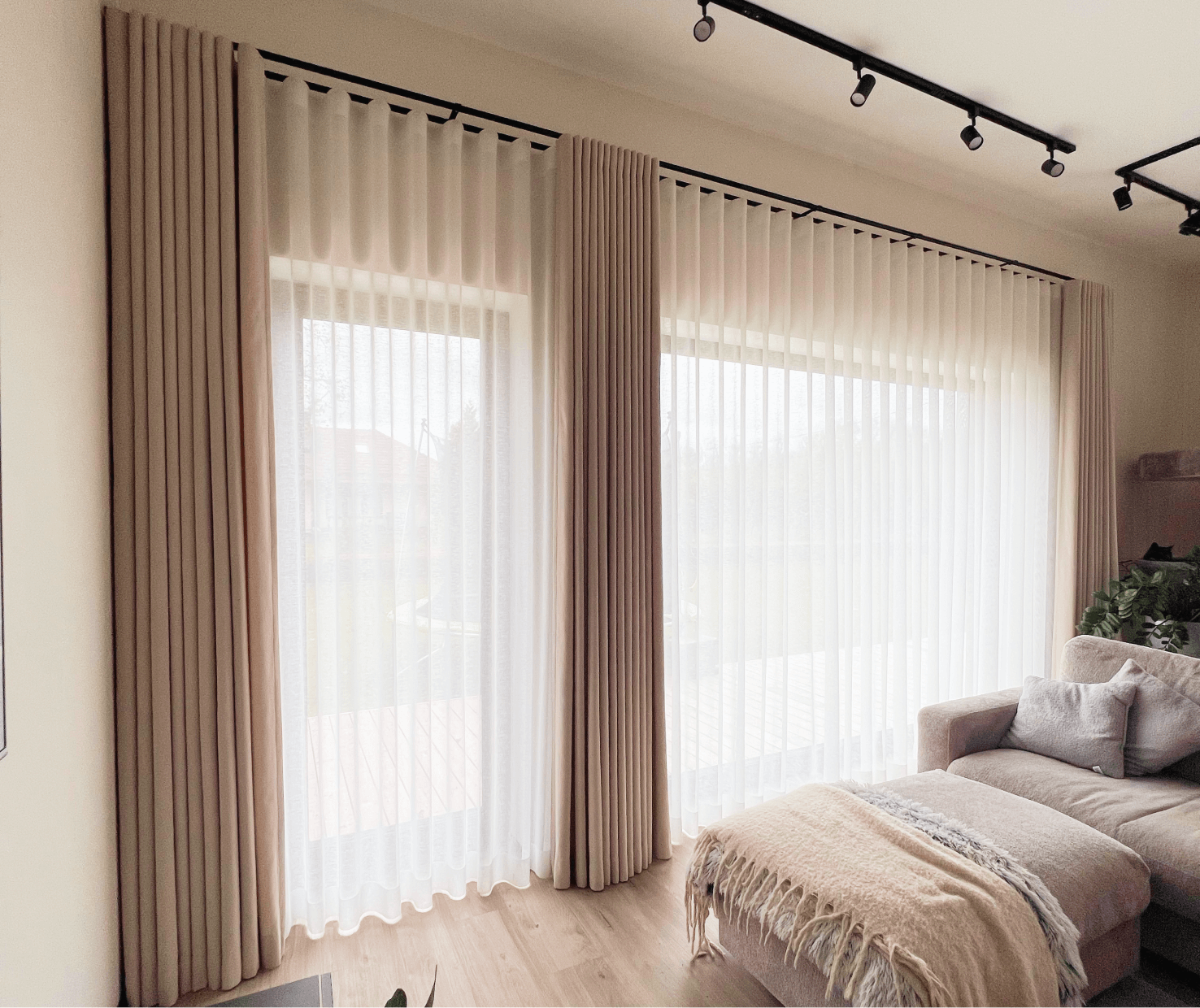
A common configuration includes:
sheer inner curtains
medium-weight outer panels
During the morning, sheer layers soften direct sunlight. Later, heavier curtains can be opened fully to maintain brightness without obstruction.
3. Adjustable Openness
East-facing light changes quickly during early hours. Curtains that allow partial adjustment provide better control.
Consider systems that allow:
center opening
side stacking
incremental closure
This flexibility prevents rooms from feeling either too dark or overwhelmingly bright.
Designing East-Facing Bedrooms
Bedrooms facing east require special attention.
Morning sunlight may wake occupants earlier than desired, especially during summer months when sunrise occurs very early.
A dual-layer solution works best:
blackout outer curtains for sleep hours
sheer inner curtains for daytime softness
This setup allows complete darkness at night while maintaining pleasant daylight once the day begins.
Understanding West-Facing Rooms
West-facing rooms experience an entirely different lighting pattern.
Sunlight entering from the west arrives later in the day and is typically warmer, stronger, and more intense.
Characteristics of West Sunlight
Afternoon sunlight:
travels at a lower angle
penetrates deeper into rooms
produces stronger glare
carries more heat energy
This combination often creates discomfort during late afternoon and evening hours.
Common Problems
West-facing spaces frequently struggle with:
overheating interiors
fading furniture and flooring
intense glare during sunset
difficulty watching screens or relaxing comfortably
Curtains in these rooms must prioritize heat and light control.
Curtain Strategies for West-Facing Rooms
1. Blackout or Room-Darkening Fabrics
Heavier fabrics help block strong sunlight before it enters the room.
Room-darkening curtains reduce brightness while still allowing some ambient light.
Blackout curtains provide maximum protection for spaces requiring strong light control.
These options are particularly useful for:
bedrooms
media rooms
living rooms used in the evening
2. Thermal Curtain Materials
Thermal-lined curtains contain insulating layers that reduce heat transfer.
Benefits include:
cooler indoor temperatures
reduced air-conditioning usage
improved comfort during summer afternoons
Thermal curtains are especially valuable in regions with strong sun exposure.
3. Neutral or Reflective Colors
Color affects how curtains handle heat.
Lighter backing colors reflect sunlight rather than absorbing it.
Even darker decorative fabrics can include light-reflective linings facing the window.
This combination maintains aesthetic appeal while improving performance.
Layering Techniques for West-Facing Windows
Layering is even more important in west-facing rooms.
A recommended system includes:
sheer curtains for daytime brightness
thick outer curtains for afternoon protection
During the morning, sheer layers allow gentle illumination.
In late afternoon, closing heavier panels prevents heat buildup and glare.
This dynamic adjustment keeps rooms comfortable throughout the day.
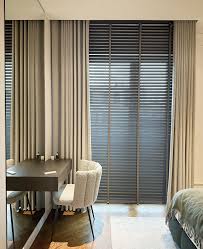
Hardware and Installation Considerations
Curtain performance depends not only on fabric but also on installation.
Mount Curtains Higher and Wider
Installing curtain rods higher than the window frame allows panels to cover light gaps more effectively.
Extending rods beyond window edges ensures better light blocking when curtains are closed.
Use Wraparound Rods
Wraparound rods prevent sunlight from leaking through side gaps.
This small detail dramatically improves blackout performance in west-facing rooms.
Combining Curtains with Other Window Treatments
Curtains can work alongside additional window solutions.
Examples include:
roller shades
cellular shades
blinds
Combining treatments allows layered control.
For example:
shades manage direct sunlight
curtains soften overall ambiance
This approach provides precision lighting control throughout the day.
Seasonal Adjustments
Sun angle changes across seasons.
In winter, sunlight sits lower in the sky and may penetrate deeper indoors.
In summer, sunlight becomes more intense.
Adjustable curtain systems allow homeowners to adapt without replacing treatments.
Heavier closures during summer afternoons and lighter configurations during winter maximize comfort year-round.
Energy Efficiency Benefits
Orientation-based curtain choices can improve energy efficiency significantly.
Proper light control helps:
reduce cooling costs in west-facing rooms
retain warmth during cooler months
minimize reliance on artificial lighting
Curtains essentially function as passive climate-control tools.
Over time, these benefits contribute to both comfort and cost savings.
Psychological Effects of Balanced Lighting
Lighting strongly influences emotional well-being.
Harsh glare may cause stress or fatigue, while soft natural illumination promotes relaxation.
East-facing rooms benefit from curtains that preserve morning brightness.
West-facing rooms benefit from solutions that prevent overwhelming late-day intensity.
When lighting feels balanced, spaces become more enjoyable for work, rest, and social activities.
Common Curtain Selection Mistakes
Many homeowners unintentionally reduce comfort by ignoring orientation.
Common mistakes include:
choosing sheer curtains for west-facing rooms
installing heavy blackout curtains in east-facing kitchens
ignoring side light leakage
selecting fabric based solely on appearance
Correcting these mistakes often produces immediate improvements in comfort.
Creating a Whole-Home Lighting Strategy
Rather than selecting curtains individually, consider the home as a complete lighting ecosystem.
Ask questions such as:
Which rooms need energizing morning light?
Which spaces require evening comfort?
Where does overheating occur most often?
Aligning curtain choices with daily routines creates a more harmonious living environment.
Final Thoughts
Choosing curtains based on window orientation is one of the most effective yet overlooked ways to improve indoor comfort.
East-facing rooms benefit from light-diffusing fabrics that soften bright mornings while preserving natural energy. West-facing rooms require stronger solutions that block heat and glare during intense afternoon sunlight.
By understanding how sunlight interacts with different spaces, homeowners can select curtains that do more than decorate—they actively shape lighting, temperature, and mood throughout the day.
Thoughtful curtain design transforms challenging light conditions into balanced, comfortable environments. Instead of fighting sunlight, the right window treatments allow you to work with it, creating a home that feels pleasant from sunrise to sunset.
Need Help with Your Custom Project?
Have questions about materials, sizing, or looking for a quick quote? Drop us a message and our experts will respond within 24 hours.
Chat on WhatsApp
+1 (304) 356-6765
Send us an Email
hello@incustom.com
Picked for You