
Outdoor living spaces have become an essential extension of the modern home. From cozy patio lounges and backyard dining sets to fire pit seating areas and poolside sectionals, outdoor furniture helps transform patios, decks, porches, and gardens into comfortable gathering places for family and friends.
However, as temperatures begin to drop and winter weather approaches, outdoor furniture faces a season of harsh environmental exposure. Snow, freezing rain, moisture buildup, frost, ice, wind, and fluctuating temperatures can all shorten the lifespan of your furniture if it is not properly protected.
One of the most effective ways to safeguard outdoor furniture during winter is by using high-quality waterproof covers. Proper winterization helps prevent moisture damage, mold growth, rust, fading, cracking, and structural deterioration while extending the long-term value of your investment.
This comprehensive guide explains how to prepare outdoor furniture for winter using waterproof covers, including cleaning methods, storage strategies, material-specific care tips, common mistakes to avoid, and how to maximize protection throughout the cold season.
Why Winter Protection Matters for Outdoor Furniture
Many homeowners assume outdoor furniture is designed to withstand all weather conditions year-round. While most outdoor furniture is more durable than indoor furniture, prolonged winter exposure still creates significant wear and tear over time.
Winter weather can damage:
Wood finishes
Metal frames
Fabric cushions
Wicker materials
Fasteners and joints
Protective coatings
Upholstery foam
Plastic components
Without proper protection, outdoor furniture may develop:
Rust
Mold and mildew
Water stains
Cracking
Splitting
Warping
Color fading
Corrosion
Structural weakness
Waterproof furniture covers act as a protective barrier against these environmental threats.
Understanding the Biggest Winter Threats to Outdoor Furniture
Different climates create different winter risks.
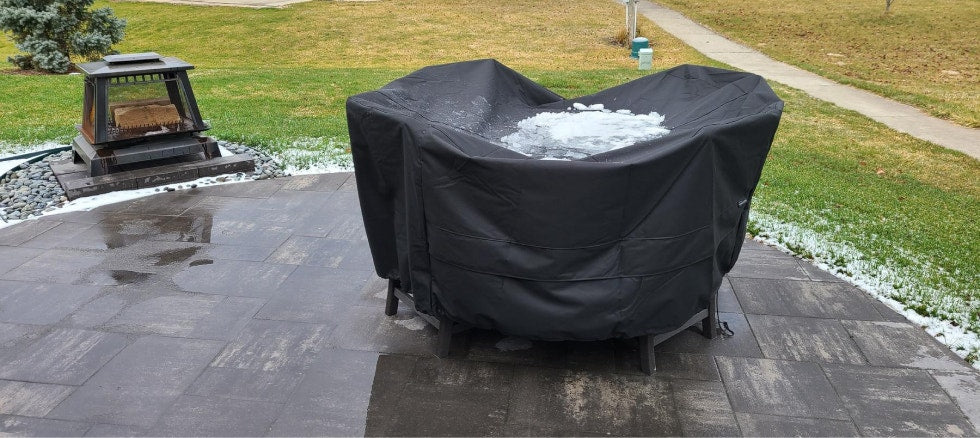
Moisture and Snow
Water is one of the most damaging elements for outdoor furniture.
Moisture can:
Soak into cushions
Freeze inside cracks
Cause wood swelling
Promote mildew growth
Accelerate metal corrosion
Snow buildup adds prolonged moisture exposure and extra weight stress.
Freeze-Thaw Cycles
Repeated freezing and thawing are especially destructive.
Water trapped inside:
Wood grain
Fabric seams
Small cracks
Weld joints
can expand when frozen, causing gradual structural damage.
UV Exposure During Winter
Many people forget that sunlight still affects furniture during winter.
UV rays continue to:
Fade fabrics
Dry out wood
Weaken synthetic materials
Waterproof covers help reduce year-round sun exposure.
Wind Damage
Winter storms can:
Blow furniture over
Scratch surfaces
Tear fabric
Dislodge cushions
Secure covers help stabilize furniture during windy conditions.
Why Waterproof Covers Are Essential
Waterproof covers provide several major benefits simultaneously.
They help:
Block moisture
Reduce UV exposure
Prevent debris accumulation
Minimize ice formation
Protect against dirt and bird droppings
Reduce mold growth
Keep furniture cleaner during off-seasons
Quality covers significantly reduce spring cleaning and repair work.
Waterproof vs Water-Resistant Covers
These terms are often confused.
Water-Resistant Covers
Water-resistant materials repel light moisture temporarily but may eventually allow water penetration during:
Heavy rain
Snow exposure
Long-term outdoor storage
Waterproof Covers
True waterproof covers use specialized coatings or laminated materials designed to prevent water penetration entirely.
These are better suited for:
Harsh winters
Snow climates
Wet regions
Long-term outdoor storage
Choosing the Right Outdoor Furniture Covers
Not all furniture covers offer equal protection.
Selecting the right cover is critical for effective winterization.
Material Quality Matters
High-quality waterproof covers commonly use:
Polyester with PVC backing
Vinyl-coated fabrics
Heavy-duty Oxford fabric
Solution-dyed polyester
Marine-grade materials
Good covers balance:
Waterproofing
Durability
Breathability
Why Breathability Is Important
Completely airtight covers can trap condensation inside.
This creates conditions for:
Mold
Mildew
Moisture buildup
The best covers include:
Ventilation panels
Breathable membranes
Airflow systems
These help reduce trapped humidity.
Proper Cover Sizing Is Critical
Oversized covers may:
Collect water
Flap excessively in wind
Trap debris
Undersized covers may:
Leave gaps exposed
Stress seams
Fail to secure properly
Measure furniture carefully before purchasing covers.
Features to Look for in Waterproof Furniture Covers
Important features include:
Reinforced seams
Adjustable straps
Elastic hems
Buckle systems
Air vents
UV-resistant coatings
Heavy-duty stitching
Padded handles
These details improve long-term performance.
Cleaning Furniture Before Winter Storage
Never cover dirty furniture for winter.
Trapped dirt and moisture create ideal conditions for:
Mold growth
Surface staining
Mildew
Odor buildup
Cleaning Wooden Outdoor Furniture
Use:
Mild soap
Soft brushes
Wood-safe cleaners
Allow wood furniture to dry completely before covering.
For teak or hardwood furniture:
Apply protective oil if recommended
Cleaning Metal Furniture
Inspect for:
Rust spots
Paint chips
Corrosion
Clean thoroughly and touch up damaged coatings if necessary.
Cleaning Outdoor Cushions
Cushions should be:
Washed
Fully dried
Stored separately if possible
Even waterproof covers may not fully prevent moisture issues in thick cushions during winter.
Indoor storage is ideal.
Cleaning Wicker Furniture
Synthetic wicker is more weather-resistant than natural wicker, but both benefit from cleaning before winter.
Use:
Soft brushes
Vacuum attachments
Mild soap solutions
Remove debris trapped in weaving patterns.
Why Furniture Must Be Completely Dry Before Covering
This is one of the most important winterization rules.
Covering damp furniture traps moisture inside.
This can lead to:
Mold
Mildew
Rust
Wood rot
Odors
After cleaning:
Allow furniture to air dry thoroughly
Choose sunny or low-humidity days for preparation
Elevating Furniture Improves Winter Protection
Furniture sitting directly on wet ground experiences greater moisture exposure.
Consider:
Furniture risers
Deck tiles
Bricks
Protective pads
Elevation improves airflow and drainage.
How to Secure Waterproof Covers Properly
Loose covers can become damaged during winter storms.
Use:
Buckles
Drawstrings
Tie-downs
Adjustable straps
A secure fit reduces:
Wind lifting
Water pooling
Abrasion damage
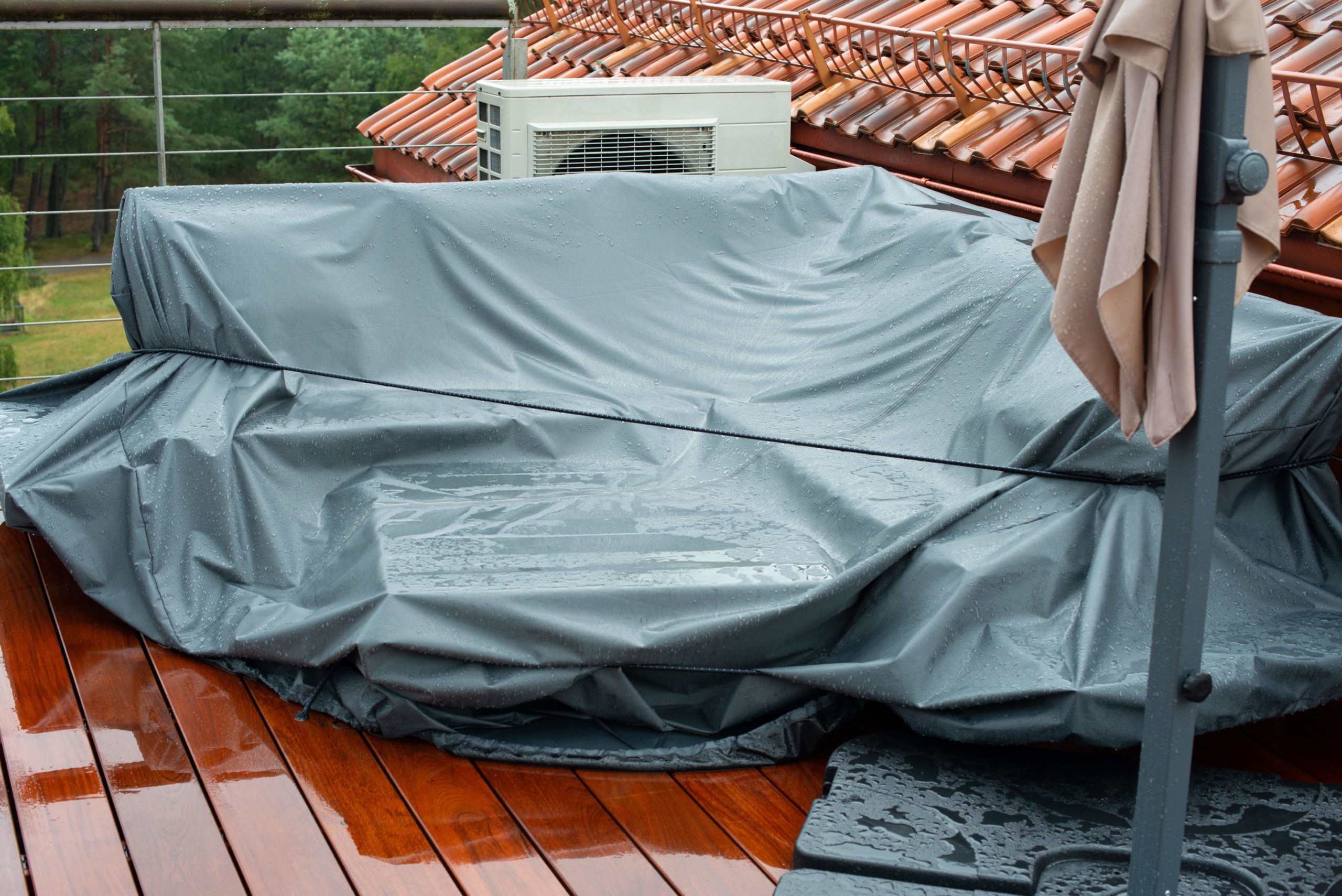
Preventing Water Pooling on Covers
Standing water weakens covers over time.
Water pooling also increases:
Stretching
Leakage risk
Ice formation
Create Sloped Surfaces
Raise the center of covers slightly using:
Support poles
Inflatable cover supports
Storage bins
Upside-down buckets
This encourages water runoff.
How Snow Affects Covered Furniture
Heavy snow creates:
Compression weight
Fabric stress
Seam strain
Remove excessive snow accumulation regularly.
Use:
Soft brooms
Foam snow tools
Avoid sharp shovels that may damage covers.
Winterizing Different Types of Outdoor Furniture
Different materials require slightly different protection strategies.
Wood Furniture Winterization
Wood is highly vulnerable to:
Moisture absorption
Cracking
Swelling
Use breathable waterproof covers and avoid trapping excessive humidity.
Metal Furniture Winterization
Aluminum resists rust well, but steel and iron require extra protection.
Inspect carefully for:
Exposed metal
Coating damage
Rust development
Plastic Furniture Winterization
Plastic furniture handles moisture well but may become brittle in freezing temperatures.
Covers help reduce:
UV damage
Surface fading
Ice stress
Wicker Furniture Winterization
Natural wicker should ideally be stored indoors.
Synthetic wicker tolerates outdoor winter storage better but still benefits greatly from waterproof covers.
Outdoor Cushion Storage Tips
Cushions are often the most vulnerable furniture components.
Even water-resistant cushions can develop:
Mold
Odors
Mildew
Foam deterioration
Best storage options:
Indoor closets
Storage benches
Waterproof deck boxes
Garage shelving
Fire Pit and Outdoor Heater Protection
Outdoor heating equipment also requires winter preparation.
Use weatherproof covers specifically designed for:
Fire pits
Patio heaters
Grill stations
Ensure equipment cools completely before covering.
Winter Protection for Patio Umbrellas
Umbrellas are highly vulnerable to winter wind damage.
Best practices:
Close umbrellas completely
Use fitted covers
Store indoors if possible
Remove detachable fabric canopies if recommended.
Common Winter Furniture Storage Mistakes
Covering Dirty Furniture
This traps contaminants and encourages mold growth.
Ignoring Ventilation
Completely sealed covers may increase condensation.
Leaving Cushions Outside
Cushions deteriorate faster than most frame materials.
Allowing Water Pooling
Pooling increases leak risks and ice damage.
Using Cheap Thin Covers
Low-quality covers tear more easily and provide weaker waterproofing.
Should Outdoor Furniture Be Stored Indoors?
Indoor storage offers maximum protection.
Ideal locations include:
Garages
Basements
Storage sheds
Covered patios
However, many homeowners lack sufficient space.
High-quality waterproof covers become especially important when furniture remains outdoors year-round.
How Climate Affects Winter Furniture Protection
Different regions require different approaches.
Snowy Northern Climates
Main concerns:
Snow weight
Freeze-thaw cycles
Ice buildup
Use heavy-duty waterproof covers with reinforced seams.
Rainy Coastal Regions
Main concerns:
Constant moisture
Salt air
Mildew
Breathability becomes especially important.
Dry Cold Climates
Even dry winters can cause:
UV damage
Material brittleness
Cracking
UV-resistant covers remain valuable.
Protecting Outdoor Furniture During Windstorms
Strong winds can damage both covers and furniture.
Extra precautions:
Anchor covers tightly
Store lightweight items indoors
Use weighted furniture bases
Check covers after storms.
Extending the Lifespan of Waterproof Covers
Furniture covers also require maintenance.
Clean Covers Periodically
Remove:
Dirt
Bird droppings
Leaf debris
Mold buildup
Use mild soap and water.
Inspect for Damage
Check regularly for:
Seam separation
Tears
UV cracking
Strap wear
Repair minor damage early.
Waterproof Cover Maintenance Tips
To maintain waterproof performance:
Avoid abrasive cleaning
Store dry when not in use
Reapply waterproofing sprays if recommended
Quality covers can last many seasons with proper care.
Why Winter Preparation Saves Money
Outdoor furniture can be expensive.
Proper winterization reduces:
Repair costs
Replacement frequency
Fabric deterioration
Structural damage
Preventive care is far more affordable than replacing damaged furniture sets.
Creating a Complete Winter Patio Strategy
The best winter preparation includes:
Furniture cleaning
Cushion storage
Waterproof covers
Drainage management
Wind protection
Periodic winter inspections
Layered protection works best.
Spring Preparation After Winter Storage
When winter ends:
Remove covers carefully
Clean surfaces lightly
Inspect for damage
Allow airflow before use
Proper winter care makes spring setup significantly easier.
Why Outdoor Furniture Protection Matters Year-Round
Although winter is the harshest season, waterproof covers remain useful throughout the year.
They also protect against:
Summer UV rays
Rainstorms
Pollen
Dust
Bird droppings
Tree sap
Many homeowners now use covers continuously whenever furniture is not in use.
The Future of Outdoor Furniture Covers
Modern cover technology continues improving.
New developments include:
Smart breathable membranes
Eco-friendly waterproof coatings
UV-reflective fabrics
Heavy-duty lightweight textiles
Enhanced ventilation systems
Future covers will likely become:
More durable
More breathable
Easier to secure
More environmentally friendly
Final Thoughts
Preparing outdoor furniture for winter is one of the most important steps homeowners can take to preserve the beauty, comfort, and lifespan of their outdoor living spaces. Harsh weather conditions—including moisture, snow, freezing temperatures, UV exposure, and wind—can gradually damage even high-quality patio furniture if left unprotected.
Waterproof furniture covers provide an effective barrier against these seasonal threats while helping reduce cleaning, maintenance, and replacement costs over time.
The key to successful winterization lies in combining several smart practices:
Cleaning furniture thoroughly
Ensuring complete dryness
Choosing properly fitted waterproof covers
Maintaining airflow
Preventing water pooling
Securing covers against wind
Whether you own a luxury outdoor sectional, a simple backyard dining set, poolside loungers, or a full patio entertainment area, proper winter preparation helps ensure your furniture remains protected, functional, and beautiful season after season.
With the right waterproof covers and consistent maintenance habits, your outdoor furniture can survive winter weather far more effectively—and be ready to enjoy again when warmer days return.
Need Help with Your Custom Project?
Have questions about materials, sizing, or looking for a quick quote? Drop us a message and our experts will respond within 24 hours.
Chat on WhatsApp
+1 (304) 356-6765
Send us an Email
hello@incustom.com
Picked for You