Kitchen & Dining Room Drapes: The Ultimate Deep-Clean Strategy for Grease and Odor

Mar 17 2026
In modern American home design, the "Open Concept" is king. We love the way our kitchen flows into the dining room, allowing the scent of a searing ribeye or a simmering marinara to fill the home. But there is a silent victim of this architectural trend: your custom curtains.
Kitchen and dining room drapes are the most "hard-working" textiles in your house. Unlike the curtains in your bedroom, these panels act as a massive, passive filter for every airborne particle produced by your stove. They don't just deal with dust; they deal with aerosolized grease, steam, and persistent food odors. If left untreated, these "culinary byproducts" bond with the fabric fibers, causing yellowing, stiffness, and a stale smell that no amount of scented candles can mask. Here is the professional-grade blueprint for deep-cleaning your kitchen drapes and reclaiming a fresh atmosphere.
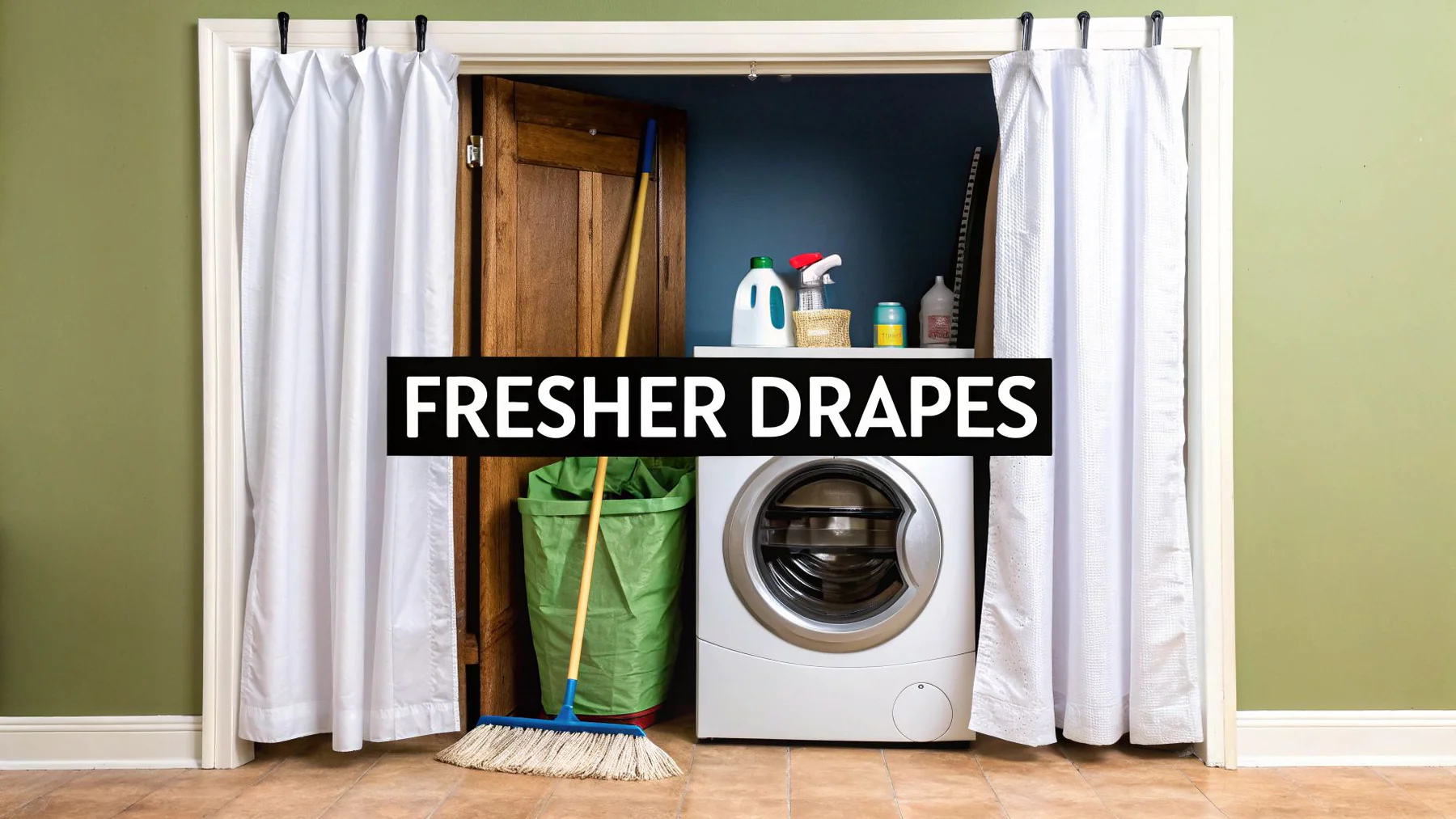
1. The Chemistry of the "Kitchen Film"
When you sauté or fry, tiny droplets of oil are launched into the air. These droplets are light enough to travel on thermal currents, eventually settling on the highest and most absorbent surfaces—your window treatments.
Once this grease hits the fabric, it undergoes oxidation. This is why white kitchen curtains often turn a dingy yellow over time. This "grease film" then acts as a literal magnet for household dust, creating a sticky, grimy layer that is far more difficult to remove than standard dirt.
2. Odor Neutralization: Beyond the Surface
Fabric is a porous material. Smells like fish, garlic, or curry are carried by organic molecules that "hook" into the microscopic crevices of the yarn.
The "Cover-Up" Mistake: Spritting your drapes with a fabric refresher might work for an hour, but it doesn't remove the molecule. It just layers a perfume on top of the grease. To truly remove odors, you must break the chemical bond between the organic molecule and the fiber.
3. The "Pre-Treatment" Ritual: Vacuuming and Air-Shaking
Before you apply any liquid or solvent, you must remove the "dry" contaminants. If you wet a curtain that is covered in grease-heavy dust, you will create a "mud" that pushes deeper into the weave.
The High-Power Vacuum: Use an upholstery attachment with soft bristles. Focus heavily on the headers and the top 12 inches of the drapes. This is where most grease-laden dust settles as heat rises from the stove.
The "Out-Door" Shake: If the panels are manageable, take them outside and give them a vigorous shake. This uses centrifugal force to dislodge dry particles that a vacuum might miss.
4. Deep-Cleaning Techniques by Fabric Type
Because kitchen drapes are so exposed, the cleaning method must be aggressive enough to cut grease but gentle enough to preserve the fabric's "hand."
Synthetic Blends (Polyester/Faux Linen)
Most modern kitchen drapes are high-quality synthetics because they are non-absorbent by nature.
The Solution: A mixture of lukewarm distilled water and a few drops of a degreasing dish soap (like Dawn).
The Technique: Use a microfiber cloth to "blot" the grease-heavy areas. The surfactants in the soap will break the molecular bond of the cooking oil. Rinse by blotting with pure distilled water.
Natural Fibers (Cotton/Linen)
These are "thirsty" fibers and are the hardest to clean in a kitchen environment.
The Solution: An enzyme-based cleaner or a diluted white vinegar solution ($1$ part vinegar to $4$ parts water).
The Technique: Vinegar is a natural acetic acid that cuts through grease and neutralizes alkaline odors (like fish). Warning: Always test a hidden corner first, as vinegar can slightly alter the pH and color of some natural dyes.
Sheers and Voiles
These are often the "yellowest" because they sit closest to the glass where heat is concentrated.
The Solution: An oxygen-based whitener (like OxiClean) in a bathtub soak.
The Technique: Avoid chlorine bleach, which can react with kitchen grease and turn the fabric even more yellow. A 2-hour soak in oxygenated water will lift the "bio-film" without damaging the delicate weave.

5. The "Steam-Extraction" Hack for Odors
If your drapes aren't visibly greasy but hold a stale "cooking smell," steam is your best friend.
High-temperature steam ($212°F$) doesn't just relax wrinkles; it opens the "pores" of the fabric.
Steam from the bottom up.
Follow with a dry microfiber cloth. As the steam loosens the odor-bearing oils, the dry cloth "wicks" them away.
Cross-Ventilation: Always perform this on a day when you can open the windows. You want the moisture (and the loosened odors) to exit the house immediately.
6. Preventative Maintenance: The "Chef’s Strategy"
To avoid having to deep-clean every six months, implement these three "pro" habits:
The Range Hood Rule: Never turn on the burner without turning on the vent fan. Even boiling water releases steam that carries dust to your curtains.
The "Cooking Screen": Use a splatter screen on pans to keep oil droplets contained at the source.
The Fabric Protector: Consider applying a high-end, aerosolized fabric protector (like Scotchgard) to new kitchen drapes. This creates a microscopic "shield" that prevents grease from penetrating the fibers, allowing it to be easily vacuumed off.
Summary: A Fresh Kitchen is a Clean Kitchen
Your kitchen and dining room are the heart of your home, and your drapes are the frame for that heart. By understanding the science of grease and odor, you can ensure that your home always smells like a fresh sanctuary rather than last night’s dinner.
Treat your textiles with the same care you treat your high-end cookware, and they will reward you with a decade of beauty and performance.
Is Your Kitchen Lighting Highlighting the Grime?
Grease film can also settle on your light fixtures and windows, making your carefully cleaned drapes look duller than they actually are.

Need Help with Your Custom Project?
Have questions about materials, sizing, or looking for a quick quote? Drop us a message and our experts will respond within 24 hours.
Chat on WhatsApp
+1 (304) 356-6765
Send us an Email
hello@incustom.com
Picked for You