Landscape Construction Challenges in Complex Terrain: Solutions from Retaining Wall Design to Water Feature Creation

Jul 15 2026
Creating a beautiful outdoor space is much more complicated when the land itself presents challenges. Flat, open areas may allow designers and builders to work with fewer limitations, but complex terrain requires deeper planning, stronger engineering solutions, and careful attention to natural conditions.
Sloped properties, uneven ground, rocky landscapes, poor drainage areas, and elevation changes can all create obstacles during landscape construction. However, these challenges do not mean a property cannot become an attractive and functional outdoor environment.
In fact, difficult terrain often creates opportunities for unique landscape designs. Hillsides can become dramatic garden levels. Natural slopes can support beautiful terraces. Water movement can be transformed into elegant streams or ponds.
The key is understanding the land and creating solutions that work with nature instead of against it.
From retaining wall engineering to drainage management and water feature construction, successful landscape projects depend on combining creativity with technical knowledge.
This guide explores the most common challenges of complex terrain and explains practical solutions that help transform difficult landscapes into stable, beautiful outdoor spaces.
Understanding the Challenges of Complex Terrain
Before construction begins, every landscape project should start with a detailed evaluation of the site.
Complex terrain creates several interconnected challenges.
These may include:
- Soil instability
- Steep slopes
- Water runoff problems
- Uneven elevation
- Limited access for construction equipment
- Erosion risks
- Structural requirements
- Planting difficulties
Ignoring these factors can lead to expensive repairs later.
A successful landscape design must consider not only how the space looks today but also how it will perform after years of rainfall, temperature changes, plant growth, and natural movement.
Challenge One: Managing Slopes and Uneven Ground
Sloped terrain is one of the most common challenges in landscape construction.
A steep slope can create problems such as:
- Soil erosion
- Water runoff
- Planting difficulties
- Limited usable space
- Safety concerns
However, slopes also offer opportunities for creative design.
Instead of trying to flatten the entire property, experienced landscape professionals often work with the existing landform.
Creating Functional Levels Through Terracing
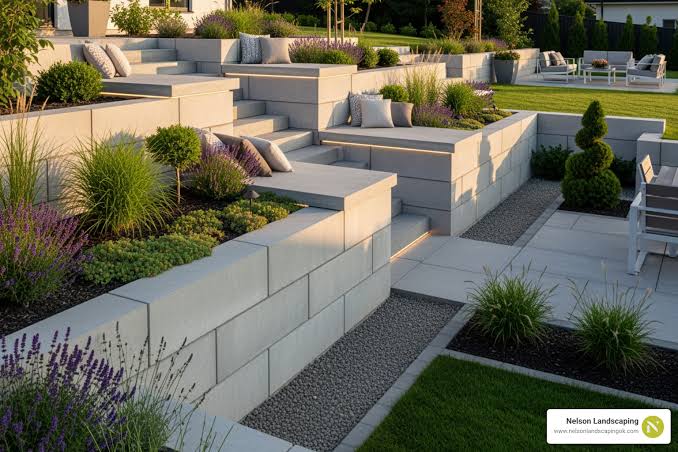
Terracing is one of the most effective solutions for steep landscapes.
A terraced design divides a large slope into several smaller levels.
Benefits include:
- Improved stability
- Reduced erosion
- More usable outdoor areas
- Better planting conditions
- More attractive visual structure
A hillside that was previously difficult to use can become a series of garden spaces, seating areas, pathways, or entertainment zones.
The Importance of Proper Slope Planning
Before creating terraces, professionals evaluate:
- Slope angle
- Soil composition
- Water movement
- Load requirements
- Local climate conditions
A poorly planned terrace may experience:
- Wall failure
- Soil movement
- Drainage problems
- Plant damage
Good design considers both appearance and long-term performance.
Retaining Wall Design: The Foundation of Hillside Landscaping
Retaining walls are among the most important structural elements in complex landscape construction.
Their primary purpose is to hold back soil and manage elevation changes.
However, a retaining wall is not simply a decorative barrier.
It is an engineered structure that must handle:
- Soil pressure
- Water pressure
- Weather conditions
- Ground movement
- Long-term loading
Choosing the Right Retaining Wall Material
Different materials provide different advantages.
The right choice depends on the site conditions, design goals, and budget.
Natural Stone Retaining Walls
Natural stone walls are popular because they blend beautifully with outdoor environments.
Advantages include:
- Natural appearance
- Strong durability
- Timeless design
- Compatibility with gardens
They are especially suitable for landscapes that emphasize organic, natural aesthetics.
Concrete Retaining Walls
Concrete provides excellent structural strength.
Advantages include:
- High durability
- Design flexibility
- Strong load capacity
- Long service life
Concrete walls are often used for larger elevation changes or areas requiring greater stability.
Timber Retaining Walls
Wood retaining walls can create a warm, natural appearance.
They are commonly used for:
- Small garden terraces
- Decorative landscaping
- Residential projects
However, proper treatment is necessary to protect against moisture and decay.
Segmental Retaining Walls
Segmental blocks are widely used because they combine appearance and practicality.
Benefits include:
- Easy installation
- Multiple design options
- Good drainage capability
- Structural flexibility
They are a popular choice for residential landscapes.
Why Drainage Is Critical Behind Retaining Walls
One of the biggest causes of retaining wall failure is poor water management.
Water creates pressure behind the wall.
Without proper drainage, this pressure can become stronger than the wall structure.
Effective retaining wall drainage may include:
- Gravel backfill
- Drainage pipes
- Filter fabric
- Proper grading
- Water outlets
A strong wall without proper drainage can still fail.
Common Retaining Wall Problems and Solutions
Problem: Wall Leaning Forward
Possible causes:
- Excessive soil pressure
- Poor foundation preparation
- Drainage failure
Solutions may include:
- Improving drainage
- Reinforcing the structure
- Rebuilding unstable sections
Problem: Cracks Appearing
Small cracks may be harmless, but large structural cracks can indicate movement.
Possible causes:
- Ground shifting
- Water pressure
- Incorrect construction methods
Professional evaluation is recommended before the damage increases.
Problem: Soil Erosion Around the Wall
Water flowing around the wall can remove supporting soil.
Solutions include:
- Improved grading
- Planting ground cover
- Installing erosion-control materials
Challenge Two: Managing Water Flow in Difficult Landscapes
Water is one of the most important elements in landscape construction.
It can create beauty through ponds, streams, and waterfalls.
However, uncontrolled water can also become one of the biggest threats to a landscape.
Complex terrain often creates unpredictable water movement.
Heavy rainfall can cause:
- Flooding
- Soil erosion
- Plant damage
- Foundation problems
Successful landscape design requires controlling water rather than simply redirecting it.
Understanding Natural Drainage Patterns
Before installing plants, patios, walls, or water features, professionals study how water naturally moves across the property.
Important factors include:
- High and low points
- Existing slopes
- Soil absorption ability
- Rainfall patterns
- Nearby structures
A landscape that ignores natural drainage often develops problems later.
Creating Effective Drainage Solutions
Several techniques can improve water management.
French Drains
French drains use underground gravel-filled channels and perforated pipes to redirect water.
They are useful for:
- Wet areas
- Sloped properties
- Foundation protection
Surface Drainage Systems
Surface drains collect water from areas where runoff accumulates.
They can help protect:
- Patios
- Walkways
- Outdoor structures
Proper Landscape Grading
Grading shapes the land to guide water naturally.
A well-designed slope can prevent water from pooling in unwanted areas.
Building Water Features on Complex Terrain
Water features are often the highlight of landscape projects.
However, creating ponds, streams, and waterfalls on uneven terrain requires careful planning.
A successful water feature must balance:
- Visual design
- Structural stability
- Water circulation
- Maintenance requirements
Designing Water Features That Work With the Landscape
One of the biggest mistakes in landscape construction is forcing a water feature into a site that naturally resists it. Instead, successful projects use the existing terrain to guide both the appearance and movement of water.
Complex landscapes often provide excellent opportunities for:
- Cascading waterfalls
- Natural-looking streams
- Reflecting ponds
- Rain gardens
- Decorative fountains
- Multi-level water systems
Rather than viewing elevation changes as obstacles, designers can transform them into features that add movement, sound, and visual interest.
For example, a hillside can naturally support a series of small waterfalls connected by pools, creating a more authentic appearance than a single large waterfall built on flat ground.
Building Stable Water Features
A beautiful water feature must also be structurally reliable.
Key construction considerations include:
- Proper excavation
- Stable foundations
- Waterproof liners
- Reliable pumps
- Filtration systems
- Overflow management
- Accessible maintenance areas
Ignoring any of these elements can lead to leaks, unstable structures, or expensive repairs.
Water features should be designed for long-term performance, not just visual impact on installation day.
Managing Water Circulation
Moving water remains healthier and easier to maintain than stagnant water.
An effective circulation system helps:
- Improve water clarity
- Reduce algae growth
- Prevent unpleasant odors
- Distribute oxygen
- Support aquatic plants and fish when included in the design
Pump capacity should match the size and elevation of the water feature to ensure consistent circulation.
Routine maintenance, such as cleaning filters and removing debris, is equally important.
Erosion Control: Protecting the Landscape Over Time
Erosion is one of the greatest long-term threats to landscapes built on uneven terrain.
Without proper control, rainwater can gradually remove soil, weaken retaining walls, expose plant roots, and damage hardscape features.
Effective erosion control combines engineering and landscaping techniques.
Ground Cover Plants
Dense ground cover helps stabilize soil by reducing direct exposure to rainfall.
Plants with spreading root systems can:
- Hold soil in place
- Reduce runoff
- Improve moisture retention
- Add visual appeal
Common choices include low-growing perennials, ornamental grasses, and creeping varieties suited to local climate conditions.
Mulching
Mulch helps protect exposed soil while improving moisture management.
Benefits include:
- Reduced erosion
- Improved soil temperature regulation
- Less weed growth
- Better water retention
Organic mulch also enriches the soil as it decomposes.
Erosion Control Fabrics
In areas with steep slopes or newly planted landscapes, erosion control blankets or geotextiles can provide temporary stabilization while vegetation becomes established.
These materials help:
- Hold soil in place
- Slow water movement
- Support seed germination
- Reduce washouts after heavy rainfall
Selecting Plants for Challenging Terrain
Plant selection plays a critical role in the success of landscapes built on complex terrain.
The right plants do more than enhance appearance—they also improve stability and reduce maintenance.
Factors to consider include:
- Root structure
- Water requirements
- Sun exposure
- Wind conditions
- Soil type
- Seasonal performance
Native plants are often excellent choices because they have adapted to local environmental conditions and generally require less maintenance once established.
Plants for Slopes
Steep areas benefit from plants with strong root systems.
Examples include:
- Ornamental grasses
- Shrubs
- Deep-rooted perennials
- Native ground covers
These plants help anchor soil while softening the appearance of retaining walls and terraces.
Plants for Wet Areas
Low-lying sections of the landscape may require moisture-tolerant species.
Suitable choices may include:
- Moisture-loving grasses
- Certain ferns
- Rushes
- Water-tolerant perennials
Selecting plants based on drainage conditions reduces long-term maintenance issues.
Access Challenges During Landscape Construction
Complex terrain often makes construction logistics more difficult.
Limited access can affect:
- Material delivery
- Equipment operation
- Worker safety
- Construction schedules
Narrow pathways, steep slopes, and existing structures may prevent large machinery from reaching certain areas.
In these situations, contractors may use:
- Compact equipment
- Specialized excavation tools
- Manual installation methods
- Staged material delivery
Although these approaches can increase labor requirements, they often minimize disturbance to the surrounding landscape.
Safety Considerations for Complex Landscape Projects
Safety should remain a priority throughout every phase of construction.
Potential risks include:
- Unstable slopes
- Falling materials
- Excavation hazards
- Heavy equipment operation
- Water-related hazards
Professional planning should include:
- Soil stability assessments
- Temporary erosion control
- Safe excavation practices
- Proper drainage management
- Regular site inspections
Investing in safety during construction helps prevent costly structural issues later.
Balancing Beauty and Functionality
One of the most successful landscape projects achieves a balance between aesthetics and engineering.
A retaining wall should provide structural support while complementing the surrounding environment.
A water feature should enhance the landscape without creating maintenance problems.
Pathways should be visually appealing while remaining safe and accessible.
Every design decision should contribute to both the appearance and long-term performance of the outdoor space.
Long-Term Maintenance for Landscapes on Complex Terrain
Even the best-designed landscape requires ongoing care.
Regular maintenance helps preserve structural integrity and prevent small issues from becoming major repairs.
Recommended maintenance includes:
- Inspect retaining walls for movement or cracks
- Clear drainage outlets of debris
- Check water feature pumps and filters
- Remove sediment from ponds and streams
- Replenish mulch as needed
- Prune vegetation to maintain healthy growth
- Monitor erosion after heavy storms
Routine inspections can identify problems early, reducing repair costs over time.
Common Mistakes to Avoid
Landscape construction on difficult terrain presents unique challenges, but many problems can be avoided with proper planning.
Common mistakes include:
Ignoring Drainage
A beautiful retaining wall can fail if water has nowhere to go.
Choosing Plants Based Only on Appearance
Plants should match the site's environmental conditions, not just the desired aesthetic.
Underestimating Soil Conditions
Different soil types behave differently under load and during heavy rainfall.
Building Water Features Without Maintenance Access
Every pond, stream, or waterfall should be designed so pumps, filters, and plumbing remain accessible.
Trying to Eliminate Every Natural Slope
Working with the terrain often produces better long-term results than attempting to reshape the entire site.
Future Trends in Landscape Construction
Modern landscape design continues to evolve with new technologies and sustainable practices.
Emerging trends include:
- Smart irrigation systems that monitor soil moisture
- Permeable paving materials that improve drainage
- Eco-friendly erosion control methods
- Rainwater harvesting systems
- Native and drought-tolerant planting designs
- Environmentally responsible construction materials
These innovations help create landscapes that are not only visually impressive but also more resilient and resource-efficient.
Final Thoughts: Turning Difficult Terrain Into an Opportunity
Complex terrain may seem intimidating at first, but it often provides the foundation for the most distinctive and rewarding landscape projects.
With thoughtful planning, sound engineering, and creative design, steep slopes, uneven elevations, and challenging drainage conditions can become defining features rather than obstacles.
Retaining walls create stability while adding architectural character. Carefully designed drainage systems protect the landscape from long-term water damage. Natural-looking streams, ponds, and waterfalls bring movement and tranquility to outdoor spaces. Strategic plant selection strengthens the soil while enhancing seasonal beauty.
Successful landscape construction is about more than solving technical problems—it is about understanding how land, water, plants, and structures work together as a complete system.
Whether you're developing a residential garden, a commercial property, or a public outdoor space, investing in proper planning and construction techniques will help ensure your landscape remains safe, functional, and beautiful for years to come.
If you're planning a landscape project on challenging terrain or need professional solutions for retaining walls, drainage systems, or custom water features, feel free to leave a comment or contact us for a personalized consultation and quote.
Need Help with Your Custom Project?
Have questions about materials, sizing, or looking for a quick quote? Drop us a message and our experts will respond within 24 hours.
Chat on WhatsApp
+1 (304) 356-6765
Send us an Email
hello@incustom.com
Picked for You