Modern Minimalist vs. Classic French: Choosing Hooks and Pleats for Different Interior Design Styles

Apr 08 2026
Window treatments are often described as the finishing touch of interior design, yet they quietly influence how an entire space feels. Curtains control light, shape proportions, soften architecture, and introduce texture — but one of the most overlooked details lies behind the fabric itself: the choice of hooks and pleats.
Many homeowners focus on fabric color or pattern while ignoring the structural elements that determine how curtains hang and move. The reality is that curtain hooks and pleating styles dramatically affect whether a room reads as sleek and contemporary or elegant and timeless.
Two design styles highlight this contrast especially well: modern minimalist interiors and classic French interiors. Each follows different philosophies about symmetry, texture, and visual rhythm, which means the same curtain fabric can look completely different depending on how it is constructed.
This guide explores how hooks and pleats work within these two popular design approaches, helping you choose window treatments that feel intentional, cohesive, and professionally styled.
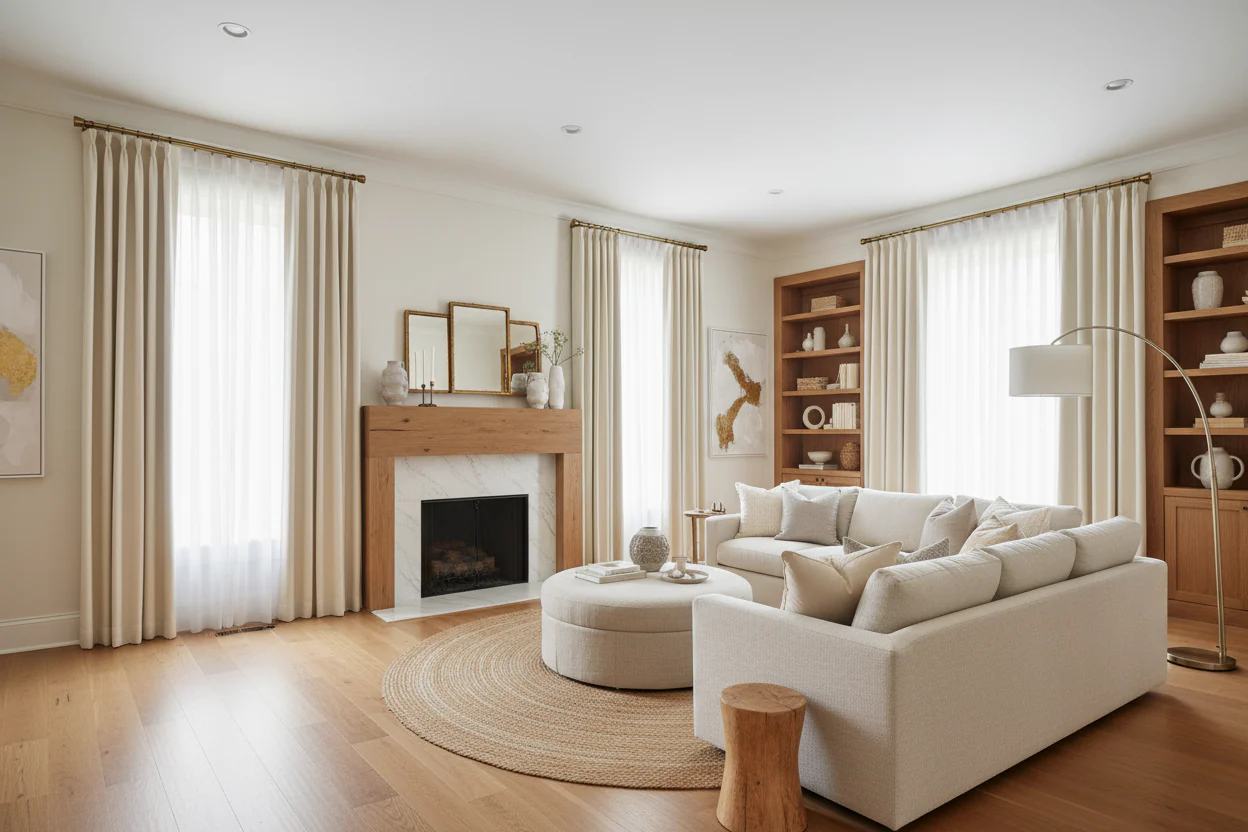
Why Hooks and Pleats Matter More Than Fabric Alone
Before comparing styles, it’s important to understand why construction details matter.
Curtains are not flat decorations. They are architectural elements shaped by gravity, spacing, and structure. Hooks and pleats determine:
- How fabric folds
- How light enters a room
- The perceived ceiling height
- Visual weight and elegance
- Ease of opening and closing
A minimalist room can instantly feel cluttered with overly decorative pleats. Likewise, a French-inspired space may feel unfinished with flat, utilitarian curtain headings.
The difference often comes down to engineering rather than decoration.
Understanding Curtain Hooks: The Hidden Framework
Curtain hooks connect fabric to rods or tracks, but their function goes far beyond attachment.
Main Types of Curtain Hooks
1. Pin Hooks
Metal hooks inserted into pleated headings.
Best for:
- Structured pleats
- Formal interiors
- Heavy drapery
They create clean vertical alignment and controlled folds.
2. S-Hooks or Wave Hooks
Used with track systems to create continuous waves.
Best for:
- Modern interiors
- Floor-to-ceiling curtains
- Smooth motion
These produce evenly spaced folds with minimal visual interruption.
3. Ring Hooks
Attached to curtain rings on rods.
Best for:
- Transitional designs
- Decorative rods
- Medium-weight fabrics
They add movement and a slightly casual elegance.
4. Hidden Track Hooks
Mounted inside ceiling tracks.
Best for:
- Minimalist architecture
- Seamless ceiling lines
- Contemporary apartments
They make curtains appear to float.
Understanding Pleats: The Language of Curtain Design
Pleats define personality.
They control how fabric gathers and how shadows form across the curtain surface.
Common pleat styles include:
- Pinch pleat
- French pleat
- Pencil pleat
- Wave pleat
- Box pleat
- Goblet pleat
Each creates a distinct emotional tone.
The Philosophy Behind Modern Minimalist Design
Modern minimalist interiors prioritize:
- Simplicity
- Clean lines
- Functionality
- Open visual space
- Neutral palettes
Influenced by Scandinavian and contemporary architecture, this style reduces visual noise.
Every element must feel purposeful.
Curtains in minimalist homes are not decorative statements — they are architectural extensions.
Hooks for Modern Minimalist Interiors
Minimalist spaces benefit from low-visibility hardware.
Ceiling Track Systems
Hidden tracks are the gold standard.
Advantages:
- Curtains appear integrated into architecture.
- Ceiling height feels taller.
- Hardware disappears visually.
This approach works especially well in open-plan living spaces.
Slim Metal Hooks
Choose:
- Matte black
- Brushed nickel
- White-coated steel
Avoid ornate finishes or large decorative shapes.
The goal is invisibility.
Even Spacing Is Essential
Minimalist design relies on repetition and rhythm.
Hooks should be evenly spaced to create precise folds. Irregular spacing disrupts the calm aesthetic.
Pleat Choices for Modern Minimalist Style
Wave Pleats (Ripple Fold)
The defining pleat of modern interiors.
Characteristics:
- Continuous flowing curves
- Uniform spacing
- Soft architectural appearance
Wave pleats create movement without visual complexity.
They complement glass walls, concrete textures, and neutral palettes.
Flat Panel Drapery
Sometimes the best pleat is almost no pleat.
Flat panels emphasize fabric texture rather than structure.
Ideal for:
- Linen
- Sheer fabrics
- Neutral tones
Avoid Overly Structured Pleats
Minimalism avoids:
- Heavy pinch pleats
- Goblet pleats
- Excess volume
These introduce traditional formality inconsistent with modern simplicity.
The Philosophy Behind Classic French Interiors
Classic French design celebrates refinement and romance.
Key characteristics include:
- Layered textures
- Elegant symmetry
- Soft ornamentation
- Historical influence
- Light-filled sophistication
Rather than reducing detail, French interiors curate it carefully.
Curtains become decorative features rather than background elements.
Hooks for Classic French Style
Hardware plays a visible role here.
Decorative Ring Hooks
Popular finishes include:
- Antique brass
- Gold tones
- Aged bronze
Rings add rhythm and gentle movement.
Traditional Pin Hooks
Pin hooks maintain structured pleats associated with European tailoring traditions.
They support heavier fabrics such as:
- Velvet
- Jacquard
- Silk blends
Visible Curtain Rods
Unlike minimalist design, French interiors often highlight rods as part of decor.
Finials may include:
- Sculpted ends
- Floral motifs
- Classical shapes
Hardware becomes jewelry for the window.
Pleat Choices for Classic French Interiors
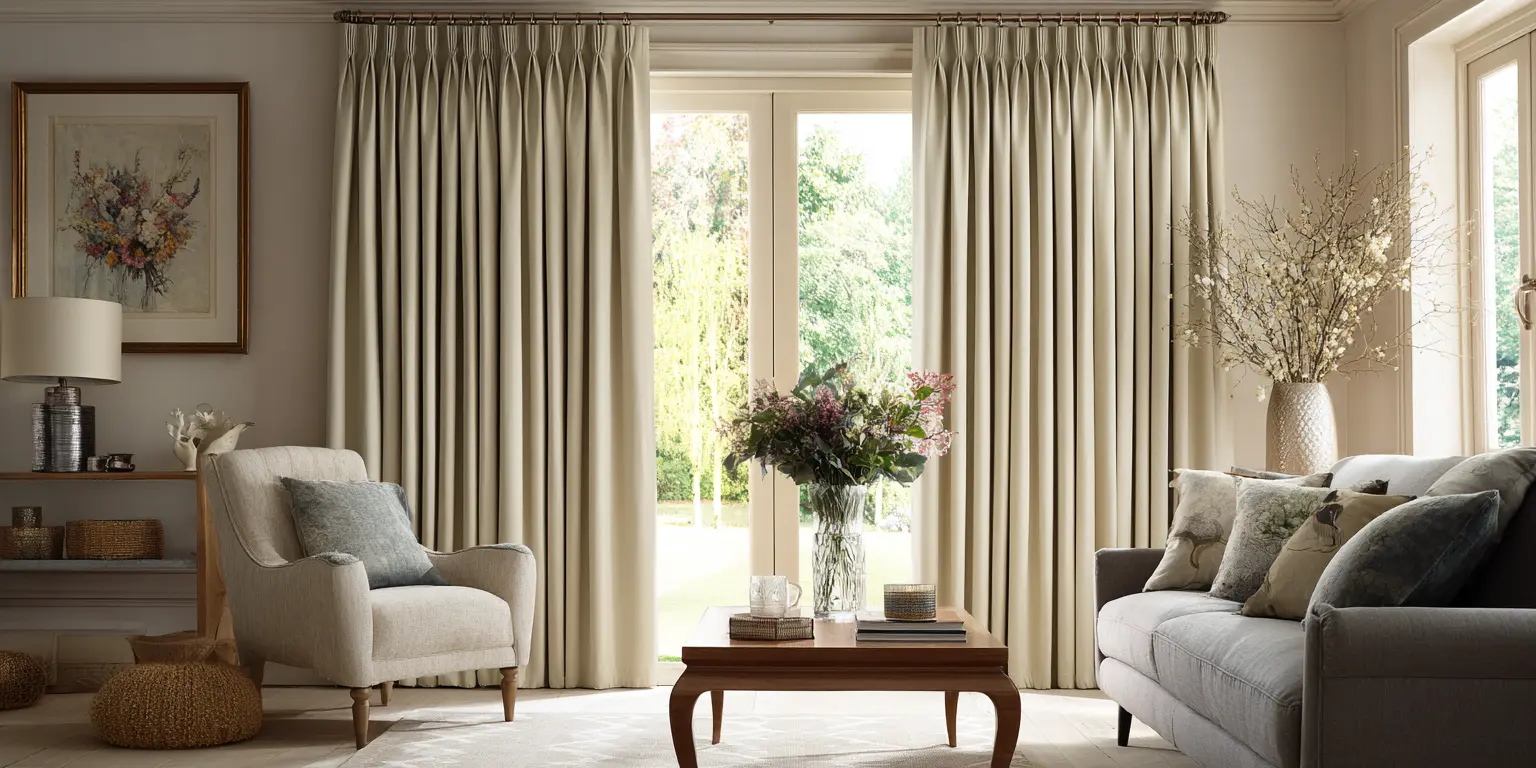
French Pleats (Triple Pinch Pleats)
The signature look.
Features:
- Three stitched folds at the top
- Elegant drape below
- Formal symmetry
They create depth and refined shadow lines.
Goblet Pleats
Inspired by traditional European interiors.
Best used in:
- Formal dining rooms
- Grand living spaces
- Tall windows
They add dramatic elegance.
Pencil Pleats
A softer option suitable for casual French country interiors.
They create many small gathers, adding warmth and charm.
Comparing Visual Effects: Minimalist vs. French
| Feature | Modern Minimalist | Classic French |
|---|---|---|
| Hardware visibility | Hidden | Decorative |
| Pleat structure | Soft waves | Structured folds |
| Fabric emphasis | Texture | Drapery volume |
| Mood | Calm & clean | Elegant & romantic |
| Movement | Smooth glide | Gentle cascading folds |
Fabric Interaction with Pleats
Pleats only work well when matched with appropriate fabrics.
Minimalist Pairings
Best fabrics:
- Linen blends
- Sheer voile
- Cotton textures
- Matte polyester
These enhance natural light diffusion.
French Style Pairings
Best fabrics:
- Velvet
- Silk
- Damask
- Heavy cotton
These support sculptural pleats.
Ceiling Height and Pleat Selection
Design professionals often use curtains to manipulate perceived height.
For Low Ceilings
Minimalist wave pleats elongate walls visually.
Mount tracks near ceiling level.
For High Ceilings
French pleats fill vertical space and prevent rooms from feeling empty.
Volume adds balance.
Color Interaction with Pleat Style
Pleats influence how color appears.
- Deep pleats create shadow contrast, intensifying color.
- Flat pleats soften color perception.
- Wave pleats create gradient light effects.
This is why minimalist rooms favor neutral tones — shadows remain subtle.
French interiors handle richer hues because structured folds add dimension.
Mixing Styles: Can Modern and French Coexist?
Yes — when balanced carefully.
A popular hybrid approach includes:
- Neutral fabrics
- Subtle pinch pleats
- Simplified rods
This creates a “modern classic” aesthetic.
Avoid combining ornate rods with ultra-minimal fabrics; contrast should feel intentional, not accidental.
Room-by-Room Recommendations
Living Room
Modern Minimalist
- Ceiling track
- Wave pleats
- Floor-length linen curtains
Classic French
- Decorative rod
- Triple pinch pleats
- Layered sheers and drapes
Bedroom
Minimalist bedrooms benefit from blackout wave curtains.
French bedrooms often include double layers for softness and luxury.
Dining Room
French pleats shine here, enhancing formality.
Minimalist dining rooms work better with tailored flat panels.
Small Apartments
Wave pleats maximize visual openness.
Bulky pleats may overwhelm compact spaces.
Common Mistakes When Choosing Hooks and Pleats
Choosing Style Before Architecture
Curtains should respond to room structure first.
Ignoring Fabric Weight
Heavy fabric with minimalist hooks causes sagging.
Incorrect Hook Spacing
Uneven spacing ruins symmetry instantly.
Mixing Too Many Elements
Stick to one dominant design language.
Maintenance Differences
Minimalist curtains:
- Easier to clean
- Less dust accumulation
- Smooth operation
French pleated curtains:
- Require occasional reshaping
- Benefit from professional cleaning
- Maintain structured appearance longer
Budget Considerations
Minimalist systems may cost more upfront due to tracks but save on fabric volume.
French pleats require more fabric — often 2–2.5× window width — increasing material cost.
However, both styles can scale to different budgets depending on fabric choice.
How Designers Decide: A Simple Rule
Interior designers often ask:
Should the curtain disappear or perform?
- If disappear → Modern minimalist.
- If perform → Classic French.
This single question clarifies most decisions.
The Emotional Impact of Each Style
Design affects psychology.
Minimalist curtains create:
- Calmness
- Focus
- Spatial clarity
French curtains create:
- Warmth
- Romance
- Historical richness
Neither is better — only different emotional goals.
Future Trends in Curtain Design
Current trends show increasing interest in:
- Motorized hidden tracks
- Sustainable fabrics
- Neutral palettes with tailored pleats
- Hybrid European-modern aesthetics
Homeowners increasingly value craftsmanship alongside simplicity.
Final Thoughts
Curtains are more than fabric panels; they are structural elements that shape how light, space, and emotion interact within a home. The choice between modern minimalist and classic French style is ultimately a decision about atmosphere.
Minimalist interiors rely on restraint, precision, and quiet elegance achieved through hidden hooks and flowing wave pleats. Classic French interiors embrace artistry, symmetry, and decorative refinement through visible hardware and sculpted folds.
By understanding how hooks and pleats influence visual language, you gain control over one of the most transformative details in interior design. The right combination elevates a room from simply furnished to thoughtfully composed.
When chosen intentionally, curtain construction becomes invisible craftsmanship — the subtle detail that makes a space feel complete without anyone immediately knowing why.
And that is the true power of well-designed window treatments.
Need Help with Your Custom Project?
Have questions about materials, sizing, or looking for a quick quote? Drop us a message and our experts will respond within 24 hours.
Chat on WhatsApp
+1 (304) 356-6765
Send us an Email
hello@incustom.com
Picked for You