More Than Just Rain Protection: A Complete Breakdown of Outdoor Cover Features You Should Consider

Jun 26 2026
When most people think about outdoor covers, the first thing that comes to mind is simple: rain protection. Whether it’s patio furniture, grills, outdoor sofas, or garden equipment, covers are often seen as basic shields against weather.
But in modern outdoor living, that view is outdated.
Today’s outdoor covers are no longer just waterproof sheets. They are engineered protective systems designed to handle multiple environmental stressors at once—sun exposure, wind pressure, temperature swings, dust accumulation, UV degradation, mold growth, and even air pollution.
Choosing the right outdoor cover is not just about “keeping things dry.” It’s about protecting your investment, extending product lifespan, and maintaining the visual and functional quality of your outdoor space.
This guide breaks down the essential features you should consider when selecting outdoor covers—beyond just rain resistance.
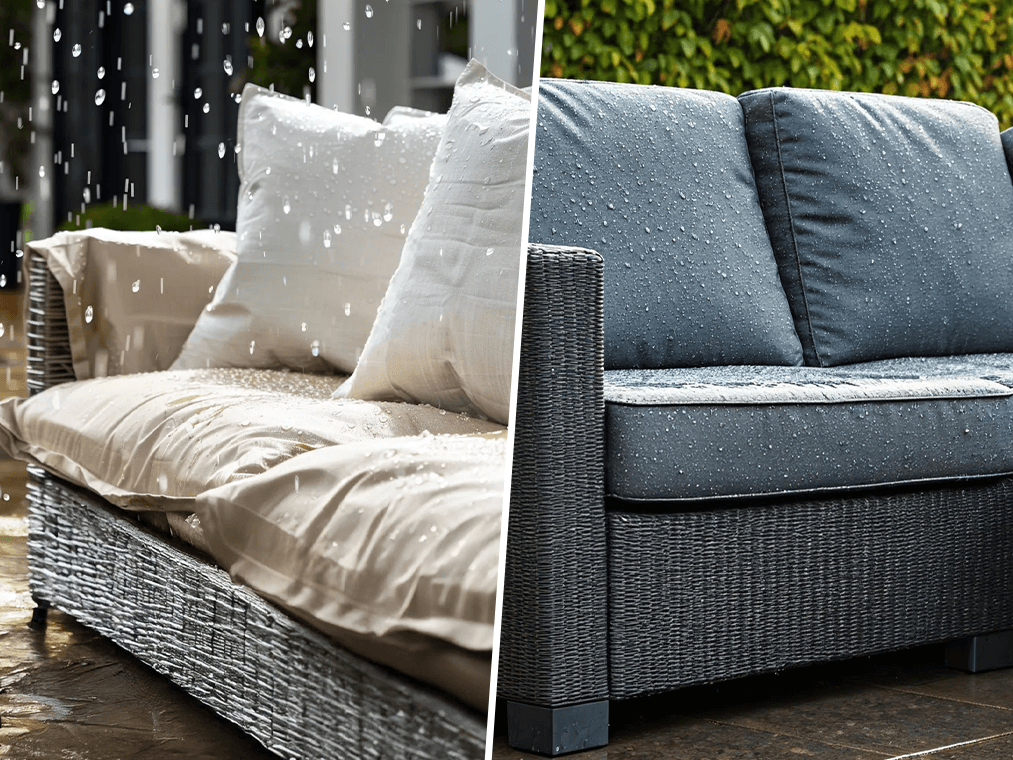
1. Waterproofing vs. Water Resistance: Understanding the Real Difference
The most common misconception is that all outdoor covers are “waterproof.” In reality, there is a major difference between waterproof and water-resistant materials.
Water-resistant covers
Can handle light rain and short exposure
May eventually allow moisture penetration
Often rely on coating rather than full barrier construction
Waterproof covers
Designed to block water completely
Use multi-layer laminated fabrics or sealed seams
Suitable for heavy rain and long-term exposure
However, even waterproof covers can fail if seams, stitching, or airflow design are poor.
The real performance comes from the entire system design, not just the fabric label.
2. UV Protection: The Silent Destroyer You Can’t Ignore
Sunlight is often more damaging than rain.
Ultraviolet (UV) radiation causes:
Fabric fading
Material brittleness
Surface cracking
Structural weakening over time
A high-quality outdoor cover should include:
UV-resistant coatings
UV-stabilized fibers
Long-term fade resistance
Without UV protection, even waterproof covers degrade quickly under continuous sunlight exposure.
In many climates, UV damage is actually the primary failure reason—not rain.
3. Breathability: Preventing Hidden Moisture Damage
One of the biggest mistakes in outdoor cover selection is focusing only on waterproofing while ignoring breathability.
When covers are completely sealed without ventilation:
Moisture gets trapped underneath
Condensation builds up
Mold and mildew begin to grow
Odors develop over time
Breathable covers solve this by allowing:
Water vapor escape
Air circulation
Temperature balance
High-end covers often use:
Microporous membranes
Ventilation panels
Air vents at strategic points
The goal is to keep external water out while allowing internal moisture to escape.
4. Wind Resistance: The Most Overlooked Performance Factor
Wind is one of the most destructive forces acting on outdoor covers.
Poorly designed covers can:
Flap violently
Tear at stress points
Be lifted off completely
Damage the furniture beneath through abrasion
Key wind-resistant features include:
Secure fastening systems
Adjustable straps
Buckles or drawcords
Elastic hems
Weighted design elements
Reinforced corners
Heavier fabric zones
Aerodynamic shaping
Contoured fit instead of loose draping
Reduced surface lift points
Wind resistance is not just about staying in place—it’s about preventing long-term structural wear.
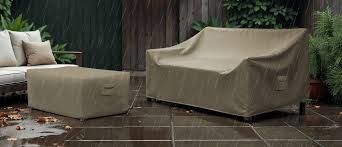
5. Temperature Resistance: Hot Summers and Freezing Winters
Outdoor covers must perform across extreme temperature ranges.
In high heat:
Materials can soften or deform
Adhesives may weaken
UV exposure intensifies material fatigue
In cold conditions:
Fabrics become brittle
Folding creases may crack coatings
Ice formation can stress seams
Good outdoor covers are engineered for:
Thermal stability
Flexibility across temperature ranges
Resistance to expansion and contraction cycles
This is especially important in regions with strong seasonal variation.
6. Mold and Mildew Resistance: The Invisible Threat
Moisture combined with heat creates the perfect environment for biological growth.
Without proper protection, outdoor covers can develop:
Mold spots
Mildew stains
Persistent odors
Fabric degradation
To prevent this, advanced covers often include:
Antimicrobial coatings
Moisture-wicking layers
Quick-dry fabrics
Ventilation-enhanced structures
Mold resistance is not just about cleanliness—it directly affects material lifespan and safety.
7. Dust and Pollution Protection
In urban and suburban environments, dust and airborne particles can accumulate quickly on outdoor furniture.
High-performance covers help prevent:
Fine dust infiltration
Pollen accumulation
Airborne pollutants settling on surfaces
Sticky residue buildup from environmental pollution
This is especially important for:
Outdoor dining sets
Cushioned seating
Grills and cooking equipment
A good cover reduces cleaning frequency and preserves surface quality.
8. Material Quality: The Foundation of Performance
The material determines almost everything about an outdoor cover’s performance.
Common materials include:
Polyester (Oxford fabric variants)
Lightweight
Cost-effective
Widely used
Can be enhanced with coatings
PVC-coated fabrics
Strong waterproof performance
High durability
Less breathable
Polyethylene blends
Good balance of cost and protection
Moderate durability
Premium multi-layer composites
UV + waterproof + breathable systems
Long lifespan
Higher cost but superior performance
Material selection should always match environmental conditions, not just budget.
9. Seam Construction: Where Most Failures Begin
Even the best fabric can fail if seams are poorly constructed.
Key seam considerations include:
Heat-sealed seams for waterproof integrity
Double stitching for reinforcement
Reinforced corner seams for stress resistance
Seam tape for leak prevention
Water often penetrates through stitching points before fabric failure occurs.
This makes seam engineering one of the most critical quality indicators.
10. Fit and Design: Why Size Matters More Than You Think
A poorly fitted cover can be more damaging than no cover at all.
Problems caused by incorrect fit:
Wind catch points
Water pooling on surfaces
Uneven stress distribution
Increased wear and tear
A well-designed cover should:
Match furniture dimensions closely
Maintain tension without overstretching
Avoid excessive loose fabric
Follow natural structural lines
Custom-fit or semi-tailored designs often outperform universal covers.
11. Ease of Use: Practical Design Matters
Functionality is just as important as protection.
Key usability features include:
Easy installation and removal
Lightweight handling
Clear orientation markers
Storage-friendly folding design
Quick fastening systems
If a cover is difficult to use, it is less likely to be used consistently—reducing its protective value.
12. Aesthetic Integration: Covers as Part of Outdoor Design
Outdoor spaces today are designed environments, not just functional areas.
That means covers should also:
Blend with surrounding colors
Avoid overly industrial appearance
Maintain clean visual lines
Support minimalist or natural aesthetics
Common color choices include:
Charcoal gray
Taupe
Sand beige
Olive tones
A well-chosen cover enhances, rather than disrupts, outdoor aesthetics.
13. Durability and Long-Term Value
Outdoor covers should be evaluated not just on initial cost, but on lifespan performance.
High-quality covers offer:
Multi-season durability
UV fade resistance over years
Stable waterproof performance
Structural integrity after repeated folding
Cheap covers may save money initially but often require frequent replacement, increasing long-term cost.
14. Environmental Considerations
Sustainability is becoming increasingly important in outdoor product design.
Eco-friendly cover features include:
Recyclable materials
Reduced chemical coatings
Longer product lifespan (less waste)
Energy-efficient manufacturing processes
A durable cover is inherently more environmentally responsible because it reduces replacement frequency.
15. Common Mistakes When Choosing Outdoor Covers
Many buyers make predictable mistakes:
Mistake 1: Choosing only based on price
Low cost often means reduced durability.
Mistake 2: Ignoring UV protection
Sun damage is often irreversible.
Mistake 3: Overlooking ventilation
Breathability is essential for long-term protection.
Mistake 4: Using one-size-fits-all covers
Poor fit leads to performance failure.
Final Thoughts: Outdoor Covers Are Engineering Products, Not Accessories
Outdoor covers are often underestimated. They are seen as simple protective layers, but in reality, they are complex material systems designed to manage multiple environmental forces simultaneously.
Rain is only one part of the equation.
A truly effective outdoor cover must also handle:
Sun exposure
Wind stress
Temperature fluctuations
Moisture control
Dust and pollution
Long-term material fatigue
When evaluated properly, a high-quality outdoor cover becomes a long-term protection system for your outdoor investment—not just a seasonal accessory.
Choosing wisely means your outdoor furniture doesn’t just survive the elements—it maintains its quality, appearance, and usability year after year.
Need Help with Your Custom Project?
Have questions about materials, sizing, or looking for a quick quote? Drop us a message and our experts will respond within 24 hours.
Chat on WhatsApp
+1 (304) 356-6765
Send us an Email
hello@incustom.com
Picked for You