Odor Alert: Do Your New Curtains Contain Excess Formaldehyde? A Complete Guide to Self-Checking Through Touch and Smell

Mar 24 2026
Few things feel as satisfying as installing brand-new curtains. Fresh fabric, updated colors, and improved light control can instantly transform a room. Yet many homeowners notice something unexpected soon after hanging new curtains — a sharp or unfamiliar odor lingering in the air.
This raises an important question:
Is the smell harmless “new fabric scent,” or could it indicate excessive formaldehyde or chemical residue?
Indoor air quality has become a growing concern in American homes, especially as people spend more time indoors. Curtains, often overlooked, are large textile surfaces capable of affecting air conditions significantly.
This comprehensive guide explains why new curtains sometimes smell, how formaldehyde enters household textiles, and — most importantly — how you can perform practical self-checks using touch and smell before relying on laboratory testing.

Why Curtains Can Affect Indoor Air Quality
Curtains are not just decorative fabrics. They are functional textiles engineered for durability, wrinkle resistance, color retention, and flame safety.
To achieve these properties, manufacturers often apply chemical finishing treatments such as:
- Anti-wrinkle resins
- Dye fixatives
- Anti-mold coatings
- Flame retardants
- Stain-resistant finishes
Some finishing agents may release volatile organic compounds (VOCs), including formaldehyde, particularly when products are newly manufactured or sealed during shipping.
Because curtains cover large vertical surfaces, even small emissions can influence indoor air perception.
What Is Formaldehyde and Why Is It Used in Textiles?
Formaldehyde is a colorless gas widely used in industrial manufacturing.
In textiles, it helps:
- Maintain fabric shape
- Prevent shrinkage
- Improve wrinkle resistance
- Stabilize dyes
- Increase durability
While regulated in many countries, trace amounts may still remain in finished products.
At elevated levels, formaldehyde may cause:
- Eye irritation
- Nose or throat discomfort
- Headaches
- Skin sensitivity
- Respiratory irritation in sensitive individuals
Understanding exposure risk begins with recognizing early warning signs.
The Difference Between Normal Fabric Smell and Chemical Odor
Not every smell indicates a problem.
Normal New Textile Smell
Typically described as:
- Mild
- Neutral or slightly starchy
- Fades within 24–72 hours
- Noticeable only at close range
Potential Chemical Warning Odor
Often characterized as:
- Sharp or pungent
- Slightly sweet yet irritating
- Similar to new furniture or strong paint
- Detectable across the room
- Causes discomfort during breathing
Persistent strong odor deserves closer evaluation.
Why Curtains Are More Likely to Retain Odors
Unlike clothing, curtains are:
- Thicker
- Multi-layered
- Less frequently washed before use
- Packaged tightly for shipping
Dense fabrics trap finishing chemicals longer, releasing them gradually after installation.
Temperature, humidity, and airflow influence how quickly odors dissipate.
Self-Check Method #1: The Smell Distance Test
This simple test helps assess emission intensity.
Step-by-Step
- Place curtain fabric in a ventilated room.
- Step back approximately six feet.
- Wait two minutes to reset your sense of smell.
- Walk toward the curtain slowly.
Interpretation
- Odor detectable only within inches: usually acceptable.
- Odor noticeable at arm’s length: moderate off-gassing.
- Odor obvious across the room: possible excessive chemical residue.
Strong room-wide odor signals a need for further action.
Self-Check Method #2: The Warm Fabric Activation Test
Heat accelerates chemical release, making hidden odors easier to detect.
Steps
- Rub a section of fabric between your hands for 15–20 seconds.
- Immediately smell the warmed area.
If odor intensity increases significantly after friction warming, residual finishing agents may still be present.
Self-Check Method #3: Touch and Texture Analysis
Chemical treatments alter fabric feel.
Warning Touch Indicators
- Sticky or slightly tacky surface
- Excessively stiff texture
- Powdery residue
- Artificially crisp feeling despite soft material claims
Natural fabrics typically feel breathable and flexible rather than rigid.
Self-Check Method #4: The Sealed Bag Test
This method concentrates emissions.
- Cut a small hidden fabric sample.
- Place it inside a sealed zip bag.
- Leave for 8–12 hours.
- Open and smell immediately.
A strong chemical burst suggests trapped volatile compounds.
Fabric Types and Formaldehyde Risk Levels
Different materials behave differently.
Higher Probability of Chemical Finishes
- Polyester blackout curtains
- Wrinkle-resistant blends
- Heavy printed fabrics
- Flame-retardant curtains
Lower Probability
- Organic cotton
- Linen
- Untreated hemp fabrics
- Certified eco-textiles
However, finishing treatments matter more than fiber type alone.
Color and Dye Influence on Odor
Dark or intensely dyed curtains sometimes require stronger dye fixation processes.
Deep colors like:
- Navy
- Charcoal
- Burgundy
may initially emit stronger odors compared to lighter tones.
This does not automatically mean unsafe levels, but it explains noticeable differences.
Environmental Factors That Intensify Odor
Several home conditions amplify perceived smell:
- Closed windows
- High humidity
- Warm indoor temperatures
- Newly painted rooms
- Poor ventilation
Improving airflow often reduces odor rapidly.
How Long Should New Curtain Odor Last?
Typical off-gassing timeline:
- 1–3 days: noticeable odor
- 4–7 days: significant reduction
- 2 weeks: minimal or undetectable
If strong odor persists beyond two weeks, further cleaning or replacement should be considered.
Safe Ways to Reduce Curtain Odors Quickly
1. Air Ventilation
Hang curtains near open windows for several days.
Air exchange is the most effective natural method.
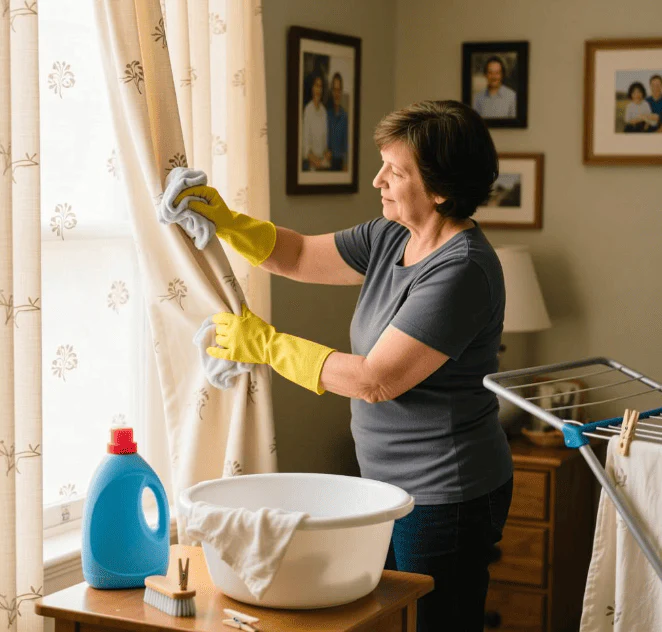
2. Gentle Washing
If fabric allows:
- Use mild detergent.
- Avoid heavy fragrances.
- Select delicate cycle.
- Air dry outdoors.
Washing removes surface residues effectively.
3. Steam Treatment
Garment steamers help release trapped compounds without aggressive washing.
4. Sunlight Exposure
Indirect sunlight accelerates chemical breakdown.
Avoid prolonged direct UV exposure for delicate fabrics.
What NOT to Do
Avoid common mistakes:
- Spraying strong air fresheners (masks odor only)
- Using harsh chemicals
- Sealing curtains in enclosed rooms
- Heating excessively with dryers
These methods may worsen emissions.
Signs You Should Stop Using the Curtains Immediately
Remove curtains if occupants experience:
- Persistent coughing
- Eye burning sensation
- Headaches near windows
- Skin irritation after contact
Sensitive individuals, children, and pets may react sooner.
Certifications That Indicate Safer Textile Production
When purchasing curtains, look for recognized textile safety labels indicating controlled chemical use.
These certifications often involve testing for harmful substance limits and manufacturing transparency.
While no product is entirely chemical-free, certified products generally maintain safer thresholds.
Why Price Does Not Always Equal Safety
Higher price does not automatically mean lower chemical content.
Factors influencing chemical residue include:
- Manufacturing speed
- Finishing processes
- Packaging duration
- Storage conditions
Evaluating smell and touch remains valuable regardless of brand.
The Role of Packaging in Odor Intensity
Curtains sealed in plastic during long shipping periods accumulate concentrated emissions.
Opening packaging outdoors or in ventilated spaces reduces indoor odor buildup immediately.
Special Considerations for Bedrooms and Nurseries
Sleeping spaces require stricter air quality awareness because exposure duration is longer.
For bedrooms:
- Air curtains before installation.
- Wash when possible.
- Avoid immediate overnight exposure after unboxing.
Nurseries benefit especially from low-odor textile choices.
Long-Term Indoor Air Quality Benefits
Choosing low-emission curtains contributes to:
- Better sleep comfort
- Reduced respiratory irritation
- Fresher indoor environment
- Improved overall home comfort perception
Curtains influence air more than many homeowners expect due to their size and surface area.
Future Trends in Curtain Manufacturing
Textile innovation increasingly focuses on healthier indoor environments.
Emerging developments include:
- Low-resin finishing technologies
- Plant-based textile treatments
- Water-based dye fixation
- Reduced VOC manufacturing processes
Consumer awareness continues driving safer production standards.
Quick Self-Inspection Checklist
Before hanging new curtains, ask:
- Does the odor fill the room?
- Does rubbing increase smell intensity?
- Does fabric feel overly stiff or coated?
- Does odor persist after ventilation?
If multiple answers are yes, additional airing or washing is recommended.
Final Thoughts: Trust Your Senses First
You don’t need specialized equipment to perform an initial safety check on new curtains. Your senses — especially smell and touch — are powerful early detection tools.
Most curtain odors fade naturally with ventilation and cleaning. However, persistent strong chemical smells deserve attention, particularly in spaces where families spend extended time.
By understanding textile treatments and applying simple self-check methods, homeowners can confidently enjoy new décor while protecting indoor comfort and air quality.
A beautiful home should not only look inviting — it should feel fresh, breathable, and safe from the moment you walk in.

Need Help with Your Custom Project?
Have questions about materials, sizing, or looking for a quick quote? Drop us a message and our experts will respond within 24 hours.
Chat on WhatsApp
+1 (304) 356-6765
Send us an Email
hello@incustom.com
Picked for You