Protect Your Ride: The Pros and Cons of Using a Car Cover When Parking Outdoors

Aug 13 2026
For many vehicle owners, parking outdoors is simply a fact of life. Not everyone has access to a private garage, covered parking space, or enclosed storage facility. Whether you park your vehicle in a driveway, apartment parking lot, workplace lot, or on the street, leaving a car exposed to the elements can raise an important question:
Should you use a car cover?
A quality car cover can provide a physical barrier against sunlight, bird droppings, tree sap, dust, rain, and other outdoor contaminants. It can also help keep a vehicle cleaner between washes and provide an additional layer of protection when the car sits unused for extended periods.
However, a car cover is not automatically beneficial in every situation.
If the wrong cover is used, installed incorrectly, or placed over a dirty vehicle, it can potentially create new problems. Trapped moisture, abrasive dirt, poor ventilation, wind movement, and difficult daily installation are all factors worth considering.
For that reason, choosing whether to use an outdoor car cover should not be based simply on the idea that "more protection is always better."
The right approach is to understand both the advantages and disadvantages, consider your parking environment, select the appropriate cover, and use it correctly.
This comprehensive guide explains the major benefits and potential drawbacks of car covers for outdoor parking, along with practical advice for choosing and maintaining one.
Why Outdoor Parking Can Be Hard on Your Vehicle
Before deciding whether a car cover is worthwhile, it helps to understand what your vehicle is exposed to when it remains outside.
A parked vehicle may encounter:
- Direct sunlight
- Ultraviolet radiation
- Rain
- Snow and ice
- Bird droppings
- Tree sap
- Pollen
- Dust
- Road grime
- Leaves
- Insects
- Wind-blown debris
- Industrial pollutants
- Salt in coastal environments
- Temperature fluctuations
- Moisture and humidity
Not all of these hazards create the same type of damage.
For example, intense sunlight can contribute to fading and deterioration of exterior materials over time. Bird droppings and tree sap can become difficult to remove if they remain on painted surfaces for extended periods.
Dust and sand can become a different kind of problem when they are trapped between a cover and the vehicle's paint.
That is why the effectiveness of a car cover depends not only on the material itself, but also on how it is used.
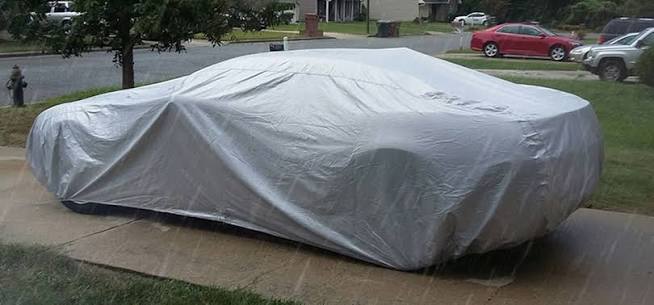
What Does a Car Cover Actually Do?
A car cover creates a physical barrier between your vehicle and the surrounding environment.
Depending on its construction, an outdoor car cover may help reduce exposure to:
- Sunlight
- Rain
- Dust
- Pollen
- Bird droppings
- Tree debris
- Snow
- Light environmental contaminants
Some covers are designed primarily for indoor use, while others are specifically engineered for outdoor conditions.
An outdoor cover generally needs to balance several characteristics:
Weather resistance
It should resist rain and environmental exposure.
Breathability
It should allow moisture vapor to escape rather than trapping condensation underneath.
Softness
The inner surface should minimize the risk of scratching or scuffing the vehicle's finish.
Durability
It should withstand repeated installation, removal, folding, and exposure to outdoor conditions.
Secure fit
It should remain reasonably stable in wind.
A cover that performs well in one category may perform poorly in another.
For example, an extremely waterproof material may not necessarily provide the best moisture management.
This is one reason why simply buying the thickest or heaviest cover available is not always the best strategy.
The Major Benefits of Using a Car Cover Outdoors
1. Protection From Direct Sunlight
One of the biggest advantages of a car cover is reducing direct exposure to sunlight.
Long-term sun exposure can affect various vehicle materials, particularly exterior surfaces and certain plastics, rubber components, and interior materials.
A cover can provide shade and reduce the amount of direct solar radiation reaching the vehicle.
This can be especially useful when your vehicle is parked outside for long periods.
If your driveway receives strong afternoon sunlight every day, for example, covering the vehicle can provide a consistent barrier between the paint and the sun.
However, the effectiveness depends heavily on the cover's material and construction.
A thin decorative cover may offer very different protection from a cover specifically designed for outdoor use.
When evaluating a product, look for construction intended for outdoor exposure rather than assuming any fabric cover provides meaningful protection.
2. Reduced Exposure to Bird Droppings
Bird droppings are more than an aesthetic annoyance.
They can contain substances that may be difficult on automotive finishes, particularly when left on the surface for extended periods.
A car parked under trees or in an area with a large bird population may be particularly vulnerable.
Instead of landing directly on your vehicle, contaminants can land on the exterior of the cover.
That can make cleanup easier.
Rather than repeatedly removing dried contamination from painted panels, you can remove and clean the cover itself.
This is particularly valuable for vehicles that are parked outside for days at a time.
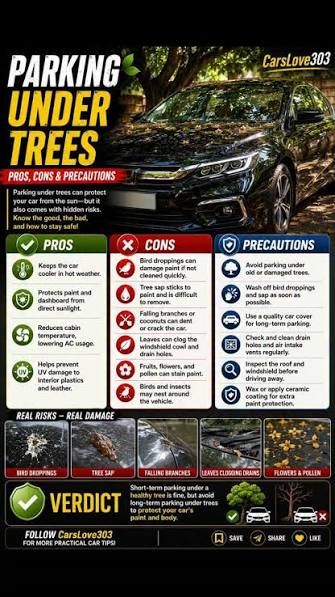
3. Protection From Tree Sap and Leaves
Parking under trees can create another set of problems.
Trees provide shade, but they can also produce:
- Sap
- Leaves
- Small branches
- Pollen
- Seeds
- Bird droppings
Tree sap can be particularly annoying because it may become sticky and difficult to remove.
Leaves can also accumulate around areas such as windshield wipers, roof channels, and other exterior gaps.
A car cover can reduce the amount of direct contact between these materials and the vehicle.
This does not eliminate maintenance, but it can make outdoor parking less demanding.
4. Less Dust and Pollen on the Vehicle
If your vehicle sits outside for several days without being driven, dust can accumulate surprisingly quickly.
The same is true for pollen during certain seasons.
A cover can act as a first line of defense.
Instead of the vehicle's entire exterior collecting airborne particles, much of the contamination settles on the cover.
This can be especially helpful for owners who want to keep a recently washed vehicle cleaner for longer.
However, this benefit comes with an important condition:
The cover itself must be kept clean.
A dirty cover can become a source of abrasion when it moves against the vehicle.
5. Added Protection During Light Weather Events
A suitable outdoor car cover can provide an additional barrier during rain, light snow, and other weather conditions.
It can reduce the amount of direct environmental exposure the vehicle receives.
However, a car cover should not be treated as a substitute for enclosed storage in extreme weather.
Heavy storms, strong winds, hail, flooding, and severe winter conditions can exceed what a conventional cover is designed to handle.
The cover is an additional protective layer, not an invincible shield.
6. Helps Keep the Vehicle Cleaner
One of the most obvious advantages is simple:
Your car may stay cleaner.
Instead of washing the entire vehicle after every period of outdoor exposure, you can remove the cover and potentially find a much cleaner exterior underneath.
This can reduce the frequency of certain cleaning tasks.
It is particularly useful for vehicles that are driven infrequently.
If your car is only used on weekends, for example, a cover can help prevent several days of dust and environmental buildup between drives.
7. Useful for Vehicles That Sit for Long Periods
Car covers are particularly practical when a vehicle remains parked for extended periods.
Examples include:
- Seasonal vehicles
- Classic cars
- Collector vehicles
- Second vehicles
- Recreational vehicles
- Vehicles used primarily on weekends
The less frequently a vehicle moves, the more time it has to accumulate environmental contamination.
A cover can provide continuous protection while the vehicle is stationary.
For daily drivers, the calculation can be different because frequent covering and uncovering becomes part of the routine.
8. Can Provide a Small Privacy Benefit
A car cover can also make the contents and appearance of a vehicle less visible.
While it should never be considered a substitute for proper security measures, covering a vehicle can reduce visual exposure.
Someone walking past may not immediately see:
- The interior
- Dashboard items
- Seat configuration
- Equipment stored inside
However, owners should remember that some locations or parking arrangements may have rules regarding vehicle covers.
Always consider local regulations, parking policies, and property rules before using one.
The Potential Disadvantages of Car Covers
A car cover is not a completely risk-free accessory.
Understanding the drawbacks is just as important as understanding the benefits.
1. A Dirty Cover Can Scratch Your Paint
This is one of the most important considerations.
A car cover does not magically prevent abrasion.
If dirt, sand, or grit becomes trapped between the cover and the vehicle, movement caused by wind or installation can potentially drag those particles across the paint.
The result may be:
- Fine scratches
- Swirl marks
- Scuffing
- Reduced gloss
This is why placing a cover over a dirty vehicle can be counterproductive.
If the vehicle has accumulated significant dirt, washing it before covering is generally a better approach.
The same principle applies to the cover itself.
A cover that looks clean from a distance may still contain fine particles.
Regular cleaning is therefore essential.
2. Wind Can Cause Movement
Wind is one of the biggest challenges associated with outdoor car covers.
A poorly fitted cover can move repeatedly against the vehicle.
Even if the cover material itself is soft, constant movement can create abrasion.
Strong winds can also:
- Pull the cover loose
- Expose portions of the vehicle
- Stress straps
- Damage the cover
- Cause the cover to contact nearby objects
A properly fitted cover should have a secure attachment system.
Depending on the design, this may include:
- Elastic edges
- Straps
- Buckles
- Tie-down systems
- Mirror pockets
- Reinforced attachment points
The goal is not simply to make the cover look fitted.
It needs to remain reasonably stable in the conditions where the vehicle is parked.
3. Moisture Can Become Trapped
Water resistance sounds like an obvious advantage, but excessive moisture retention can become a problem.
If rain or condensation gets beneath a poorly ventilated cover, moisture may remain trapped between the cover and vehicle.
This can create an unpleasant damp environment.
A quality outdoor cover should balance weather resistance with breathability.
The objective is not necessarily to create a completely airtight enclosure.
Instead, the cover should help keep external water away while allowing moisture vapor to escape.
This distinction is particularly important in humid environments.
4. Covering a Wet Vehicle Can Be a Bad Idea
Putting a cover over a wet vehicle can create problems depending on the conditions and cover design.
If the vehicle is wet from rain or washing, moisture may remain underneath the cover.
If you need to cover the car after washing, allowing it to dry thoroughly first is generally preferable.
This is one reason why a car cover is not always convenient during unpredictable weather.
If rain begins suddenly and you need to leave immediately, you may not have the opportunity to prepare the vehicle properly.
5. Installation Takes Time
A car cover requires an extra step every time you use your vehicle.
For some owners, this is insignificant.
For others, it quickly becomes annoying.
Consider a daily commute.
Every morning:
- Remove the cover.
- Fold or store it.
- Place it somewhere clean.
- Drive to work.
- Park.
- Wait for the vehicle to cool if necessary.
- Put the cover back on.
- Secure it.
That routine may become inconvenient.
If the cover is wet or dirty, the problem becomes even more noticeable.
For a vehicle driven every day, the convenience factor should be considered carefully.
6. Storage Can Be Surprisingly Difficult
A full-size vehicle cover takes up space.
You need somewhere to put it when the vehicle is being driven.
A wet cover requires additional consideration.
Putting a wet cover into a trunk or storage bag without allowing it to dry can create odor and moisture problems.
A practical storage system might include:
- A dedicated storage bag
- A clean garage shelf
- A drying area
- A waterproof container
- A large breathable storage space
Before buying a cover, consider where you will keep it.
7. Poor Fit Can Reduce Protection
One of the most common mistakes is purchasing a cover that does not fit the vehicle properly.
A cover that is too large may flap excessively in wind.
A cover that is too small may leave parts of the vehicle exposed.
The best fit depends on:
- Vehicle length
- Width
- Height
- Body shape
- Mirrors
- Spoilers
- Antennas
- Roof accessories
A universal cover may be convenient, but a vehicle-specific fit can provide better overall coverage and stability.
8. Some Covers Are Too Heavy
Heavy-duty construction can improve durability, but excessive weight can make daily use frustrating.
A very heavy cover may be difficult for one person to:
- Install
- Remove
- Fold
- Carry
- Clean
- Dry
For a vehicle that is rarely moved, weight may be less important.
For a daily driver, a lighter but well-designed cover may be more practical.
The best product is not necessarily the heaviest product.
9. A Cover Does Not Protect Against Everything
A car cover has limits.
It may reduce exposure to ordinary environmental contaminants, but it cannot guarantee protection against:
- Severe hail
- Falling tree branches
- Flooding
- Major storm debris
- Vehicle collisions
- Theft
- Vandalism
In severe weather, moving the vehicle to a protected location is usually a more effective strategy than relying entirely on a cover.
How to Choose the Right Outdoor Car Cover
Choosing the right cover requires more than picking the cheapest option.
Consider the following characteristics.
Material
Outdoor covers can be made from different combinations of synthetic fabrics and layered materials.
Important characteristics include:
- Water resistance
- Breathability
- UV resistance
- Tear resistance
- Soft inner surfaces
- Overall durability
A good outdoor cover should be designed specifically for outdoor use.
Do not assume an indoor dust cover is suitable for rain and sunlight.
Fit
Fit is one of the most important factors.
A properly fitted cover should cover the vehicle's major exterior surfaces without excessive loose material.
Look for features such as:
- Mirror pockets
- Elastic hems
- Adjustable straps
- Buckles
- Reinforced attachment points
The exact design will vary depending on the vehicle and manufacturer.
Breathability
Breathability deserves special attention.
A cover that blocks external moisture but allows internal moisture vapor to escape can be more practical than one that simply attempts to create a completely waterproof barrier.
This is particularly important in areas with:
- High humidity
- Frequent rain
- Large temperature fluctuations
- Coastal conditions
UV Resistance
If sunlight is your primary concern, UV resistance should be one of the major selection criteria.
A cover designed for outdoor exposure should be able to withstand repeated sunlight without rapidly deteriorating.
A cover that becomes brittle or damaged after a short period will provide poor long-term value.
Soft Inner Surface
The surface touching your vehicle matters.
A soft inner layer can help reduce the risk of scratches compared with rough materials.
However, even the softest material can become abrasive if dirt or grit is trapped underneath.
Material quality and cleanliness must work together.
Strap and Tie-Down System
A cover that does not stay in place is not very useful outdoors.
Look for a secure attachment system appropriate for your environment.
If your parking area is frequently windy, this becomes even more important.
Never assume that simply draping a cover over the vehicle is enough.
When Should You Use a Car Cover?
A cover can be especially useful when:
- Your vehicle is parked outside for long periods.
- Your parking space receives strong sunlight.
- You park beneath trees.
- Birds frequently gather in the area.
- Your vehicle is driven infrequently.
- You want to reduce dust accumulation.
- You own a seasonal or collector vehicle.
- You do not have access to covered parking.
These conditions generally make the benefits more attractive.
When Might You Skip the Car Cover?
A cover may be less practical when:
- You drive the vehicle multiple times every day.
- Your parking area is extremely windy.
- You cannot store the cover properly.
- You frequently park in locations where covers are inconvenient.
- The vehicle is already protected by a garage or high-quality covered structure.
- You are unable to keep the cover and vehicle clean.
In these situations, other forms of vehicle protection may make more sense.
Car Cover vs. Garage Parking
A garage provides the strongest overall protection because it removes the vehicle from direct outdoor exposure.
A garage can protect against:
- Sunlight
- Rain
- Snow
- Bird droppings
- Tree debris
- Wind
- Certain forms of vandalism
However, garage parking is not available to everyone.
A car cover can therefore serve as a practical middle ground between completely exposed parking and enclosed storage.
Think of the options as a spectrum:
Open parking → Car cover → Covered parking → Enclosed garage
Each step generally provides greater environmental protection, but also involves different costs and levels of convenience.
Car Cover vs. Ceramic Coating
A ceramic coating and a car cover serve different purposes.
A coating is applied directly to the vehicle's exterior.
A cover creates a physical barrier around the vehicle.
They are not necessarily competing solutions.
In some cases, they can complement one another.
A protected paint surface may be easier to clean, while a car cover can reduce the amount of contamination reaching the surface in the first place.
However, neither solution should be viewed as permanent protection against every outdoor hazard.
How to Use a Car Cover Correctly
Even an excellent cover can cause problems if used incorrectly.
Follow a consistent routine.
Step 1: Inspect the vehicle
Make sure there is no heavy dirt, mud, or abrasive debris on the paint.
Step 2: Allow the vehicle to dry
Avoid trapping unnecessary moisture beneath the cover.
Step 3: Inspect the cover
Check for dirt, sand, leaves, or other debris.
Step 4: Install carefully
Avoid dragging the cover aggressively across the paint.
Step 5: Secure the cover
Use the provided straps, buckles, or other attachment points.
Step 6: Check exposed areas
Make sure major portions of the vehicle are covered.
Step 7: Inspect periodically
If the vehicle remains covered for an extended period, occasionally check the condition underneath.
This allows you to identify moisture, dirt, or other problems before they become serious.
How to Clean and Maintain a Car Cover
The cover itself needs maintenance.
Follow the manufacturer's cleaning instructions whenever possible.
In general:
- Remove loose dirt before washing.
- Avoid harsh cleaning products unless specifically approved.
- Allow the cover to dry thoroughly.
- Do not store it while damp.
- Inspect seams and straps periodically.
- Replace the cover if the material becomes badly damaged.
A neglected cover can lose many of the benefits it was purchased to provide.
Special Considerations for Different Climates
Hot and Sunny Regions
In hot climates, UV resistance is particularly important.
Look for a cover designed for prolonged outdoor sunlight exposure.
Breathability is also valuable because heat can build up underneath the cover.
Rainy and Humid Regions
Moisture management becomes a major priority.
A balance between water resistance and breathability is important.
Avoid keeping a wet cover folded in storage.
Snowy Regions
Snow can place significant weight on a cover.
A conventional lightweight cover may not be designed to support heavy accumulation.
During severe winter conditions, follow the manufacturer's instructions and consider whether the cover is actually appropriate for the environment.
Coastal Regions
Salt and moisture can be particularly challenging near the coast.
Regular washing and inspection remain important even when a cover is used.
The cover reduces exposure but does not eliminate environmental contamination.
Does a Car Cover Prevent Scratches?
This question deserves a nuanced answer.
A properly designed and properly used cover can help protect a vehicle from environmental contamination.
But a cover itself can potentially contribute to scratches if:
- The vehicle is dirty.
- The cover is dirty.
- The cover moves excessively in wind.
- The material is rough.
- The cover is dragged across the paint.
- The fit is poor.
Therefore, the correct question is not:
"Can a car cover scratch my car?"
A better question is:
"How can I use a car cover without creating unnecessary abrasion?"
The answer involves cleanliness, correct material, proper fit, careful installation, and secure attachment.
Is a Car Cover Worth It?
For many outdoor vehicle owners, the answer can be yes.
But the value depends on how you use the vehicle and where you park it.
A car cover is particularly attractive if your vehicle:
- Remains outside for extended periods
- Receives strong sunlight
- Sits beneath trees
- Is driven infrequently
- Is valuable or difficult to replace
- Needs to remain clean between uses
The value may be lower if you:
- Drive every few hours
- Have covered parking
- Park in a highly windy location
- Dislike the maintenance required
- Cannot store the cover properly
In other words, there is no universal answer.
The right choice depends on your specific parking environment.
A Practical Decision-Making Checklist
Before purchasing an outdoor car cover, ask yourself:
About your parking location
- Is the vehicle exposed to direct sunlight?
- Is it parked beneath trees?
- Are birds common in the area?
- Is the parking space windy?
- Does the area receive frequent rain?
- Is the climate humid?
About your vehicle
- How often do you drive it?
- Is it a daily driver?
- Is it a classic or collector vehicle?
- Is maintaining the exterior especially important to you?
About the cover
- Is it designed for outdoor use?
- Does it provide adequate UV resistance?
- Is it breathable?
- Does it have a soft inner surface?
- Does it fit the vehicle properly?
- Does it have a reliable tie-down system?
- Can you clean and store it conveniently?
Answering these questions can help you determine whether a car cover makes sense.
The Best Strategy May Be a Combination of Protection Methods
You do not necessarily have to choose one protection method.
A comprehensive vehicle-care strategy can combine:
Regular washing
Removes accumulated contaminants before they become difficult to clean.
Paint protection
Depending on your goals, this may include wax, sealants, or professional paint-protection solutions.
Car cover
Reduces direct exposure when the vehicle is parked outdoors.
Covered parking
Provides additional environmental protection whenever available.
Regular inspection
Helps identify contamination, moisture, scratches, and other issues early.
The more consistently these measures are used, the easier it can be to maintain a vehicle's appearance over time.
Final Verdict: Are Car Covers Good or Bad?
The answer is neither.
A car cover is a tool.
Used correctly, it can be an effective way to reduce outdoor exposure and keep a parked vehicle cleaner and better protected.
Used incorrectly, it can create inconvenience, trap moisture, or contribute to paint abrasion.
The biggest benefits include:
- Reduced sun exposure
- Less dust and pollen
- Protection from bird droppings
- Reduced contact with tree sap and leaves
- Cleaner exterior surfaces
- Additional protection for infrequently driven vehicles
The biggest disadvantages include:
- Installation and removal time
- Storage requirements
- Potential paint abrasion
- Wind-related movement
- Moisture management concerns
- Limited protection during extreme weather
The key is matching the cover to the vehicle and environment.
For a car that sits outdoors beneath intense sunlight and trees for days at a time, a high-quality outdoor cover may be an extremely practical investment.
For a vehicle driven several times every day, however, the inconvenience may outweigh the benefits.
Ultimately, protecting your vehicle is not about buying the most expensive accessory.
It is about choosing the right protection for your actual environment and using it correctly.
A good outdoor car cover can become an important part of a vehicle-care routine—but only when cleanliness, fit, ventilation, weather conditions, and proper handling are taken seriously.
Your car may spend most of its life parked.
That does not mean it has to spend that time completely exposed.
Need Help with Your Custom Project?
Have questions about materials, sizing, or looking for a quick quote? Drop us a message and our experts will respond within 24 hours.
Chat on WhatsApp
+1 (304) 356-6765
Send us an Email
hello@incustom.com
Picked for You