Protecting Curtain Pleats: How to Wash Curtains Without Losing Their Perfect Drape

Mar 12 2026
Curtains do more than block light or provide privacy. They shape how a room feels. The softness of fabric, the rhythm of folds, and the way panels fall toward the floor all contribute to what designers often call visual calm. Among these elements, pleats and drape are the most delicate — and the most easily damaged during cleaning.
Many homeowners discover this the hard way. Curtains that once hung elegantly suddenly look flat, twisted, or uneven after washing. The fabric may still be clean, but the structure — the graceful vertical flow that gave the curtains character — seems permanently lost.
The truth is that curtain pleats are not accidental. They are engineered through fabric weight, stitching tension, and gravity. Cleaning without understanding this structure disrupts the balance.
The good news is that you can safely wash curtains and still preserve their beautiful drape. With the right preparation, washing method, drying technique, and reshaping process, your curtains can return to their original elegance — sometimes even better than before.
This guide explains exactly how to clean curtains while protecting pleats and maintaining that perfect cascading look.
Why Curtain Pleats Matter More Than You Think
When people notice beautiful curtains, they rarely focus on color first. Instead, they respond subconsciously to movement and form.
Pleats create:
visual rhythm
controlled shadows
dimensional texture
balanced proportions
softness without clutter
A well-maintained pleat structure makes curtains look tailored rather than wrinkled.
Once pleats collapse, curtains appear inexpensive even if the fabric itself is high quality.
Understanding What Creates a Perfect Drape
Before cleaning curtains properly, it helps to understand why they hang beautifully in the first place.
A curtain’s drape depends on several factors working together:
1. Fabric Weight Distribution
Heavier fabrics naturally fall into defined folds, while lighter fabrics require structural support from stitching or pleat design.
2. Memory Created by Sewing
Pleats are often stitched under tension during manufacturing. Over time, gravity reinforces these folds, creating “fabric memory.”
Improper washing can erase that memory.
3. Moisture and Fiber Behavior
Different fibers react differently to water:
Cotton relaxes and expands.
Polyester maintains shape better.
Linen softens dramatically.
Velvet compresses easily.
Understanding fiber response prevents accidental distortion.
4. Drying Direction
Gravity during drying determines whether pleats reform correctly or collapse randomly.
This is one of the most overlooked steps in curtain care.
The Biggest Mistake: Treating Curtains Like Regular Laundry
Curtains are architectural textiles, not everyday clothing.
Machine washing without preparation often leads to:
twisted seams
uneven shrinkage
flattened pleats
stretched headers
distorted hems
Cleaning success begins before water ever touches the fabric.
Step 1: Identify Your Curtain Type
Different constructions require different approaches.
Common styles include:
pinch pleat curtains
pencil pleat curtains
ripple fold curtains
grommet curtains
rod pocket panels
Pleated styles require the most careful handling because their shape depends on structured folds.
Fabric Identification Matters
Check labels or perform a simple touch test.
| Fabric | Cleaning Risk Level |
|---|---|
| Polyester blends | Low risk |
| Cotton | Medium risk |
| Linen | High reshaping needed |
| Velvet | Very delicate |
| Sheer fabrics | Easy to distort |
Knowing the material determines washing intensity.
Step 2: Prepare Curtains Before Washing
Preparation protects pleat geometry.
Remove Hardware Carefully
Take off:
hooks
rings
pins
weights (if removable)
Leaving hardware attached pulls fabric unevenly during washing.
Shake Out Dust First
Outdoor dust and indoor particles become abrasive in water.
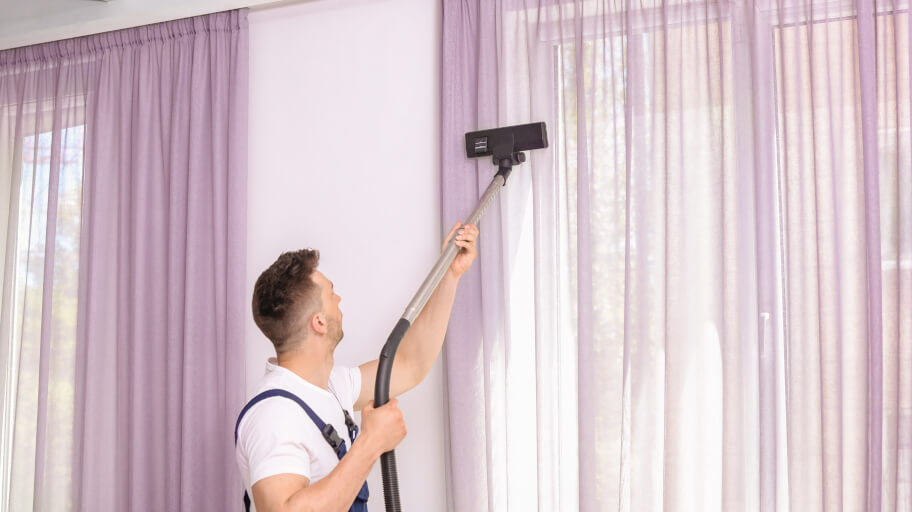
Shake panels outside or vacuum gently using a soft brush attachment.
Secure Pleats Before Washing
This is the secret professionals use.
Lightly tie pleats using:
cotton ribbons
fabric ties
loose elastic bands
Do not tighten. The goal is to guide folds, not compress them.
This preserves structural alignment during washing.
Step 3: Choosing the Right Washing Method
Machine Washing (When Safe)
Use only if the fabric label allows.
Settings should include:
delicate cycle
cold water
low spin speed
High agitation destroys pleat memory.
Load Size Matters
Wash curtains alone.
Crowded machines cause twisting and uneven pressure.
Curtains need space to move gently.
Hand Washing (Best for Pleated Curtains)
Fill a bathtub or large basin with lukewarm water.
Add mild detergent and gently submerge panels.
Avoid scrubbing or wringing.
Simply press water through the fabric.
This minimizes structural stress.
When Dry Cleaning Is the Better Choice
Choose professional cleaning for:
lined curtains
blackout fabrics
velvet
silk
heavily structured pleats
Some materials rely on internal layers that react poorly to water.
Step 4: Detergent Selection — Less Is More
Harsh detergents stiffen fibers and ruin drape.
Use:
mild liquid detergent
fabric-safe cleaners
small quantities only
Excess detergent leaves residue that makes fabric hang stiffly.
Avoid bleach and strong fragrance additives.
Step 5: The Critical Moment — Removing Curtains From Water
How you lift curtains matters.
Never pull from one corner.
Instead:
gather evenly from multiple points
support weight with both hands
keep pleats aligned
Wet fabric is significantly heavier and stretches easily.
Step 6: Skip the Dryer (Most of the Time)
Heat is the enemy of pleat structure.
Machine dryers:
shrink fibers unevenly
flatten folds
distort headers
Air drying produces far better results.
The Professional Drying Method
Rehang curtains while slightly damp.
Yes — before they are fully dry.
Steps:
Reinstall curtain hooks.
Hang panels immediately.
Arrange pleats by hand.
Smooth fabric downward.
Gravity reshapes folds naturally as curtains dry.
This single step often determines final appearance.
Step 7: Hand-Shaping Pleats
After hanging, gently reshape folds.
Use both hands to guide fabric into original lines.
Work from top to bottom.
Do not pull aggressively — encourage rather than force.
Within hours, pleats begin setting again.
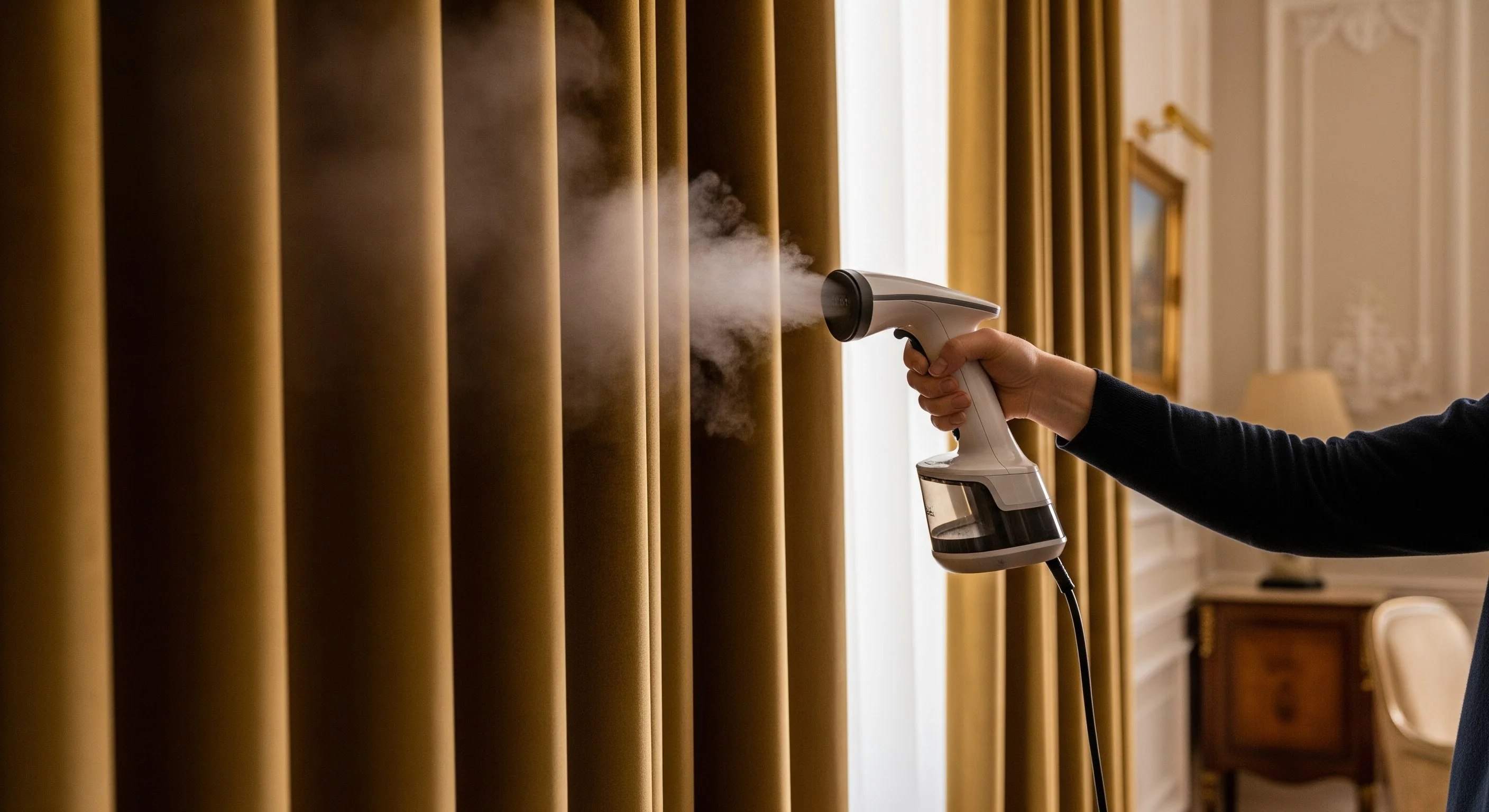
Using Steam Correctly
Steam helps fibers relax and remember their structure.
Hold a garment steamer several inches away.
Allow steam to fall vertically along pleats.
Avoid pressing directly against fabric.
Steam plus gravity restores drape safely.
Step 8: Weight Distribution Tricks Designers Use
If pleats look slightly loose after drying, try adding temporary weight.
Clip small weights or damp towels at curtain bottoms for several hours.
This encourages vertical alignment.
Many professional installers use this technique during installation.
Common Washing Mistakes That Destroy Curtain Drape
Over-Spinning
High spin cycles twist pleats permanently.
Drying Horizontally
Flat drying causes uneven creasing.
Overloading the Washer
Crowding prevents natural fabric movement.
Ignoring Fabric Type
Different materials require different handling.
Ironing Incorrectly
Direct ironing flattens dimensional folds.
Steam is safer than pressing.
Maintaining Pleats Between Washes
Frequent washing isn’t necessary.
Instead:
vacuum curtains monthly
shake out dust seasonally
open windows carefully during windy days
keep airflow circulating indoors
Less washing means longer-lasting structure.
How Humidity Affects Curtain Shape
Moisture levels influence drape.
High humidity softens fibers, causing folds to relax.
Low humidity stiffens fabric.
Using indoor humidity control helps curtains maintain consistent appearance.
Seasonal Curtain Care Strategy
Spring
Light cleaning and dust removal.
Summer
Protect from UV fading and humidity.
Fall
Deep cleaning if needed.
Winter
Minimal washing; focus on airflow.
Seasonal care prevents heavy restoration work later.
When Curtains Need Professional Reshaping
Sometimes pleats lose definition after years of use.
Signs include:
uneven spacing
twisting folds
sagging headers
Professional steaming or re-pleating services can restore structure without replacement.
Extending Curtain Lifespan Through Proper Cleaning
Well-maintained curtains can last over a decade.
Correct washing preserves:
stitching tension
fabric texture
color integrity
structural balance
Improper cleaning shortens lifespan dramatically.
The Design Impact of Perfect Drape
When curtains hang correctly, rooms feel:
taller
calmer
more refined
visually organized
The effect is subtle but powerful.
Perfect drape frames windows the way tailored clothing frames the body.
A Simple Cleaning Checklist
Before washing:
identify fabric
secure pleats
remove hardware
During washing:
gentle cycle or hand wash
mild detergent
low agitation
After washing:
hang while damp
reshape folds
steam lightly
Following this sequence protects structure every time.
Final Thoughts: Clean Curtains Without Losing Elegance
Cleaning curtains should refresh your home, not change its character.
Pleats and drape are the result of careful design, gravity, and fabric memory working together. When washing respects these principles, curtains return to their windows looking soft, balanced, and beautifully structured.
The key isn’t complicated equipment or professional-level expertise — it’s understanding how fabric behaves and allowing gravity and moisture to do the work naturally.
With thoughtful preparation, gentle cleaning, and proper drying, you can maintain that perfect cascading look year after year.
Because truly beautiful curtains aren’t just clean — they move gracefully, fall naturally, and quietly elevate the entire room every single day.
Need Help with Your Custom Project?
Have questions about materials, sizing, or looking for a quick quote? Drop us a message and our experts will respond within 24 hours.
Chat on WhatsApp
+1 (304) 356-6765
Send us an Email
hello@incustom.com
Picked for You