Seasonal Storage Guide: How to Properly Store Custom Curtains When Taking Them Down

Mar 20 2026
When seasons change, our homes change with them. Heavy winter drapes give way to breezy summer sheers, blackout curtains rotate with daylight needs, and decorative panels are swapped to match evolving interior styles. While replacing curtains may feel simple, storing custom curtains correctly is often overlooked — and that mistake can shorten their lifespan dramatically.
Unlike mass-produced window treatments, custom curtains are investments. They are tailored to precise window measurements, carefully selected fabrics, and specific interior aesthetics. Improper storage can lead to wrinkles that never relax, mold growth, fading, fiber damage, and even permanent deformation.
This comprehensive guide walks you through how to remove, clean, fold, protect, and store custom curtains properly during seasonal transitions, ensuring they remain fresh, functional, and beautiful year after year.
Why Proper Curtain Storage Matters More Than You Think
Many homeowners assume curtains can simply be folded and placed in a box until next season. Unfortunately, fabric behaves differently during long-term storage.
Custom curtains often feature:
High-quality natural fibers
Specialized linings
Weighted hems
Interlinings for insulation
Decorative pleats or structured headers
These elements make them more sensitive to pressure, moisture, and temperature changes.
Improper storage may cause:
Permanent creasing
Yellowing or discoloration
Odor absorption
Fabric weakening
Pest damage
Mold or mildew formation
Replacing custom curtains can cost hundreds or even thousands of dollars, so careful storage is essentially preventive maintenance for your home décor investment.
Step 1: Inspect Curtains Before Taking Them Down
Before removing your curtains, spend a few minutes inspecting them closely.
Look for:
Dust buildup near the top pleats
Sun fading along edges
Small stains or splashes
Loose threads or seam stress
Hardware wear
This inspection helps determine whether cleaning or repairs are necessary before storage.
Why inspection matters
Storing dirty curtains traps contaminants inside folded fabric layers. Over time, oils and dust oxidize, leading to permanent discoloration. Minor stains that could have been removed easily may become impossible to treat months later.
If you notice damage, repair it now. Small fixes prevent larger issues during storage.
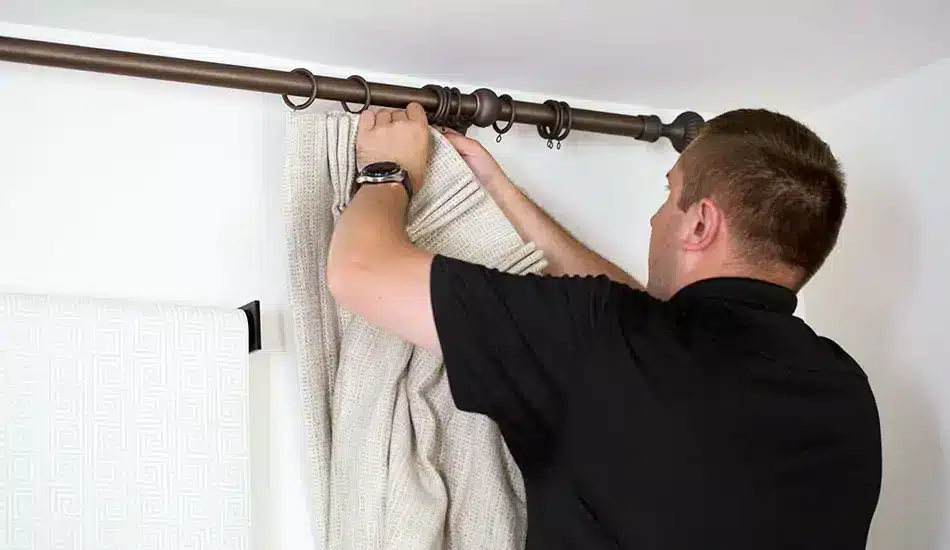
Step 2: Remove Curtains the Right Way
How you remove curtains affects their shape later.
Best removal practices
Fully close the curtains before removal.
Support fabric weight with one hand while detaching hooks.
Remove hooks or rings carefully to avoid tearing headers.
Keep hardware separated immediately.
Never pull curtains downward aggressively. Custom pleats can distort under uneven tension.
Label Everything
If you rotate multiple curtain sets, label each panel:
Room name
Window location
Left or right panel
Facing direction
A simple label saves significant time during reinstallation months later.
Step 3: Clean Curtains Before Storage
Cleaning is the single most important step in seasonal storage.
Even curtains that look clean hold:
Airborne pollutants
Cooking oils
Pet dander
Dust mites
Moisture particles
These contaminants degrade fibers over time.
Cleaning Methods by Fabric Type
Cotton and Polyester Curtains
Usually machine washable on gentle cycles.
Use cold water
Mild detergent only
Avoid bleach
Air dry when possible
Linen Curtains
Require delicate handling.
Hand wash or professional cleaning recommended
Avoid aggressive spinning
Iron lightly while slightly damp
Velvet Curtains
Never machine wash.
Vacuum using upholstery attachment
Spot clean carefully
Professional cleaning preferred
Silk Curtains
Always dry clean unless labeled washable.
Water exposure may permanently alter texture and sheen.
Blackout or Thermal Curtains
Clean gently to protect backing layers.
Avoid high heat drying, which can crack coatings.
Step 4: Ensure Curtains Are Completely Dry
Moisture is the biggest enemy of stored fabric.
Even slightly damp curtains can develop mold within days inside sealed containers.
After cleaning:
Air dry fully in a ventilated space
Avoid folding until fabric feels completely dry
Allow extra drying time for thick linings
A good rule: wait 24 hours after drying before packing.
Step 5: Remove or Protect Hardware
Metal components can rust or imprint fabric during storage.
Remove:
Hooks
Pins
Rings
Clips
Store hardware separately in labeled bags.
If hooks cannot be removed, wrap them in acid-free tissue paper to prevent pressure marks.

Step 6: Choose the Right Folding Technique
Improper folding creates deep creases that become permanent.
The Best Folding Method
Instead of tight squares, use loose layered folds:
Lay curtain flat on a clean surface.
Smooth fabric gently with hands.
Fold lengthwise following natural pleat lines.
Create wide folds rather than sharp bends.
Avoid compressing fabric.
For delicate fabrics, rolling instead of folding works even better.
Step 7: Use Breathable Storage Materials
Plastic bags may seem protective, but they trap humidity.
Ideal Storage Materials
Cotton storage bags
Linen garment bags
Acid-free boxes
Breathable fabric bins
Avoid vacuum-sealed bags for most custom curtains. Compression damages structure and interlining.
If plastic containers must be used, add breathable fabric wrapping inside.
Step 8: Protect Against Moisture and Odors
Closets, garages, and basements experience humidity fluctuations.
Add protective elements such as:
Silica gel packets
Activated charcoal
Cedar blocks (for pests)
Lavender sachets (natural freshness)
Avoid direct contact between scented materials and fabric to prevent staining.
Never store curtains with strong-smelling items like cleaning chemicals.
Step 9: Select the Best Storage Location
Location matters as much as packaging.
Ideal Conditions
Cool temperature
Dry environment
Minimal sunlight
Stable humidity
Good airflow
Avoid Storing Curtains In:
Basements prone to dampness
Attics with heat fluctuations
Garages exposed to temperature swings
Outdoor sheds
Interior closets are usually the safest choice.
Step 10: Prevent Pest Damage
Fabric attracts pests, especially natural fibers.
Common risks include:
Moths
Silverfish
Rodents
Prevention tips:
Clean curtains thoroughly
Use cedar or natural repellents
Avoid cardboard boxes in damp areas
Inspect storage annually
Never use pesticide sprays directly on curtains.
Step 11: Store Curtains Without Compression
Heavy stacking damages fabric structure.
Do not:
Place heavy objects on top
Overfill storage containers
Tie curtains tightly
Fabric fibers need space to maintain elasticity.
If possible, dedicate a storage container solely to curtains.
Step 12: Maintain Shape During Long-Term Storage
Structured curtains with pleats or headings require extra care.
Helpful techniques:
Insert tissue paper between folds
Maintain pleat alignment
Roll headers loosely
Store panels flat when space allows
This prevents distorted draping when rehung.
Step 13: Seasonal Checkups
Long-term storage should not mean complete neglect.
Every 2–3 months:
Open storage containers briefly
Check for moisture
Ensure no pest activity
Refold lightly if needed
This simple habit prevents unpleasant surprises later.
Step 14: Preparing Curtains for Reinstallation
When the new season arrives, avoid hanging curtains directly from storage.
Instead:
Unpack several days early.
Allow fabric to breathe.
Shake gently to release folds.
Steam lightly if necessary.
Steam is safer than ironing for most fabrics.
Common Curtain Storage Mistakes to Avoid
Mistake 1: Skipping Cleaning
Invisible oils cause yellowing over time.
Mistake 2: Using Vacuum Bags
Compression damages lining layers.
Mistake 3: Storing in Plastic Only
Trapped moisture encourages mold.
Mistake 4: Folding Too Tightly
Sharp creases become permanent.
Mistake 5: Storing in Hot Areas
Heat accelerates fabric breakdown.
Special Tips for Different Curtain Types
Sheer Curtains
Roll instead of fold to prevent wrinkles.
Blackout Curtains
Store flat to protect backing layers.
Embroidered Curtains
Wrap in acid-free tissue to protect stitching.
Motorized Curtain Panels
Detach electrical components before storage.
How Long Can Curtains Be Stored Safely?
When stored properly, high-quality custom curtains can remain in storage for years without degradation.
Key longevity factors include:
Cleanliness before storage
Stable environment
Breathable materials
Periodic inspection
Poor storage conditions, however, can cause visible damage within months.
Sustainable Curtain Storage Practices
Environmentally conscious storage methods also protect fabrics.
Consider:
Reusable cotton storage bags
Natural pest repellents
Avoiding disposable plastics
Repurposing breathable garment covers
Good storage extends curtain lifespan, reducing replacement waste.
Creating a Seasonal Curtain Rotation System
Many homeowners now rotate curtains seasonally:
Heavy insulated drapes for winter
Light-filtering fabrics for spring
Sheer panels for summer
Decorative textures for fall
Keeping a rotation schedule simplifies maintenance and keeps interiors feeling refreshed without new purchases.
When Professional Storage Makes Sense
For luxury or oversized curtains, professional textile storage may be worthwhile.
Professional services offer:
Climate-controlled environments
Fabric-safe packaging
Cleaning integration
Pest prevention
This option works well for designer fabrics or rarely used specialty curtains.
Final Thoughts: Protecting Beauty Between Seasons
Custom curtains are more than window coverings — they shape light, privacy, comfort, and atmosphere within a home. Seasonal removal doesn’t mean temporary neglect. With thoughtful preparation and careful storage, curtains can maintain their elegance for many years.
The key principles are simple:
Clean before storing
Keep fabrics dry
Use breathable protection
Avoid compression
Store in stable environments
Treat your curtains with the same care you would give fine clothing or upholstered furniture, and each seasonal transition will feel effortless.
Proper storage isn’t just about organization — it’s about preserving craftsmanship, protecting investment, and ensuring that when the curtains return to your windows, they look just as stunning as the day they were installed.
Need Help with Your Custom Project?
Have questions about materials, sizing, or looking for a quick quote? Drop us a message and our experts will respond within 24 hours.
Chat on WhatsApp
+1 (304) 356-6765
Send us an Email
hello@incustom.com
Picked for You