Small Space Expansion Secrets: How Raising Your Curtain Rod Can Make Your Ceiling Look 8 Inches Taller

Mar 23 2026
Small homes demand smart design decisions. Every inch matters — not only physically, but visually. When square footage is limited, creating the feeling of space becomes just as important as adding storage or minimizing furniture.
Many homeowners spend thousands knocking down walls, repainting rooms, or buying smaller furniture in hopes of making their space feel larger. Yet one of the most powerful spatial illusions costs surprisingly little and requires no renovation at all:
Adjusting the height of your curtain rod.
Interior designers have quietly used this technique for decades. By positioning curtain rods higher than the window frame, a room’s perceived ceiling height can increase dramatically — often by the visual equivalent of 6–8 inches (about 15–20 cm).
This article explores the science, psychology, and practical application behind this design strategy, showing exactly how curtain height transforms spatial perception and how you can apply it successfully in small apartments, condos, and compact homes.
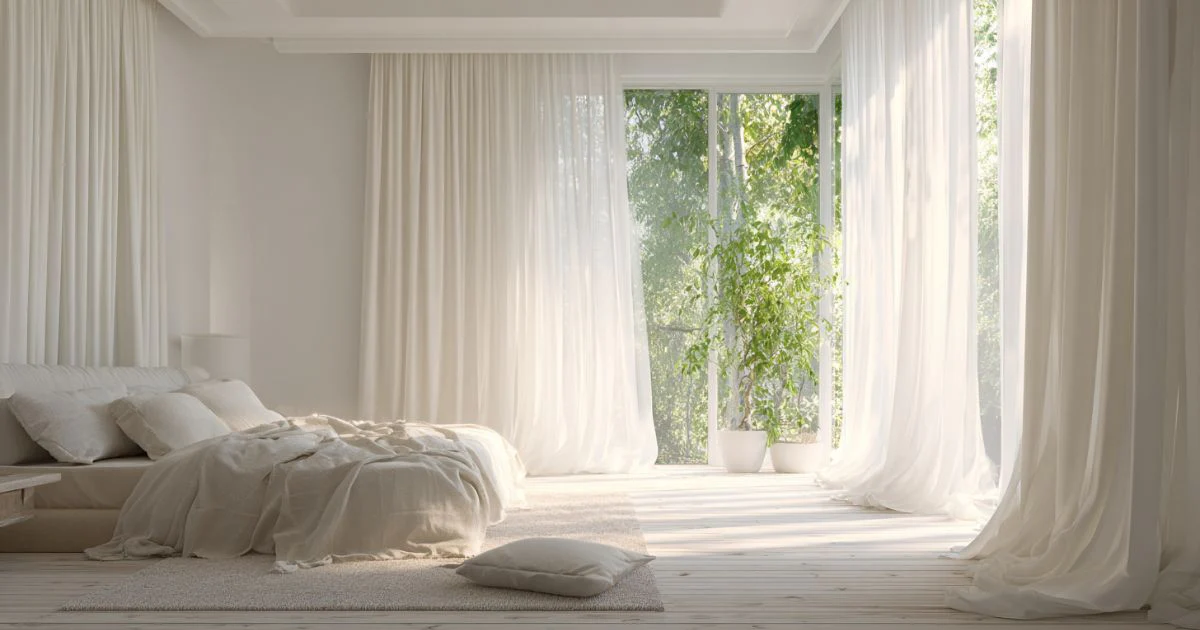
Why Small Spaces Feel Smaller Than They Actually Are
Before discussing curtains, it helps to understand why rooms feel cramped in the first place.
Human perception of space depends less on floor area and more on visual cues, including:
- Vertical lines
- Light distribution
- Proportions between walls and openings
- Furniture height relationships
- Contrast boundaries
When windows appear short or compressed, ceilings automatically feel lower — even when measurements remain unchanged.
Most builders install curtain rods just above window frames for convenience. Unfortunately, this placement visually cuts the wall into sections, shortening perceived wall height.
The result?
A room that feels boxed in.
The Vertical Illusion Principle in Interior Design
Designers rely on a concept sometimes called vertical emphasis — guiding the eye upward to create a sense of height.
You see this principle everywhere:
- Floor-to-ceiling bookshelves
- Vertical wall paneling
- Tall mirrors
- Long pendant lighting
- Full-height drapery
Curtains play a unique role because they introduce continuous vertical lines made of soft material, which the brain interprets as architectural height.
When curtains start higher, the brain assumes the window — and therefore the wall — extends further upward.
The “8-Inch Taller Ceiling” Effect Explained
Raising curtain rods typically works within a specific visual range.
Standard Installation (Common Mistake)
Most rods are installed:
- 2–4 inches above the window frame
This creates a visual stopping point close to eye level.
Designer Installation Method
Professional designers often place rods:
- 6–12 inches above the window frame
- Or halfway between window top and ceiling
- Or even directly below ceiling molding
This repositioning elongates wall proportions.
The eye reads curtain length as wall height, not window height.
Even though the ceiling hasn’t moved, perception changes instantly.
Why Curtains Influence Spatial Perception More Than Paint
Many people attempt to enlarge rooms using lighter paint colors. While helpful, color alone cannot redefine architectural proportions.
Curtains affect space differently because they introduce:
- Continuous vertical flow
- Soft shadow gradients
- Movement
- Scale reference
Unlike paint, curtains add dimensional layers that reshape depth perception.
Long curtains create uninterrupted vertical pathways for the eye, making walls appear taller and rooms feel more open.
The Psychology Behind Height Perception
Human vision constantly searches for boundaries — where walls begin and end.
When a curtain rod sits low:
- The brain identifies the top of the curtain as a structural limit.
- Ceiling height feels reduced.
When the rod sits high:
- The eye travels upward before stopping.
- The brain interprets expanded volume.
This psychological response happens subconsciously within seconds of entering a room.
It’s not decoration. It’s perception engineering.
Step-by-Step: How to Position Curtain Rods for Maximum Height
Step 1: Measure Your Wall, Not Just the Window
Instead of focusing only on window dimensions, measure:
- Floor to ceiling height
- Window top distance from ceiling
- Wall width beyond window edges
Understanding total wall proportions allows smarter placement.
Step 2: Choose the Correct Rod Height Rule
Designers commonly follow three proven rules.
Rule A: The Halfway Rule
Install the rod halfway between the window frame and ceiling.
Best for:
- Standard 8-foot ceilings
- Rental apartments
Rule B: The Ceiling-Line Rule
Mount rods 1–2 inches below the ceiling or crown molding.
Best for:
- Small rooms needing dramatic height enhancement.
Rule C: The Architectural Alignment Rule
Align rod height with nearby architectural elements like cabinets or door frames.
Best for:
- Open-concept layouts.
Step 3: Extend the Rod Width Beyond the Window
Horizontal placement matters too.
Extend rods:
- 8–12 inches beyond each side of the window.
Benefits include:
- Larger perceived window size
- More natural light when curtains open
- Balanced wall proportions
A wider installation enhances the vertical illusion created by higher placement.
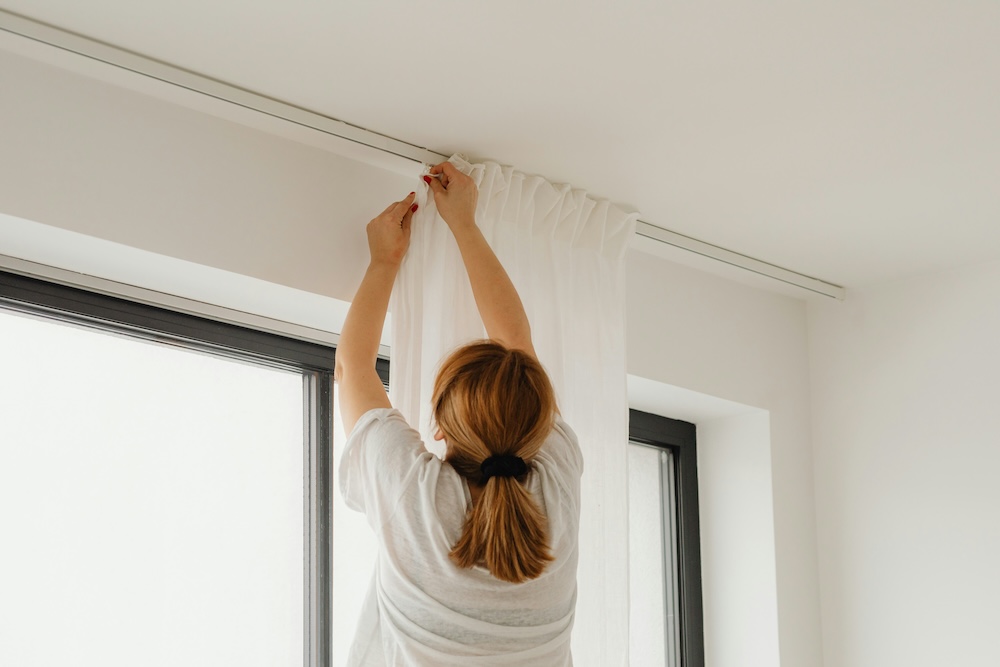
Fabric Length: The Critical Companion to Rod Height
Raising rods only works if curtain length supports the illusion.
Curtains should:
- Touch the floor lightly, or
- Hover within ½ inch of flooring, or
- Slightly puddle for softness.
Short curtains immediately break the vertical effect.
Think of curtains as visual columns — they must stretch fully from top to bottom.
Choosing Fabrics That Enhance Height
Not all fabrics amplify vertical space equally.
Best Choices for Small Rooms
1. Lightweight Linen Blends
Allow light diffusion and prevent heaviness.
2. Soft Cotton Drapery
Creates clean vertical folds.
3. Subtle Vertical Textures
Encourage upward eye movement.
Fabrics to Use Carefully
- Thick velvet in tight rooms
- Busy horizontal patterns
- Heavy contrasting borders
These interrupt vertical continuity.
Color Strategies That Increase Ceiling Perception
Color placement between curtains, walls, and ceilings strongly influences perceived height.
High-Impact Approaches
Monochromatic Palette
Curtains similar to wall color blur boundaries, extending visual height.
Slightly Lighter Curtains
Reflect light upward, lifting perceived ceiling position.
Ceiling-Matching Drapery
Creates seamless upward flow.
Avoid Strong Horizontal Contrast
Dark curtains against light walls create visual breaks that shorten height.
Ceiling Height Scenarios and Recommended Rod Placement
7.5–8 Foot Ceilings (Most Apartments)
- Mount rods close to ceiling.
- Use lightweight fabrics.
- Avoid bulky headers.
Result: noticeable openness improvement.
9 Foot Ceilings
- Place rods 8–10 inches above windows.
- Use fuller pleats for elegance.
Result: refined vertical emphasis.
Low Basement Ceilings
- Ceiling-mounted tracks work best.
- Use light-colored sheer layers.
Result: minimized compression feeling.
Sheer Curtains: The Secret Weapon for Small Spaces
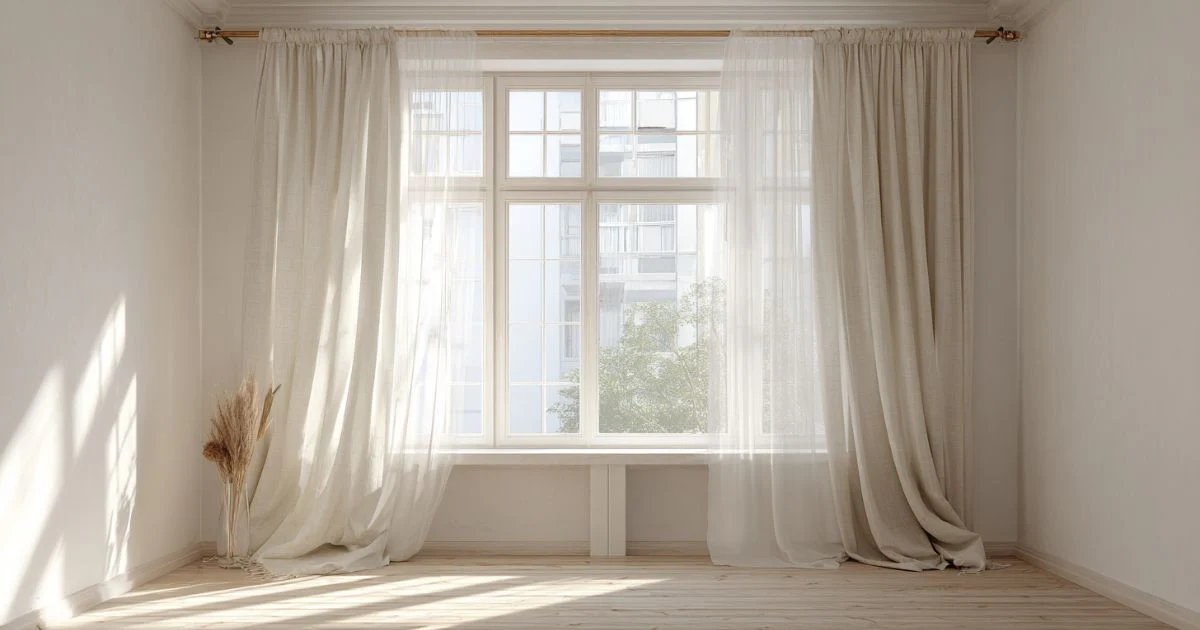
Layering sheer curtains behind main panels adds depth without bulk.
Benefits include:
- Soft light diffusion
- Expanded visual dimension
- Continuous vertical texture
Sheers act like architectural light filters, making ceilings feel higher and rooms brighter simultaneously.
Curtain Headers That Enhance Vertical Lines
Header style affects how folds fall.
Best Options
- Ripple fold
- Wave pleat
- Tailored pinch pleat
These create consistent vertical rhythm.
Less Effective Options
- Grommets (create horizontal emphasis)
- Short rod pockets
- Decorative valances
Horizontal elements visually compress space.
Common Mistakes That Cancel the Height Effect
Installing Rods Too Low
The most frequent error.
Using Curtains That Are Too Narrow
Flat panels lack vertical presence.
Choosing Thick Decorative Rods
Oversized rods draw attention sideways rather than upward.
Stopping Curtains at Window Sill
Instantly shortens walls.
Rental-Friendly Solutions (No Permanent Damage Required)
Renters can still apply this strategy using:
- Tension-mounted ceiling tracks
- Adhesive mounting brackets rated for weight
- Lightweight curtain systems
Always check load limits for safety.
Combining Curtain Height With Other Space-Expanding Techniques
For maximum impact, pair high curtains with:
- Vertical wall art
- Tall mirrors
- Low-profile furniture
- Upward lighting
- Slim floor lamps
Together, these reinforce upward visual flow.
Lighting’s Role in Enhancing the Illusion
Lighting direction changes how curtains shape space.
Best practices:
- Use warm indirect lighting near ceiling.
- Avoid harsh overhead shadows.
- Let natural light pass through sheer layers.
Light traveling upward reinforces perceived height.
Real Apartment Transformation Example
Consider a 600-square-foot city apartment:
Before
- Rods installed 3 inches above windows
- Short curtains
- Dark panels
Room felt enclosed and heavy.
After
- Rods moved 10 inches higher
- Floor-length neutral drapery
- Extended rod width
Result:
- Ceiling appeared taller
- Windows looked larger
- Space felt calmer and more breathable
No structural changes required.
Budget Breakdown: High Impact, Low Investment
Compared to renovations:
| Upgrade | Average Cost | Visual Impact |
|---|---|---|
| Wall demolition | Very high | Structural |
| New flooring | High | Moderate |
| Raised curtain rods | Low | Dramatic |
This makes curtain placement one of the most cost-effective spatial upgrades available.
Designer Secrets Professionals Rarely Explain
Designers rarely mount rods at window height unless constrained by architecture.
Why?
Because they design for perception first, measurements second.
Their goal is not to show where a window ends — but to suggest where space continues.
Maintenance Considerations
Higher rods require:
- Slightly longer curtains
- Stable brackets
- Proper wall anchors
Once installed correctly, maintenance remains identical to standard curtains.
Creating Luxury Atmosphere in Small Homes
Floor-to-ceiling drapery is often associated with luxury hotels and upscale interiors.
The reason is simple:
Tall lines signal spaciousness and architectural confidence.
Even modest apartments gain sophistication through vertical scaling.
Final Thoughts: Designing Space Without Expanding Walls
Small homes don’t always need more square footage — they need smarter visual design.
By raising curtain rods and allowing fabric to extend fully from near ceiling to floor, you reshape how a room is perceived. Walls appear taller. Windows feel grander. Light travels differently. The entire atmosphere shifts.
The ceiling hasn’t moved.
But your experience of the space has.
Sometimes the most powerful home upgrades aren’t about adding more — they’re about guiding the eye to see what was already there in a better way.
And among all small-space design strategies, few are as simple, affordable, and transformative as thoughtful curtain height placement.
Need Help with Your Custom Project?
Have questions about materials, sizing, or looking for a quick quote? Drop us a message and our experts will respond within 24 hours.
Chat on WhatsApp
+1 (304) 356-6765
Send us an Email
hello@incustom.com
Picked for You