Small Space, Smart Solutions: How to Choose the Right Balcony Furniture Covers for Dust Protection

Jul 07 2026
A balcony may be one of the smallest areas in your home, but it often plays a much bigger role than its size suggests. It can become a relaxing outdoor lounge, a private garden corner, a reading space, or a place to enjoy fresh air after a busy day. However, because balconies are constantly exposed to outdoor conditions, keeping furniture clean and well-maintained can be a challenge.
Dust, pollen, rain, sunlight, bird droppings, humidity, and changing temperatures can gradually damage outdoor furniture. Even high-quality chairs, tables, and sofas may lose their appearance and durability without proper protection.
This is where balcony furniture covers become a practical solution.
A good dust cover does more than simply block dirt. The right cover protects your investment, extends furniture lifespan, reduces cleaning time, and helps maintain a comfortable outdoor space without requiring constant maintenance.
But choosing the right balcony furniture cover is not always as simple as buying the first product you see. Size, material, ventilation, waterproof ability, durability, and design all affect performance.
This guide will help you understand how to select the ideal balcony furniture dust cover and create a smarter protection system for small outdoor spaces.
Why Balcony Furniture Needs Protection
Many homeowners underestimate how quickly outdoor furniture can deteriorate.
Unlike indoor furniture, balcony furniture faces continuous environmental exposure.
Common problems include:
Dust Accumulation
Balconies naturally collect:
Airborne dust
Soil particles
Pollen
Pollution residue
Over time, dust can settle into fabric, cushions, and furniture surfaces.
Sun Damage
UV rays can cause:
Color fading
Material aging
Surface cracking
Fabric weakening
Even balconies with partial shade may receive significant sunlight throughout the day.
Moisture and Humidity
Outdoor humidity can lead to:
Mold growth
Mildew
Rust
Material deterioration
Furniture covers help reduce direct moisture exposure.
Seasonal Changes
Temperature changes can affect:
Plastic
Metal
Wood
Fabric materials
A protective cover creates an additional barrier against changing weather conditions.
The First Step: Understand Your Balcony Environment
Before choosing a cover, evaluate your balcony conditions.
Every balcony is different.
Consider:
Is it open or enclosed?
Does it receive direct sunlight?
Is it exposed to rain?
Is it windy?
Does dust accumulate quickly?
Is the space limited?
Your environment determines what type of protection you need.
Choosing the Right Size: The Foundation of Effective Protection
One of the most common mistakes when buying furniture covers is choosing the wrong size.
A cover that is too small:
Leaves areas exposed
Creates tension on seams
May tear more easily
A cover that is too large:
Collects water
Flaps in the wind
Looks untidy
Allows dust to enter underneath
The best fit should provide enough room to cover the furniture completely while avoiding excessive loose material.
How to Measure Balcony Furniture Correctly
Before purchasing a cover, measure three important dimensions:
Length
Measure the longest horizontal side of the furniture.
Width
Measure from the front edge to the back edge.
Height
Measure from the ground to the highest point.
For irregular furniture shapes:
Measure the widest points
Consider armrests
Include cushions
Account for accessories
Always check the product dimensions instead of relying only on furniture names.
For example, a "patio chair cover" may fit many different chair designs.
Choose Materials Based on Protection Needs
The material of a furniture cover determines its durability and performance.
Different materials provide different advantages.
Polyester Furniture Covers
Polyester is one of the most common outdoor cover materials.
Advantages:
Lightweight
Affordable
Easy to handle
Resistant to daily wear
Many polyester covers include additional coatings for:
Water resistance
UV protection
Dust resistance
Best for:
Apartment balconies
Moderate outdoor exposure
Everyday protection
Oxford Fabric Covers
Oxford fabric is popular because of its strength.
Advantages:
Durable construction
Tear resistance
Better outdoor performance
Good protection against dust
It is often used for:
Balcony sofas
Outdoor tables
Larger furniture sets
PVC-Coated Covers
PVC coatings improve resistance against moisture.
Advantages:
Strong waterproof performance
Easy cleaning
Durable surface protection
However, some PVC materials may feel heavier and less breathable.
Proper ventilation becomes especially important.
PE Materials
Polyethylene covers are often lightweight and budget-friendly.
Advantages:
Affordable
Simple protection
Easy storage
They are suitable for:
Temporary use
Short-term dust protection
Waterproof Does Not Mean Completely Sealed
Many buyers think the best furniture cover should completely block everything.
However, outdoor protection requires balance.
A completely sealed cover may trap:
Moisture
Condensation
Heat
This can create problems such as:
Mold
Mildew
Odors
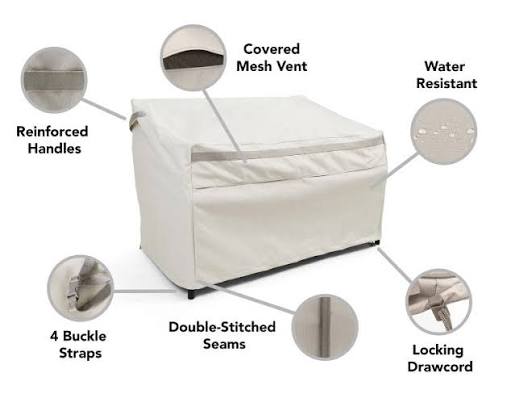
A high-quality cover should provide water resistance while allowing some airflow.
Why Ventilation Matters
Ventilation is one of the most overlooked features of furniture covers.
Good ventilation helps:
Reduce condensation
Prevent mold
Keep furniture fresher
Extend material life
Look for:
Air vents
Mesh openings
Breathable fabric structures
Especially for humid environments, ventilation is essential.
Consider Wind Protection
Balconies are often exposed to strong airflow.
A loose cover can:
Move around
Blow away
Collect dust underneath
Useful features include:
Adjustable Straps
Help secure the cover tightly.
Buckles
Provide stronger attachment.
Elastic Hems
Create a closer fit around furniture edges.
Drawstrings
Allow flexible adjustment.
UV Resistance: Protecting Against Sun Damage
Sunlight is one of the biggest causes of outdoor furniture aging.
A UV-resistant cover helps prevent:
Fading
Cracking
Material weakness
For balconies with strong sunlight exposure, prioritize:
UV-resistant coatings
Thick fabrics
Durable colors
Choosing Covers for Different Balcony Furniture Types
Different furniture requires different cover designs.
Balcony Chairs
For individual chairs, choose:
Compact covers
Easy installation
Secure edges
Avoid oversized covers that create unnecessary bulk.
Balcony Tables
Tables often have larger surfaces that collect dust.
Look for:
Full coverage
Water-resistant tops
Strong seams
Outdoor Sofas and Sectionals
Sofas need extra attention because cushions absorb moisture.
Choose:
Deep covers
Strong waterproof materials
Breathable designs
Folding Furniture
For folding chairs and tables:
Consider:
Lightweight covers
Easy removal
Storage convenience
Small Balcony Storage Solutions
Limited balcony space requires smart organization.
A good furniture cover should be:
Easy to fold
Lightweight
Simple to store
Useful storage options include:
Storage bags
Wall hooks
Balcony cabinets
Under-seat storage areas
Color Selection: Function and Appearance
Color is not only about style.
Different colors have practical effects.
Dark Colors
Advantages:
Hide dirt better
Create a modern appearance
Disadvantages:
May absorb more heat
Light Colors
Advantages:
Reflect sunlight
Create a clean appearance
Disadvantages:
Show stains more easily
Neutral Colors
Popular choices include:
Gray
Beige
Black
They usually match different balcony styles.
Common Mistakes When Buying Balcony Furniture Covers
Buying Without Measuring
A beautiful cover is useless if it does not fit.
Always measure first.
Choosing the Cheapest Option Only
Low-cost covers may:
Tear easily
Fade quickly
Lack proper ventilation
Consider long-term value rather than only purchase price.
Ignoring Fabric Thickness
Thin materials may provide limited protection.
For outdoor use, durability matters.
Forgetting Maintenance
Even the best cover requires care.
Clean it regularly to prevent:
Dust buildup
Stains
Odors
How to Maintain Your Balcony Furniture Cover
Proper maintenance extends cover life.
Regular Cleaning
Remove:
Dust
Leaves
Dirt
Use:
Mild soap
Soft cloth
Clean water
Avoid harsh chemicals.
Dry Completely Before Storage
Never store a damp cover.
Moisture can create:
Mold
Bad odors
Fabric damage
Inspect Seams and Fasteners
Check regularly for:
Loose stitching
Damaged straps
Small tears
Repairing early prevents larger problems.
How to Build a Complete Balcony Protection System
A furniture cover works best as part of a larger approach.
Consider combining:
Furniture Covers
Protect against dust and weather.
Outdoor Rugs
Reduce dirt transfer.
Storage Boxes
Protect cushions and accessories.
Shade Solutions
Reduce direct UV exposure.
Regular Cleaning Routine
Maintain appearance and comfort.
Smart Buying Checklist
Before purchasing a balcony furniture cover, ask:
☐ Did I measure my furniture?
☐ Is the material suitable for my climate?
☐ Does it provide UV protection?
☐ Is it water resistant?
☐ Does it allow ventilation?
☐ Does it include straps or fasteners?
☐ Is it easy to remove and store?
☐ Does it match my balcony space?
Final Thoughts
A small balcony does not need to become a high-maintenance area. With the right furniture protection strategy, even limited outdoor spaces can remain clean, comfortable, and attractive throughout the year.
Choosing the right balcony furniture dust cover requires more than simply finding a product that looks good. The best choice combines proper sizing, durable materials, ventilation, weather resistance, and practical design.
A well-selected cover protects your furniture from daily environmental damage while saving you time, money, and effort in the long run.
Whether you have a compact apartment balcony, a cozy outdoor corner, or a larger terrace space, investing in the right protective cover is a simple way to create a smarter and more enjoyable outdoor lifestyle.
Protect your furniture today, and your balcony will continue to be a comfortable extension of your home for years to come.
Feel free to leave a message for a quotation or inquiry.
Need Help with Your Custom Project?
Have questions about materials, sizing, or looking for a quick quote? Drop us a message and our experts will respond within 24 hours.
Chat on WhatsApp
+1 (304) 356-6765
Send us an Email
hello@incustom.com
Picked for You