
For many outdoor enthusiasts, camping means pitching a tent, rolling out a sleeping bag, and settling into a familiar campsite setup. But a growing number of backpackers, survivalists, bushcrafters, minimalist campers, and thru-hikers are rediscovering one of the oldest and most versatile shelter systems ever created: the tarp.
Tarp camping strips outdoor shelter down to its essentials. Instead of carrying a bulky tent, tarp campers use lightweight waterproof tarps combined with ropes, trekking poles, trees, or stakes to create flexible shelters suited for changing weather and terrain.
At first glance, sleeping under a tarp instead of inside a tent may sound intimidating. Many beginners worry about:
Rain exposure
Wind protection
Cold temperatures
Insects
Condensation
Comfort and safety
But with the right setup and skills, tarp camping can be incredibly comfortable, lightweight, affordable, and rewarding.
This complete beginner’s guide explains how tarp camping works, what gear you need, how to stay dry and warm without a tent, and how to avoid the most common mistakes new tarp campers make.
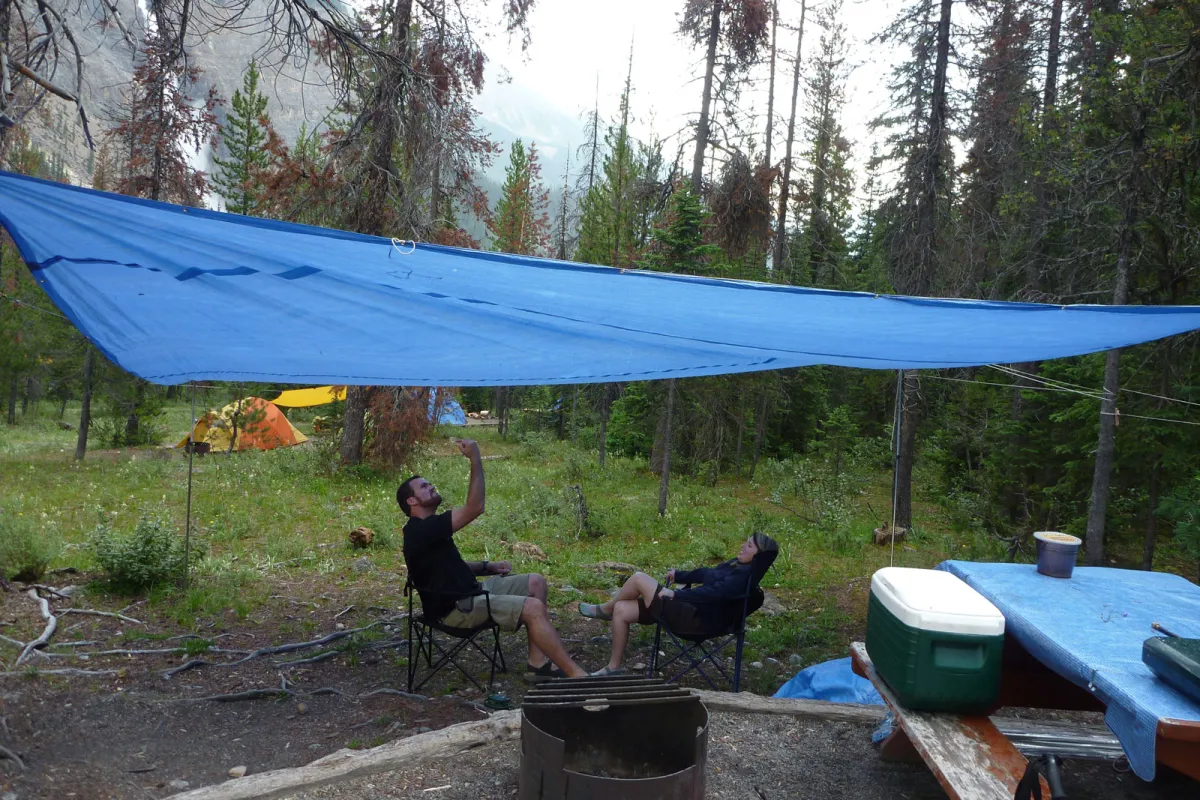
What Is Tarp Camping?
Tarp camping is a style of camping that uses a waterproof tarp instead of a traditional tent for shelter.
A tarp can be pitched in dozens of configurations depending on:
Weather conditions
Terrain
Wind direction
Number of campers
Available anchor points
Unlike tents, tarps offer open-air flexibility and customizable protection.
Why More Campers Are Switching to Tarps
Tarp camping has grown significantly in popularity over the last decade because many outdoor enthusiasts want:
Lighter backpacking gear
Faster camp setup
More connection with nature
Better ventilation
Multi-use gear systems
Lower equipment costs
Tarps are especially popular among:
Ultralight backpackers
Bushcraft campers
Survival campers
Bikepackers
Minimalist hikers
Long-distance thru-hikers
The Biggest Difference Between Tarps and Tents
Tents create a fully enclosed structure with built-in floors and walls.
Tarps provide flexible overhead weather protection while remaining partially or fully open.
This creates both advantages and challenges.
Advantages of Tarp Camping
Lightweight Gear
One of the biggest reasons hikers choose tarps is weight savings.
A tarp shelter often weighs dramatically less than a tent.
This matters for:
Long-distance hiking
Mountain trekking
Bikepacking
Fastpacking
Minimalist travel
Reducing pack weight can improve comfort and endurance significantly.
Better Ventilation
Traditional tents often trap condensation.
Tarps provide superior airflow, reducing moisture buildup.
This helps:
Keep sleeping systems drier
Improve comfort in humid climates
Reduce condensation problems
Versatility
A tarp can adapt to changing conditions more easily than many tents.
You can pitch it:
High for airflow
Low for storm protection
Wide for shade
Narrow for wind resistance
Closer Connection to Nature
Many campers enjoy the open feeling of tarp camping.
You can:
Watch the stars
Hear the forest
Feel mountain breezes
Wake up to sunrise views
This immersive outdoor experience is difficult to replicate inside a fully enclosed tent.
Lower Cost
Quality tarps are often far cheaper than premium backpacking tents.
Challenges of Tarp Camping
Tarp camping also requires more skill and preparation.
Less Bug Protection
Unlike tents, most tarps do not include:
Bug netting
Fully enclosed walls
Zippered protection
Insect management becomes more important.
Greater Weather Exposure
A poorly pitched tarp may allow:
Rain intrusion
Wind exposure
Splashback
Cold drafts
More Skill Required
Successful tarp camping depends heavily on:
Site selection
Knot tying
Shelter configuration
Weather awareness
Choosing the Right Camping Tarp
Not all tarps are designed for camping.
Hardware-store tarps are generally too heavy and bulky for backpacking.
Best Tarp Materials
Silnylon
Silnylon is lightweight and highly packable.
Advantages:
Affordable
Durable
Compact
Disadvantages:
Slightly stretches when wet
Dyneema Composite Fabric (DCF)
DCF tarps are extremely lightweight and waterproof.
Advantages:
Ultralight
No water absorption
Excellent strength
Disadvantages:
Expensive
Polyester Tarps
Polyester stretches less when wet than nylon.
Advantages:
Stable pitch
UV resistance
Disadvantages:
Slightly heavier
What Size Tarp Do Beginners Need?
For solo campers, common beginner sizes include:
8x10 feet
9x9 feet
10x10 feet
Larger tarps provide:
Better storm protection
More setup options
More living space
Smaller tarps save weight but require more experience.
Essential Gear for Tarp Camping
Tarp camping involves more than just carrying a tarp.
1. Ridgeline Cord
The ridgeline supports the tarp structure.
Popular choices include:
Dyneema cord
Paracord
Reflective guyline
2. Stakes
Strong stakes help secure the tarp during wind and rain.
Different terrains may require:
Titanium stakes
Sand stakes
Snow stakes
3. Groundsheet
Since tarps lack built-in floors, a groundsheet protects against:
Moisture
Dirt
Abrasion
Common materials include:
Tyvek
Polycryo
Lightweight footprint fabric
4. Sleeping Pad
Ground insulation is critical.
Many beginners underestimate how quickly the ground drains body heat.
Sleeping pads provide:
Cushioning
Warmth
Moisture separation
5. Sleeping Bag or Quilt
Your sleep system determines warmth far more than the tarp itself.
Choose a temperature rating appropriate for expected conditions.
6. Bug Protection
In bug-heavy areas, consider:
Bug bivies
Mosquito netting
Head nets
Insect repellents
How to Stay Dry While Tarp Camping
Remaining dry is the single most important tarp camping skill.
Step 1: Choose the Right Campsite
Even the best tarp setup can fail in a poor campsite.
Avoid:
Low ground
Drainage channels
Riverbanks
Depressions
Exposed ridges during storms
Look for:
Slightly elevated terrain
Natural windbreaks
Good drainage
Stable anchor points
Step 2: Understand Wind Direction
Wind-driven rain is one of the biggest tarp camping challenges.
Always position the tarp with:
The lowest side facing the wind
The opening away from prevailing weather
Step 3: Pitch the Tarp Tight
Loose tarps flap in the wind and collect water.
A proper pitch should be:
Tight
Balanced
Stable
Symmetrical
Step 4: Prevent Splashback
Rain hitting the ground can bounce upward beneath the tarp.
Reduce splashback by:
Pitching lower during storms
Using vegetation barriers
Selecting absorbent ground surfaces
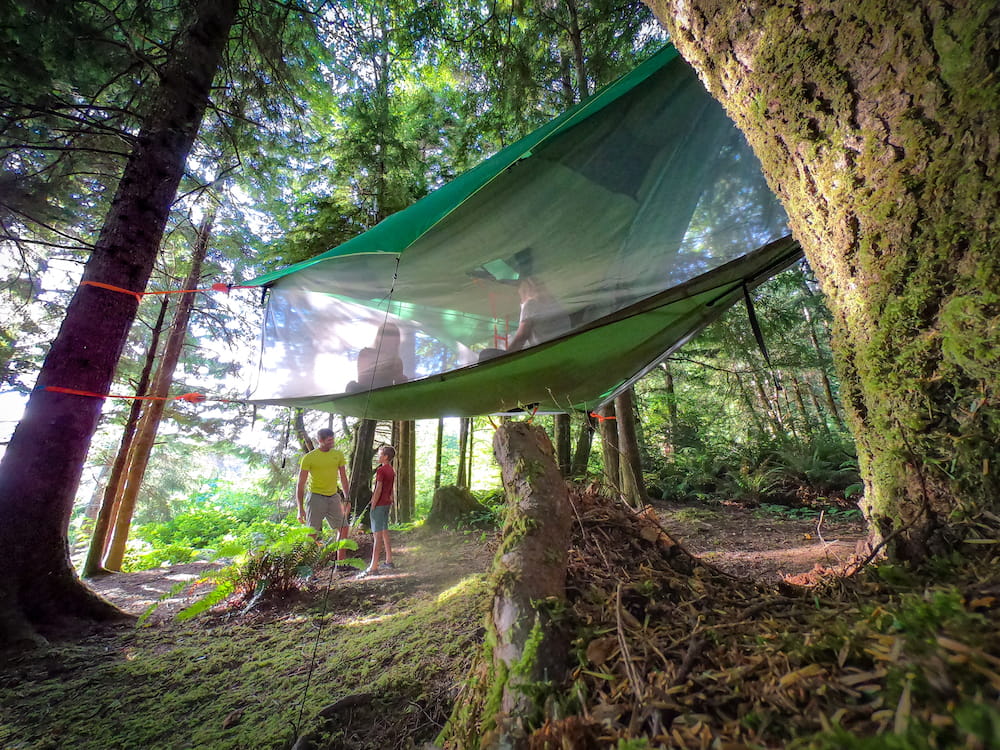
Step 5: Manage Condensation
Condensation happens when warm moist air contacts cool surfaces.
Tarps generally reduce condensation compared to tents, but moisture can still develop.
Improve ventilation by:
Leaving airflow gaps
Avoiding fully sealed pitches unless necessary
Camping away from standing water
How to Stay Warm Without a Tent
Many beginners assume tents create warmth.
In reality, tents mainly block wind and trap some heat.
Your warmth primarily depends on:
Insulation
Wind protection
Dryness
Ground separation
The Ground Steals Heat Fast
Cold ground can rapidly lower body temperature.
A quality sleeping pad is often more important than the sleeping bag itself.
Understand R-Value
Sleeping pad insulation is measured using R-value.
Higher R-values provide more insulation from cold ground.
Layer Your Sleep System
For colder conditions, combine:
Insulated sleeping pads
Warm sleeping bags
Liners
Insulated clothing
Block Wind Effectively
Wind dramatically increases heat loss.
Storm-mode tarp pitches should prioritize:
Low angles
Reduced openings
Tight edges
Eat Before Sleeping
Your body generates heat through metabolism.
Warm meals before bed help maintain nighttime warmth.
Stay Dry at All Costs
Wet clothing destroys insulation performance.
Always keep:
Dry sleep clothes
Waterproof layers
Backup socks
separate from hiking gear.
Best Tarp Shelter Configurations for Beginners
One of the greatest advantages of tarp camping is flexibility.
A-Frame Setup
The A-frame is one of the simplest beginner pitches.
Advantages:
Easy to learn
Balanced rain protection
Good ventilation
Disadvantages:
Moderate wind resistance
Lean-To Shelter
A lean-to creates an open-front shelter.
Advantages:
Excellent views
Great airflow
Easy access
Disadvantages:
Poor storm protection
Diamond Pitch
The diamond setup uses one corner facing into the wind.
Advantages:
Lightweight
Fast setup
Good for solo camping
Disadvantages:
Less interior space
C-Fly Pitch
Popular among hammock campers.
Advantages:
Strong rain protection
Good ventilation balance
Storm Pitch
Low and tight configurations maximize weather resistance.
Advantages:
Superior wind protection
Better heat retention
Disadvantages:
Reduced airflow
Smaller living space
Knots Every Beginner Should Learn
Tarp camping becomes much easier with basic knot skills.
Useful knots include:
Bowline
Taut-line hitch
Trucker’s hitch
Prusik knot
Clove hitch
These knots help create adjustable, stable shelters.
Trekking Poles vs Trees
Tarps can be pitched using:
Trees
Trekking poles
Dedicated tarp poles
Natural supports
Tree Advantages
Stable anchors
No extra gear needed
Trekking Pole Advantages
Greater flexibility
Works above treeline
Better campsite options
Tarp Camping in Rain
Rain scares many beginners away from tarp camping.
But experienced tarp campers often remain perfectly dry.
Key Rain Strategies
Pitch Lower
Lower pitches improve rain protection.
Use Drip Lines
Small cord loops help prevent water from running down suspension lines.
Protect Gear Carefully
Store backpacks and clothing away from runoff zones.
Maintain Tension
Rain and humidity can loosen tarp fabric.
Retighten guylines as needed.
Tarp Camping in Cold Weather
Tarp camping is possible even in winter with proper preparation.
Winter Priorities
Focus on:
Wind blocking
Ground insulation
Snow management
Dry clothing systems
Snow Considerations
Heavy snow loads require:
Strong support structures
Steeper tarp angles
Reinforced guylines
Fire and Heat Reflection
Some bushcraft campers use fires near tarp shelters for warmth.
However, beginners should exercise extreme caution.
Heat and sparks can damage tarp materials quickly.
Managing Bugs Without a Tent
Mosquitoes and insects are common tarp camping concerns.
Bug Control Strategies
Campsite Selection
Avoid stagnant water whenever possible.
Use Bug Nets
Lightweight bug bivies provide enclosed sleeping protection.
Wear Protective Clothing
Long sleeves and pants help reduce bites.
Use Repellents
Modern repellents remain highly effective during tarp camping.
Common Beginner Mistakes
Pitching Too High
Beginners often prioritize views over weather protection.
Higher pitches increase:
Wind exposure
Rain intrusion
Heat loss
Ignoring Weather Forecasts
Tarps require greater weather awareness than tents.
Poor Site Selection
The campsite matters as much as the tarp itself.
Underestimating Cold Ground
Many new tarp campers bring warm sleeping bags but inadequate sleeping pads.
Not Practicing Before the Trip
Practice tarp setups before heading into remote areas.
Why Many Experienced Campers Prefer Tarps
Despite the learning curve, many experienced outdoor enthusiasts eventually prefer tarps because they offer:
Freedom
Simplicity
Lower pack weight
Greater versatility
Stronger outdoor connection
Tarps encourage campers to better understand:
Terrain
Weather
Wind
Shelter design
This creates a more skill-oriented outdoor experience.
Is Tarp Camping Safe?
Yes — when done properly.
Safety depends on:
Preparation
Weather awareness
Proper gear
Campsite selection
Experience level
Beginners should start with:
Mild weather
Established campsites
Short overnight trips
before attempting advanced backcountry tarp camping.
The Best Environments for Beginner Tarp Camping
Ideal beginner conditions include:
Mild temperatures
Light winds
Predictable weather
Forested campsites
Avoid starting in:
Heavy storms
Winter conditions
High alpine terrain
Severe insect seasons
Tarp Camping vs Tent Camping
Tent Camping Pros
Simpler setup
Better bug protection
More privacy
Easier for beginners
Tarp Camping Pros
Lighter weight
Better ventilation
More versatile
Lower cost
Closer to nature
Neither style is universally better. It depends on personal preference and outdoor goals.
The Future of Ultralight Shelter Systems
Outdoor gear companies continue improving tarp camping equipment through:
Advanced waterproof fabrics
Ultralight materials
Better guyline systems
Modular bug shelters
Hybrid tarp-tent designs
Modern tarp systems are becoming increasingly beginner-friendly while retaining ultralight advantages.
Final Thoughts
Tarp camping may seem intimidating at first, but it offers one of the most rewarding and versatile ways to experience the outdoors. By learning how to manage shelter setup, weather protection, insulation, and campsite selection, beginners can stay dry, warm, and comfortable without relying on a traditional tent.
The key to successful tarp camping is understanding that your shelter system is more than just a tarp. Staying warm and dry depends on how all your gear and skills work together:
Proper tarp pitching
Smart campsite selection
Effective insulation
Wind management
Moisture control
Weather awareness
With practice, tarp camping becomes far less complicated than many beginners expect. In fact, many outdoor enthusiasts eventually discover that sleeping beneath a well-pitched tarp offers a deeper connection to nature, greater freedom on the trail, and a simpler, lighter approach to camping that is hard to leave behind.
Need Help with Your Custom Project?
Have questions about materials, sizing, or looking for a quick quote? Drop us a message and our experts will respond within 24 hours.
Chat on WhatsApp
+1 (304) 356-6765
Send us an Email
hello@incustom.com
Picked for You