The Science Behind Waterproofing: What Really Makes a Fabric Truly Waterproof?

May 07 2026
Waterproof fabric sounds simple on the surface. You see a jacket labeled “waterproof,” a tent that promises to keep you dry in a storm, or hiking gear designed to survive days of rain—and you assume water just cannot get through.
But the reality is far more complex. Waterproofing is not a single feature. It is a combination of chemistry, physics, material engineering, and microscopic surface design. In fact, no fabric is truly “impenetrable” in the absolute sense. Instead, modern waterproof materials are carefully engineered systems that control how water interacts with surfaces.
This article breaks down the science behind waterproof fabrics in a clear, practical way, helping you understand what actually makes a material resist water—and why some products fail while others perform in extreme conditions.
1. Waterproof vs Water-Resistant: The First Scientific Distinction
One of the most common misunderstandings in textiles is the difference between “waterproof” and “water-resistant.”
Water-resistant materials
These fabrics:
Slow down water penetration
Handle light rain or splashes
Eventually absorb water under pressure or time
They rely on tight weaving or light chemical coatings.
Waterproof materials
True waterproof systems:
Prevent liquid water from passing through under pressure
Maintain dryness even in prolonged rain
Often include membranes or multilayer structures
However, even “waterproof” fabrics have limits. Under extreme pressure or prolonged exposure, failure can still occur.
2. The Core Principle: Surface Energy and Water Behavior
To understand waterproofing, you first need to understand how water interacts with surfaces.
Water behaves according to surface tension and surface energy.
High surface energy materials (like untreated cotton) attract water
Low surface energy materials repel water
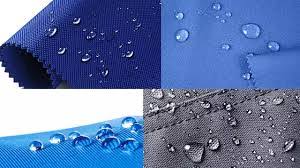
Why water beads on some surfaces
When a surface has low surface energy, water molecules cannot spread easily. Instead, they form droplets due to cohesion forces within the water itself.
This is the same principle behind:
Lotus leaves
Waxed surfaces
Many synthetic waterproof coatings
This effect is called the hydrophobic effect.
3. Hydrophobic Chemistry: The First Layer of Defense
Modern waterproof fabrics often begin with chemical treatments that reduce surface energy.
Common hydrophobic treatments include:
Fluoropolymers (historically very effective)
Silicone-based coatings
Durable water repellent (DWR) finishes
These coatings do not block water completely. Instead, they:
Cause water to bead up
Prevent immediate absorption
Buy time before penetration occurs
The limitation of coatings
Hydrophobic coatings wear off due to:
Abrasion
Dirt accumulation
Washing cycles
UV exposure
This is why rain jackets often lose performance over time unless re-treated.
4. The Real Waterproof Barrier: Membrane Technology
The most important breakthrough in waterproof fabrics is the microporous membrane.
These membranes are extremely thin layers embedded between fabric layers.
How they work:
They contain microscopic pores that are:
Too small for liquid water droplets
Large enough for water vapor molecules
This creates a paradoxical effect:
Sweat vapor escapes, but rainwater cannot enter.
Expanded Polytetrafluoroethylene (ePTFE)
One of the most famous waterproof membranes is based on expanded PTFE technology. It is widely used in outdoor gear systems like those developed by GORE-TEX.
These membranes are:
Chemically inert
Highly porous at microscopic scale
Extremely durable when protected
5. Micropores and the Physics of Water Exclusion
To understand why water cannot pass through, you need to consider scale.
Water droplets vs pore size
Rain droplets are relatively large
Membrane pores are microscopic
Liquid water cannot pass unless pressure forces it through.
Surface tension barrier
Even if a pore is large enough geometrically, water still resists entry due to surface tension.
This creates a physical barrier without needing a solid wall.
6. Pressure Resistance: The Hydrostatic Head Concept
Waterproof performance is often measured by hydrostatic pressure resistance.
This refers to how much water pressure a fabric can withstand before leaking.
Real-world examples:
Light rain: low pressure
Heavy backpack compression: moderate pressure
Kneeling on wet ground: high pressure
The higher the rating, the more durable the waterproof system.
Why seams matter
Even if fabric is waterproof, stitching creates weak points.
That’s why high-performance gear uses:
Heat-sealed seams
Waterproof tape reinforcement
Welded construction techniques
Without seam sealing, water will enter regardless of fabric quality.
7. Layered Fabric Systems: More Than Just One Material
Modern waterproof clothing is rarely a single layer. It is a system.
Typical structure:
Outer layer (face fabric)
Waterproof membrane
Inner lining
Each layer has a specific function.
Outer layer function
Protects against abrasion
Supports hydrophobic coatings
Shields membrane from dirt and oil
Membrane function
Blocks liquid water
Allows vapor escape
Inner layer function
Protects membrane from skin oils
Improves comfort
Adds durability
8. Breathability: The Hidden Challenge of Waterproof Design
A truly waterproof fabric is useless if it traps sweat inside.
This is where breathability becomes critical.
The trade-off:
Smaller pores → better waterproofing but lower breathability
Larger pores → better breathability but weaker waterproofing
How modern systems solve this:
They rely on:
Temperature-driven vapor movement
Pressure differentials
Selective permeability membranes
This allows sweat vapor to escape without letting rain in.
9. DWR Coatings: The First Line of Defense in Real Use
Even advanced membranes rely on outer coatings.
Durable Water Repellent (DWR) finishes:
Make water bead and roll off
Prevent fabric saturation
Keep outer layer dry
Why DWR matters
If the outer fabric becomes saturated:
Breathability drops
Fabric becomes heavy
Internal condensation increases
So DWR protects the entire system, not just the surface.
10. Why Waterproof Fabrics Eventually Fail
Even the best systems degrade over time.
Main causes of failure:
1. Dirt and oil buildup
Clogs pores and reduces breathability.
2. Wear and abrasion
Damages coatings and membrane integrity.
3. Washing and detergents
Break down hydrophobic treatments.
4. UV exposure
Weakens chemical bonds over time.
The result:
Waterproofing does not suddenly disappear. It gradually weakens.
11. Nanotechnology and Next-Generation Waterproofing
Modern research is pushing beyond traditional membranes.
Emerging technologies include:
Superhydrophobic nanostructures
These mimic lotus leaves at microscopic scale.
Water contact angle becomes extremely high, causing near-perfect droplet roll-off.
Bio-inspired coatings
Inspired by natural surfaces like:
Lotus leaves
Butterfly wings
Shark skin
Smart textiles
Materials that:
Adjust porosity based on temperature
Self-heal minor coating damage
Respond dynamically to humidity
12. Real-World Applications: Beyond Jackets and Raincoats
Waterproof technology is used in many industries:
Outdoor apparel
Military gear
Medical textiles
Construction materials
Electronic device protection
Each application prioritizes different balances of durability, breathability, and cost.
13. Why Cheap “Waterproof” Products Often Fail
Many low-cost waterproof items fail because they rely only on surface coating.
Without a proper membrane system:
Coating wears off quickly
Fabric absorbs water
Performance drops dramatically
True waterproofing requires engineering—not just treatment.
14. Testing Waterproof Performance: How Engineers Measure It
Waterproof fabrics are tested using:
Hydrostatic head test
A column of water is placed above fabric until leakage occurs.
Rain simulation tests
High-pressure spray systems simulate storm conditions.
Abrasion testing
Fabric is rubbed repeatedly to simulate wear.
Environmental aging tests
Exposure to UV, heat, and humidity over time.
15. The Future of Waterproof Science
The next generation of waterproof fabrics will likely focus on:
Fully recyclable membranes
Chemical-free water repellency
Adaptive breathability systems
Longer-lasting hydrophobic coatings
Integrated sensor textiles
The goal is no longer just “keeping water out,” but creating intelligent materials that adapt to human activity and environment.
Conclusion: Waterproofing Is a Controlled Relationship Between Water and Material
Waterproof fabric is not about creating an absolute barrier. It is about engineering a controlled interaction between water molecules and material structures.
The most effective systems combine:
Low surface energy chemistry
Microporous membrane physics
Multi-layer fabric engineering
Durable surface coatings
Seam sealing and structural design
When all these elements work together, the result is a fabric that feels simple to the user—just dry and comfortable—but is actually the product of complex scientific design.
Understanding this science not only helps you choose better gear, but also explains why some products last for years while others fail after a single season in the rain.

Need Help with Your Custom Project?
Have questions about materials, sizing, or looking for a quick quote? Drop us a message and our experts will respond within 24 hours.
Chat on WhatsApp
+1 (304) 356-6765
Send us an Email
hello@incustom.com
Picked for You